
Ella Spear, 136 TESS
One thing about me is that you can motivate me to do almost anything for food —potentially including moving to Thailand. To be honest, I wasn’t too excited about leaving the U.S. a little over one year ago and really felt like I had no idea what I was getting myself into. I got myself pumped up by reading some Sticky Rice blogs about what my life could soon look like. Here, I stumbled across an article written by Kayla Kawalec of group 134. She wrote about her house and the rice fields surrounding it. Kayla described arms-length ripe, fresh, juicy, fruits handed over in mounds. She also wrote about her community, and being given so many cucumbers by her neighbors that she didn’t know what to do with them— this felt like a Peace Corps problem I could tackle. Truly, this is what assured me that Thailand and I would be okay together (thanks Kayla).
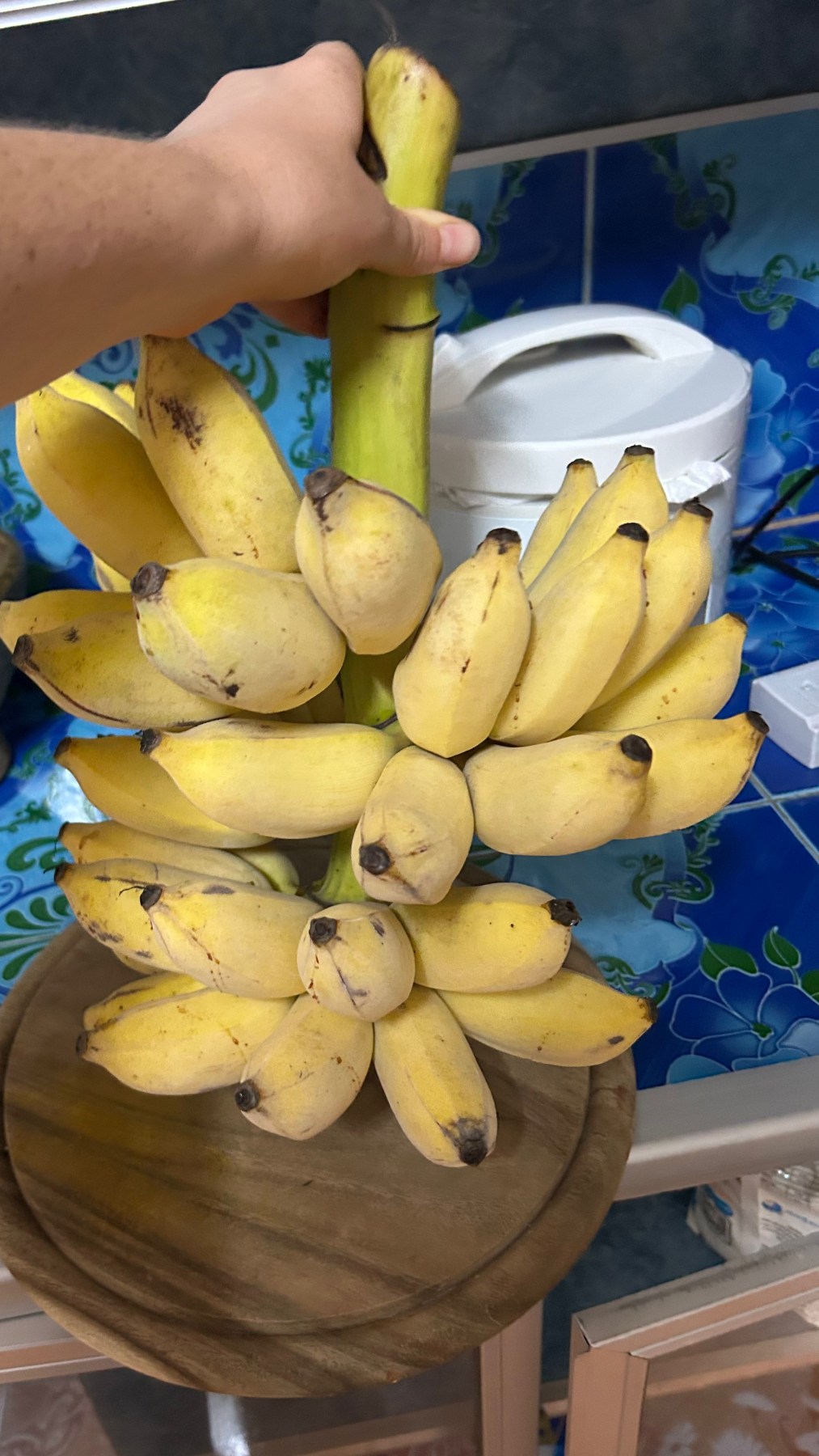
After one year in Thailand, I can say that gifting food is alive and thriving. I also learned that things in small portions don’t really exist. I asked to go pick one mango from a tree behind my friend’s house and I soon found myself begging them (halfheartedly) to stop after the eighth fruit. I asked for two bananas for tomorrow’s breakfast, I was handed a stalk, a word I had to look up; meaning, the branch that holds 4-6 bunches of bananas. Fruits are a big part of what has gotten me through the first year. Here are some of my favorites.
Durian, ทุเรียน (too-rian)
The king fruit of Thailand.
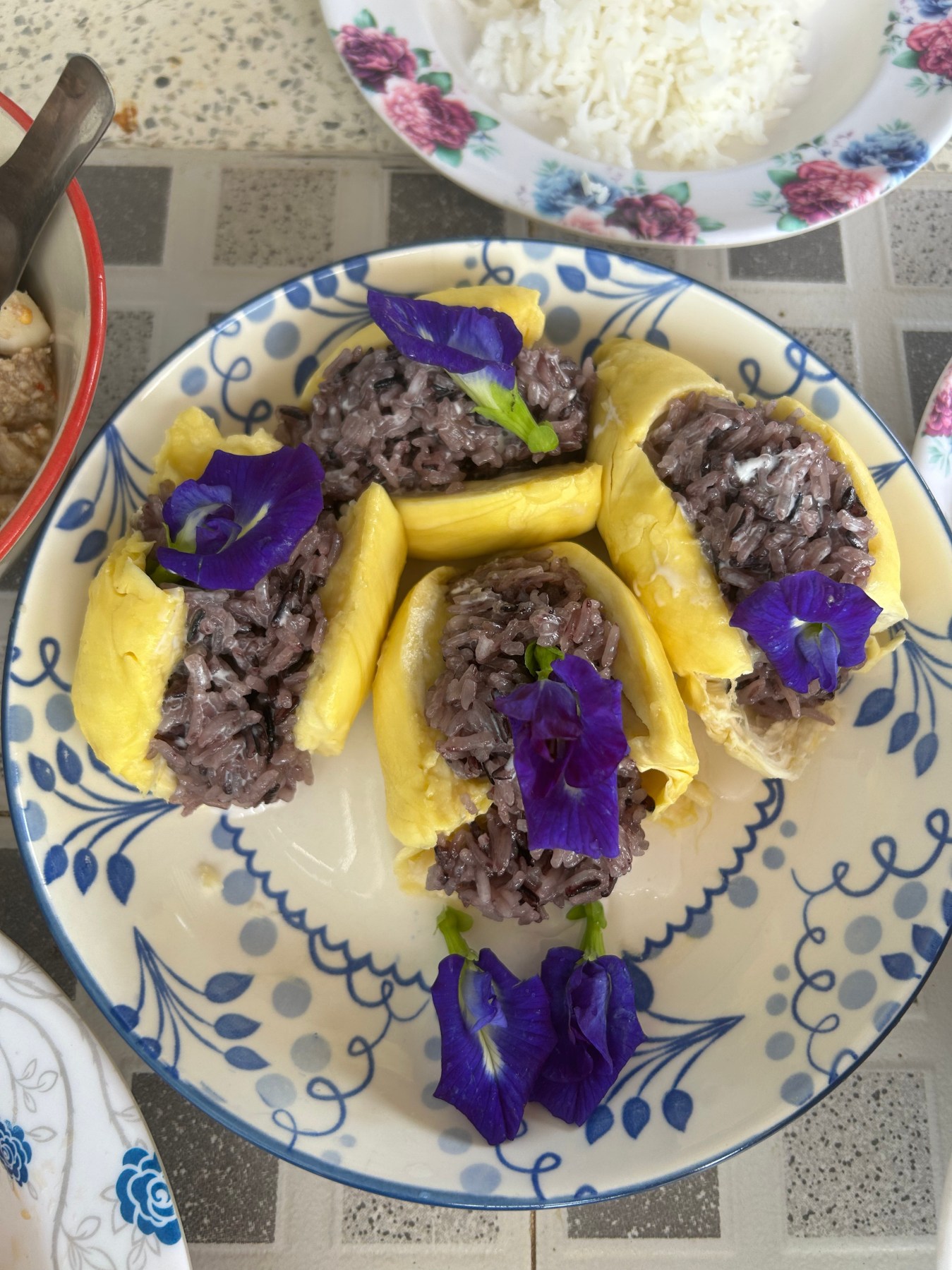
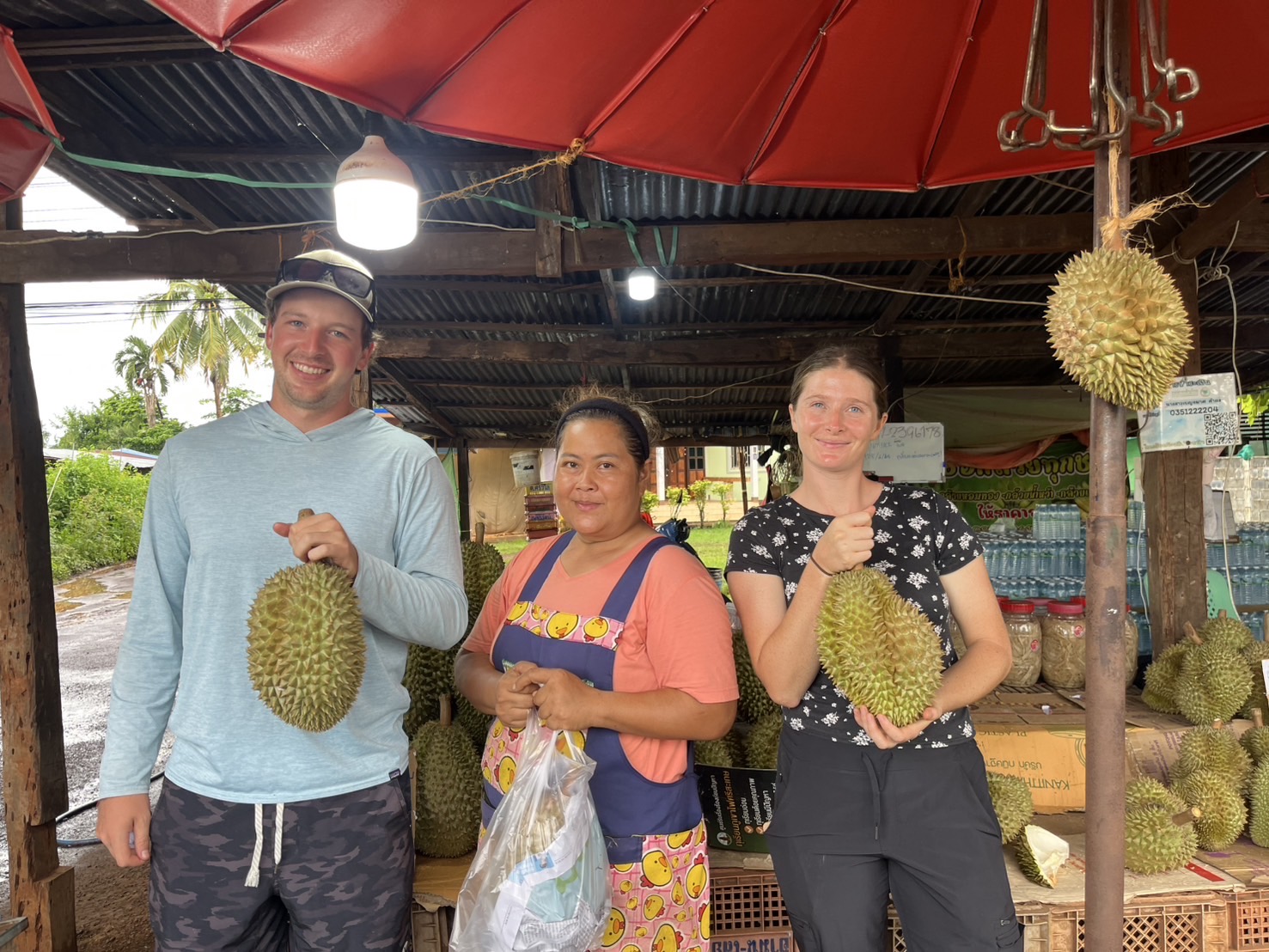
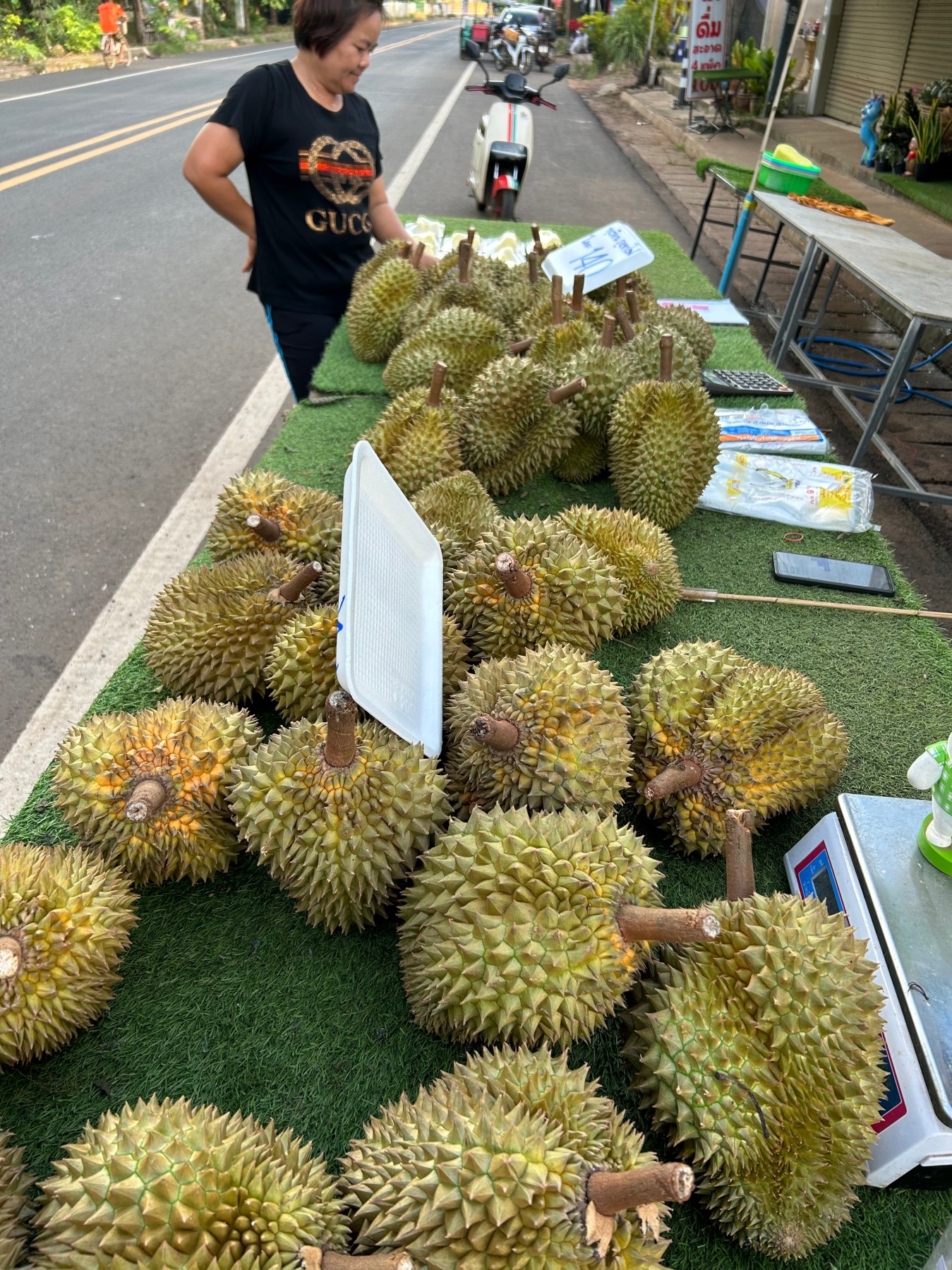
The most expensive and most controversial fruit. Some can’t stand the smell, some can’t get enough.
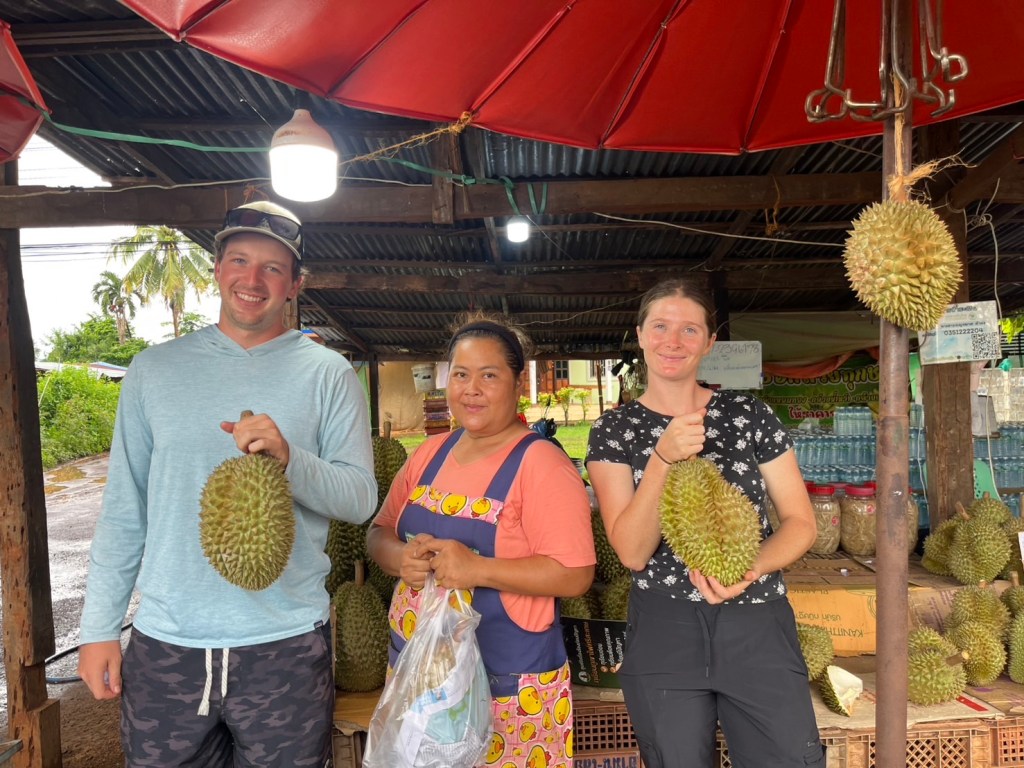
I have never gotten as much attention from my students as when I was given three spikey (and smelly) durian one afternoon in early June. The Peace Corps first on-site visit with me was smack dab in the middle of durian season, so naturally it was the gift of choice to welcome the guests. Unfortunately ~for PC staff~ they could not travel back to Bangkok with durian on the plane, so they re-gifted them to me. Huge win. Most hotels, buses, taxis, and public spaces ban durian, often with fines of at least 2,000 baht if they smell it on you so they didn’t want the risk.
I learned to fall in love with durian quickly. Not only is it highly sought after, but its lore is so great that I felt like I wouldn’t fit in if I didn’t. I live in Sisaket, which is known for a specific type of durian called ทุเรียนภูเขาไฟ ศรีสะเกษ (too-rian poo-khao fai), or volcano durian, rightfully named for the rich volcanic soil that these durian trees grow in. I was lucky to arrive before the start of durian season and during a year where durian prices were relatively low. As a sign of support and wanting to take care of their new farangs, many school directors and family members took Tucker and I on, bpai tiaow to various durian farms to take pictures (of course) and sometimes buy fruit. For a couple months, Tucker and I were happily subjected to receiving regular durian deliveries from Thai community members, who eagerly waited to see if we could eat it and to try some with us.
Tips:
Thai people claim you will have a heart attack if you eat durian and drink beer the same day. Not medical advice, but I have survived so far.
Ask for “gròp nɔɔk, nûm nai na kaa/krub” (กรอบนอก นุ่มใน) = firm outside soft inside please! The Thai people will be very impressed if you know how you like your durian.
Do not force yourself to eat the last bit of durian on your plate, even when you are guilted by your host family. Instead, put it in the freezer*, you will get the creamiest ice cream bite to snack on for the next week.
Try it three times, the first two times it’s okay to be put off by the unique smell, but stay strong and let yourself give in to the flavor and textural experience that is the king fruit.
If you don’t like it, Thai people will still love you.
*I tried to save some in the freezer for my family to try when they visited. Let’s just say it’s best to eat within 2-3 months of storage.
Mango, มะม่วง (má-mûang)
A lifelong lover.
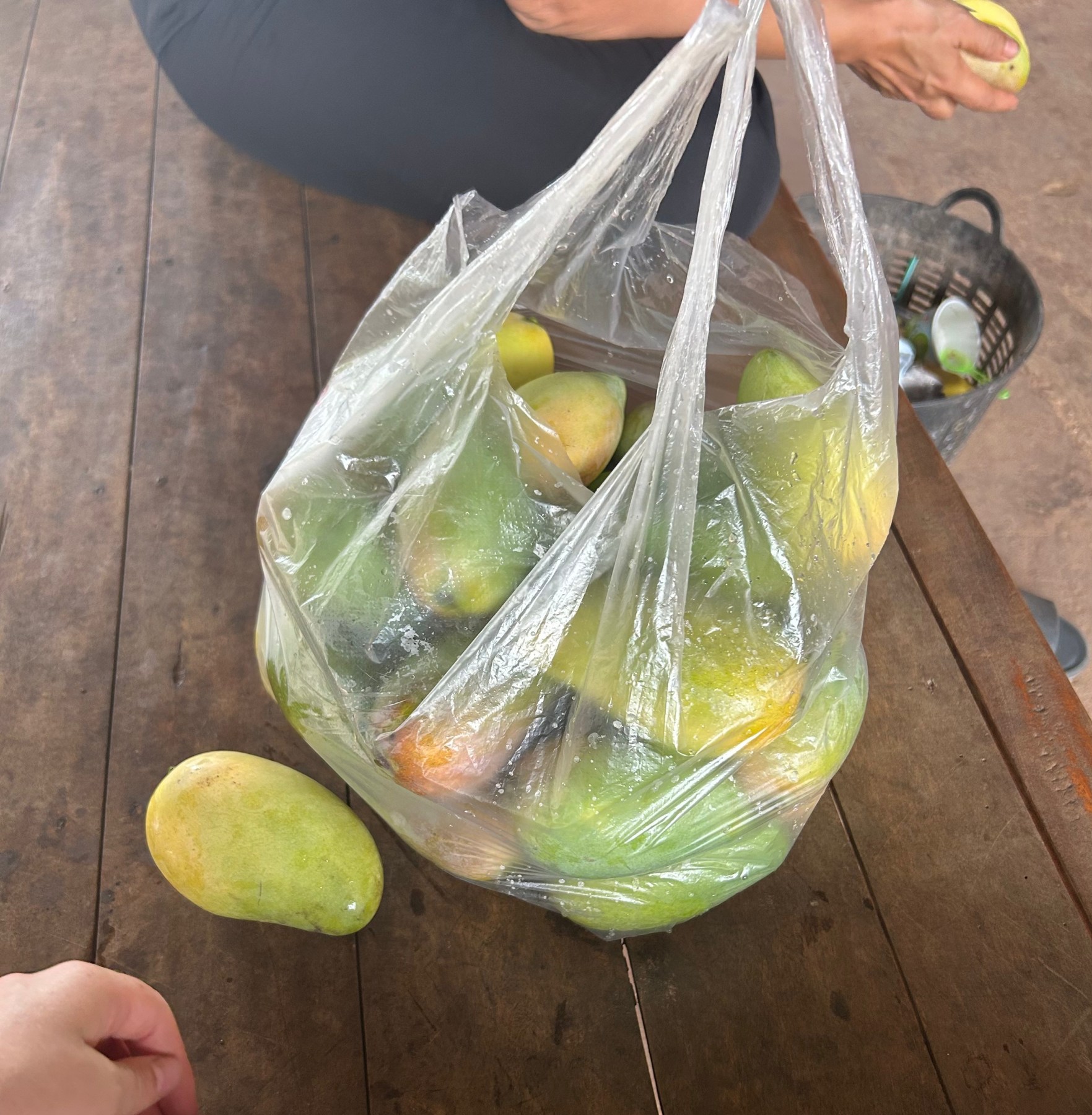
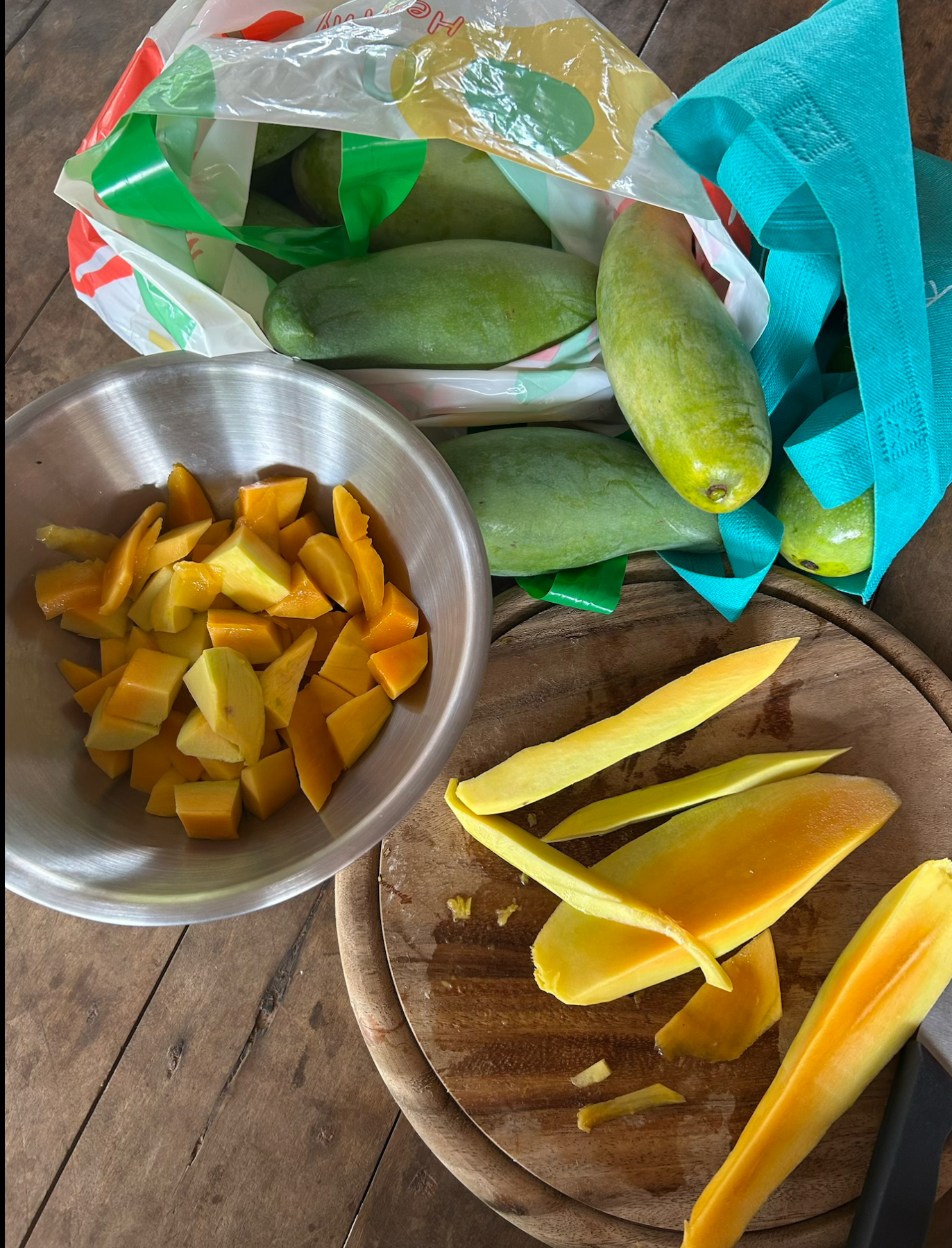
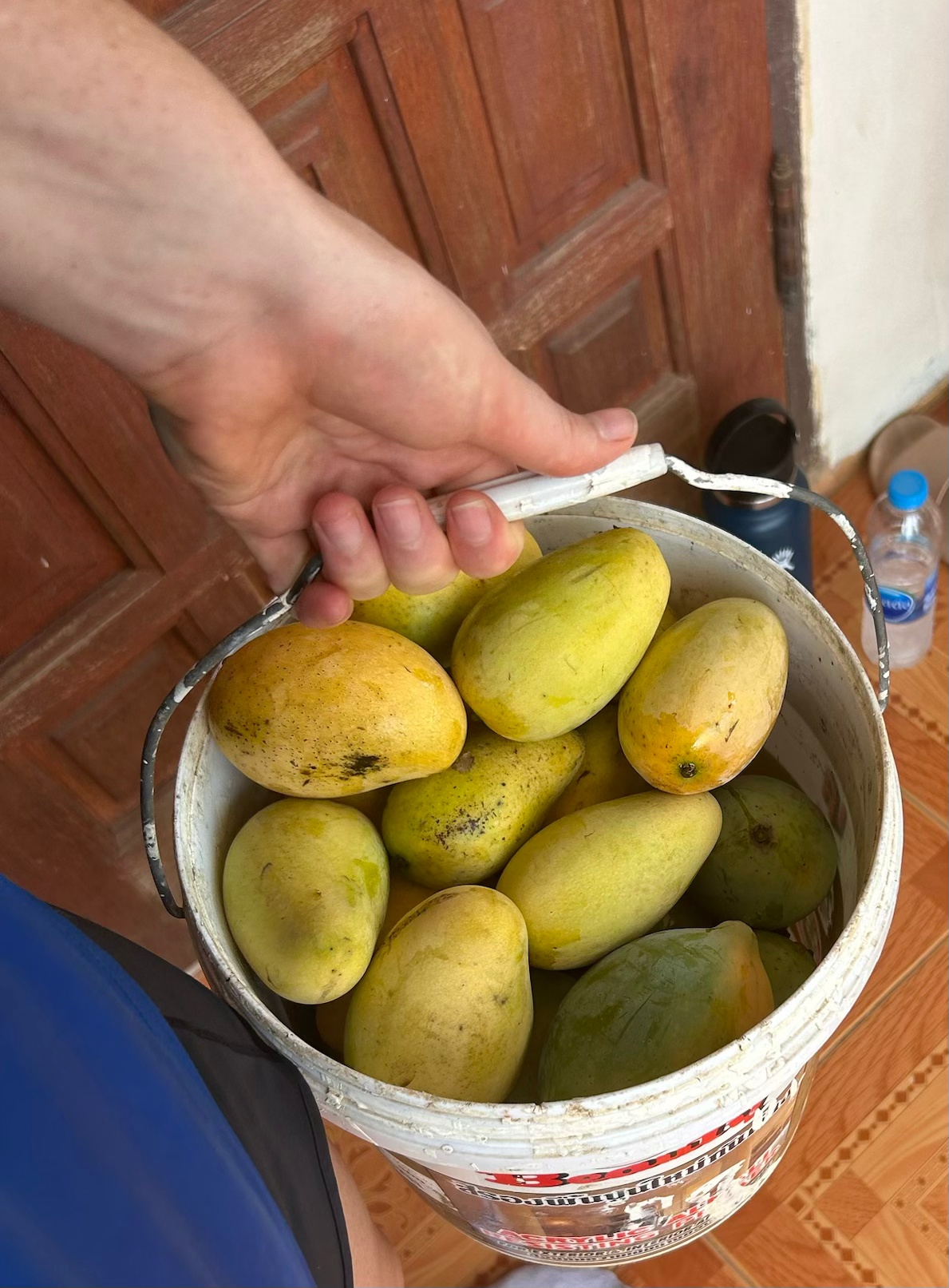
Mangos in Thailand are similar to apples in America. I had no idea how many types of mangos there could be. Well, I was pleasantly impressed and pre-occupied with taste testing all the mangos in my community for most of the spring.
My biased opinion; the best mango is called, เขียวเสวย (keaw sawai), a green skin mango that is eaten both ripe and unripe. My host aunt has a tree that was dripping with these mangoes for months. We started munching in March when we arrived at site, eating the keaw sawai mangos when they were green and sour. As the months went on the fruit became sweeter and more orange on the inside, but kept its distinct green skin and crunchy, refreshing flavors.
I don’t know where these came from, but ma-muang gɛɛo, a lighter, yellow flesh with a sweet but not overwhelming taste, presented itself to me one day in April. My host family gave me a bag with about 15 mangos, saying; “Your uncle brought them for you.” I still don’t know what uncle they were talking about, as this is also the common test to address any man around 40-60 years old. I sure did appreciate them though.
There is also the famous Thai ma-muang nam dtok mai which comes out strong in the beginning of the season with the classic sweet, thick, and juicy mango meat pairing wonderfully with sticky rice.
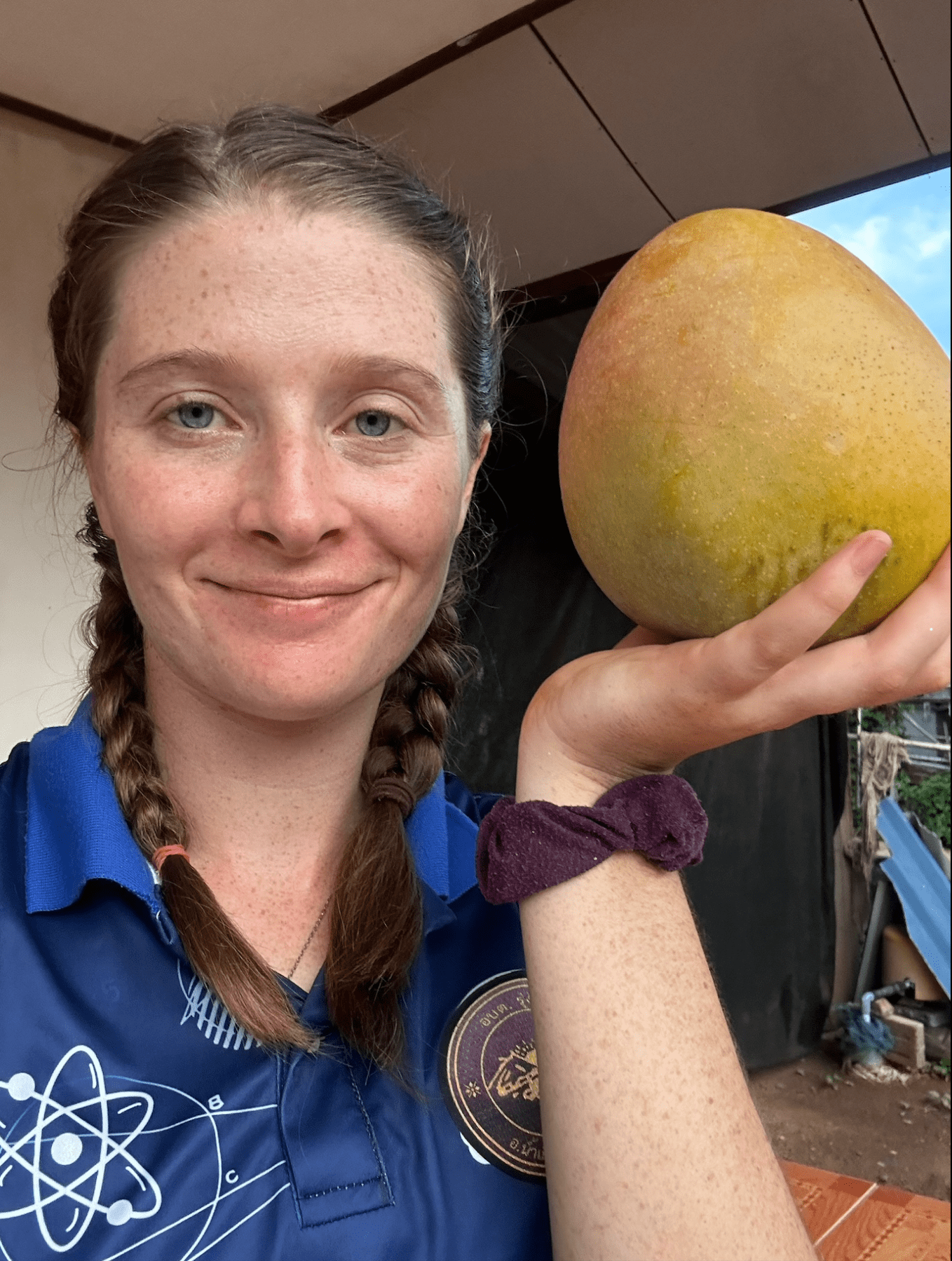
Finally, the R2E2 (row 2 experiment 2) apple mango. An Australian strain mix that is unnaturally large and round. When Tucker brought one home in his bike basket, metal bending with the weight, I didn’t believe it was a mango at all.
Tips:
- Tell everyone you can that you love mangos, then just wait and see.
- Freeze them! Enough said.
- Try the fermented fish, shallot, dried chili pepper, sugary, salty dip that the teachers will dip green mango in for snacks (even though it smells fishy).
Mangosteen, มังคุด (mang-khút)
The queen fruit of Thailand.
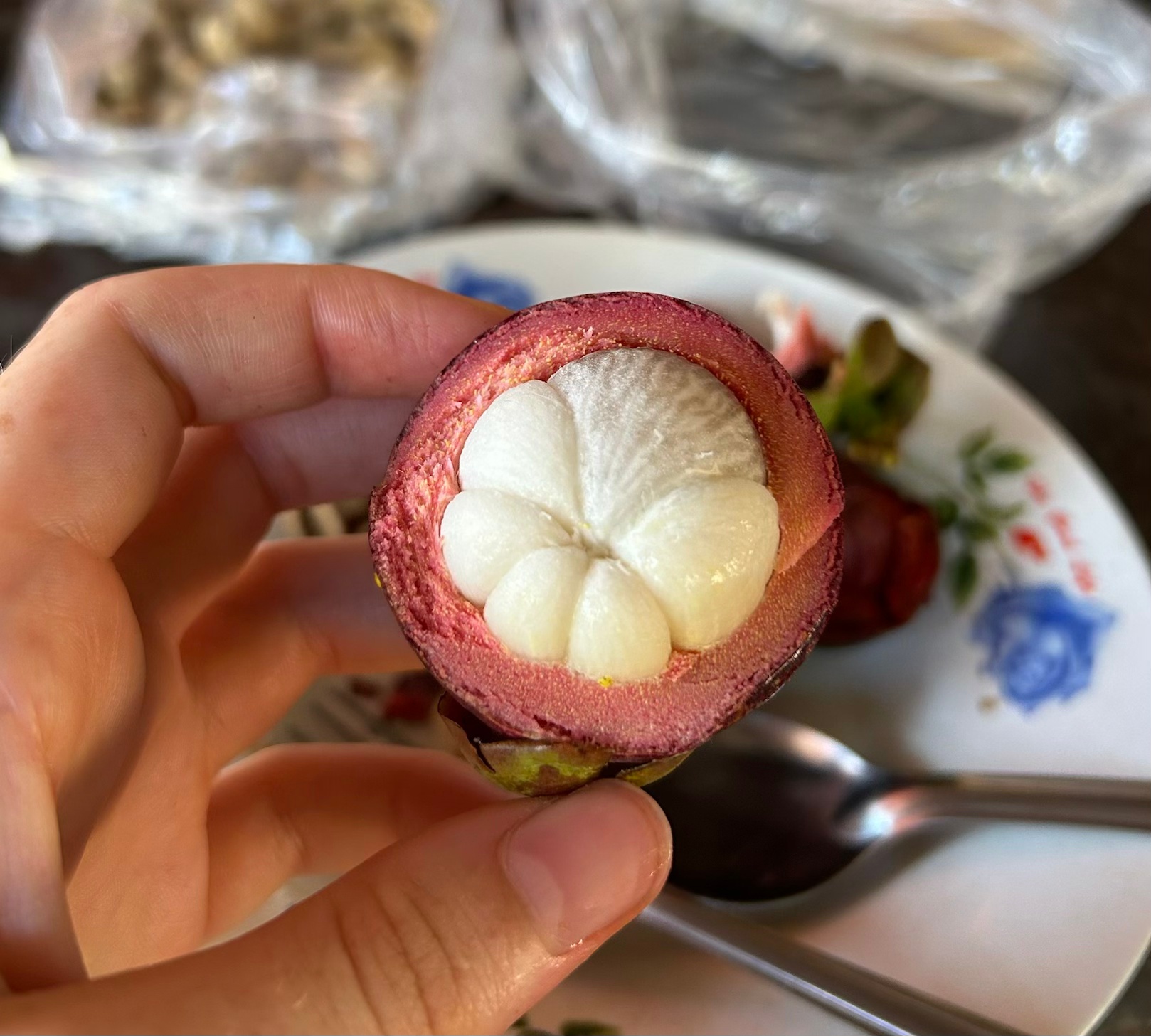
Light, refreshingly sweet and tangy combination with a soft, yet firm white meat. The texture is almost custard-like and combines flavors found in peach, strawberry, lychee and heaven (I am pretty sure).
Mangosteen is grown during the hot season alongside durian and is a great balance to the heavy durian meat and flavors. It’s quite indescribable, but if you get the chance I highly suggest trying it. Make sure you don’t eat the beautiful purple outside meaty shell, it’s very bitter, and your Thai friends will laugh at you.
Tips:
- The purple stains.
- Homemade mocktail?
Rambutan, เงาะ (ngó)
This one looks fake, like a child’s toy you would get at the dentist.
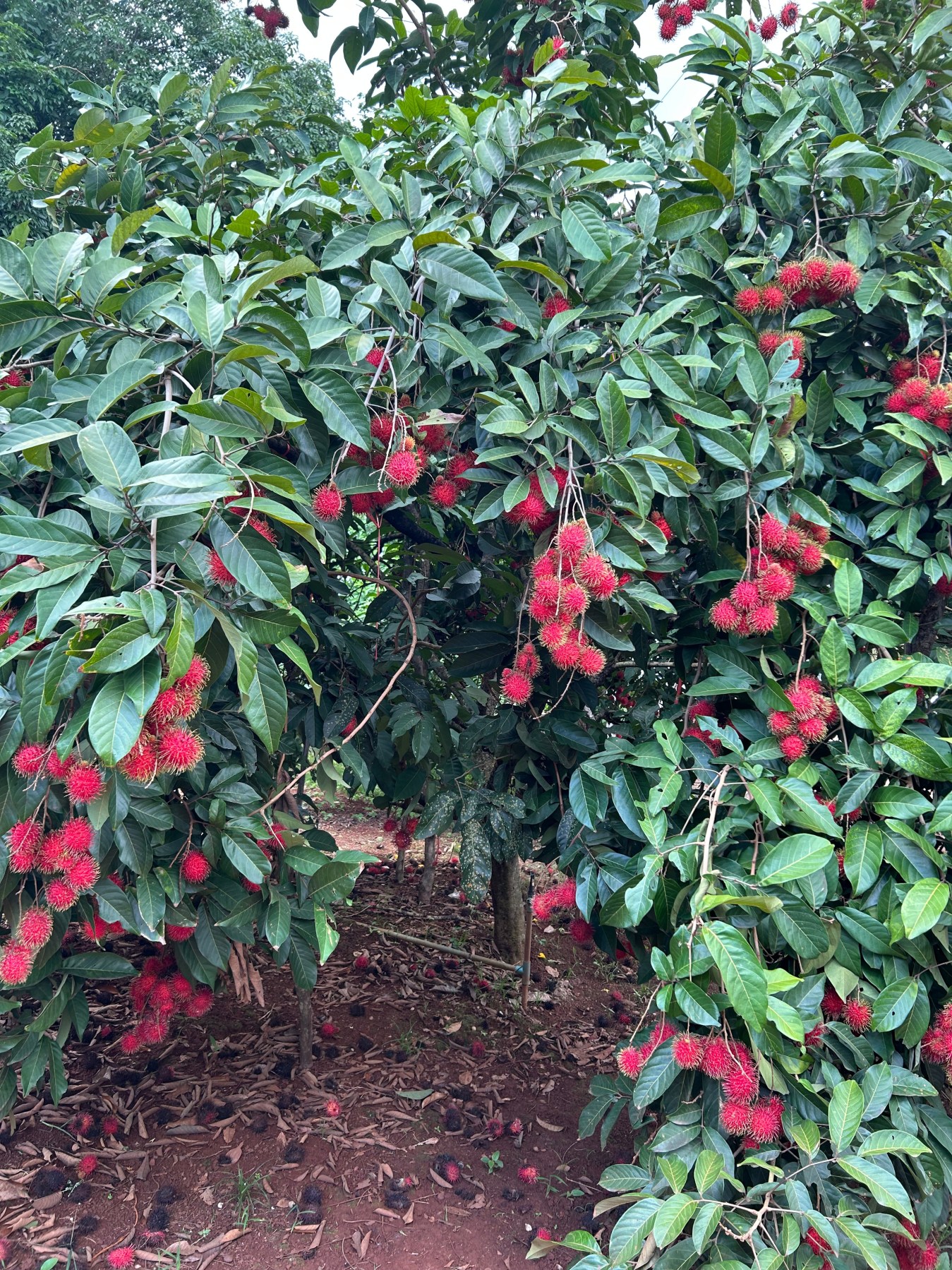
Rambutan is also a spring/summer fruit grown during Thailand’s hot season similar to durian and mangosteen season, with growth extending into late summer. Rambutan is usually more cost effective than its two royal counterparts and Thai people flock to the rong-rian variety which tends to peel away from the pit more easily, leaving less of the pit shell attached to the meat. Rambutan is as much of a pastime for me as anything. It’s satisfying to open and bite into the translucent, slightly crunchy and sweet meat. I can eat a kilogram of this beauty without blinking an eye.
Honorable mentions:
- เสาวรส (sǎo-wa-rót)— Passion fruit, sour, fun, and the best smoothie and cocktail fruit.
- แก้วมังกร (gɛɛo-mang-gorn aka dragon crystal)— Dragon fruit, purple and white are both so incredible.
- มะละกอสุก (má la gɔɔ sùk) —Fresh papaya, classic, always good.
- สับปะรด (sàp-a-rót) — Pineapple, miniature ones are so sweet and Thai people know how to cut them.
- ลำไย (lam-yai) — Longan, sweet, small, unique.
- พุทรา (phút-saa) —Jujube, like a big crunchier version of grape with apple skin (watch out for little worms).
- ฝรั่ง (farang) — Guava, beware of the seeds, I am not sure how I haven’t broken a tooth yet.
- All of the banana varieties! The sweetest in the world.
Enjoy taste testing!


 Sticky Rice
Share your thoughts