
Ella Spear, 136 TESS
In Isaan, the early bird doesn’t just get the worm. Especially on weekends, or during local events, the early bird gets the worm, the whiskey, the beer, some raw beef laab, rice, plenty of fruit, and, if you are lucky, a side of crunchy, freshly fried crickets. At a merit-making ceremony, a school fundraiser, sports day, or any other community gathering, as soon as the food is offered to the monks, the women who spent the past two days cooking pile the tables with bowls, parchments of sticky rice, and cups filled with ice and beer.
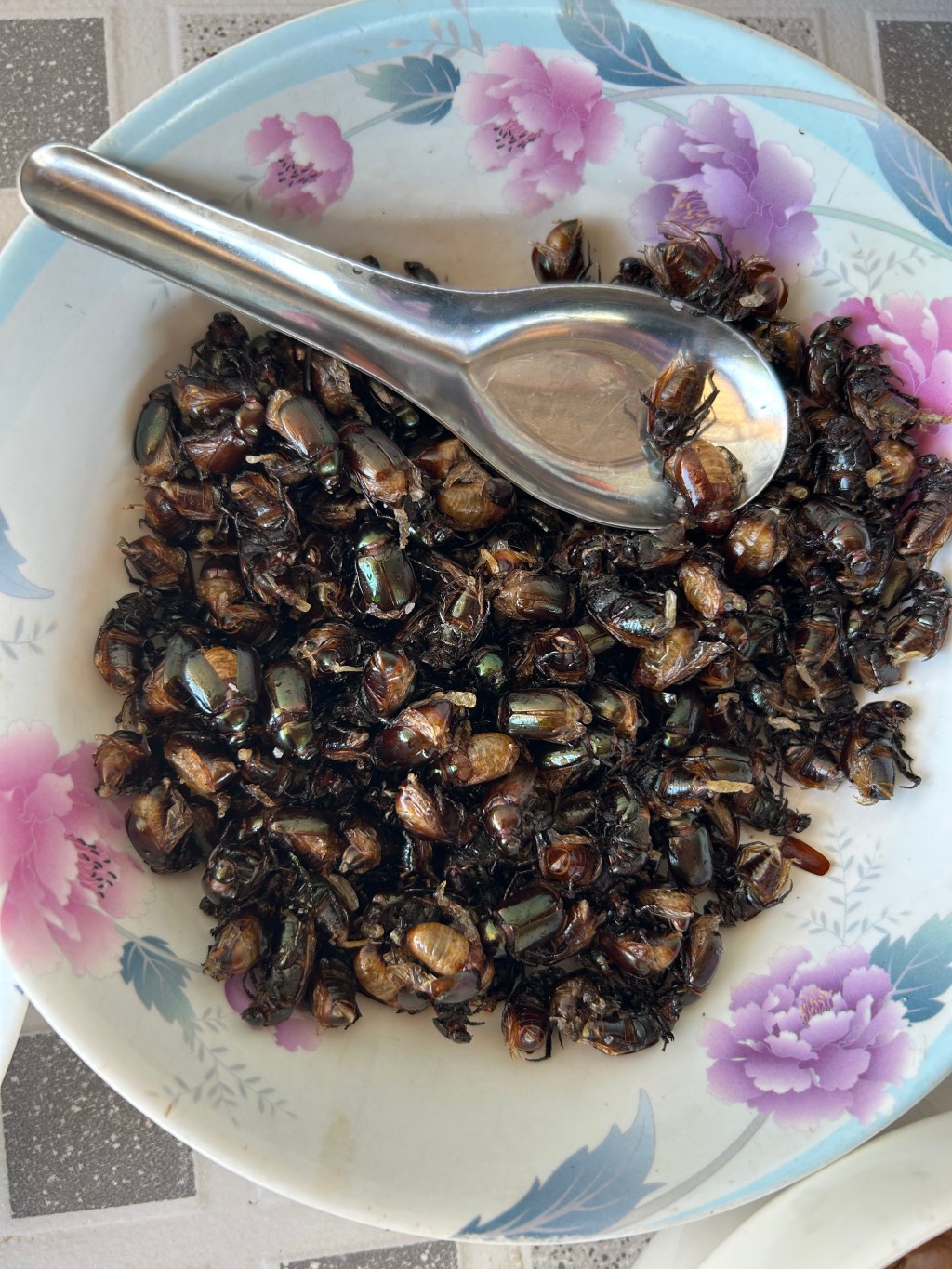
Being a Peace Corps volunteer, we talk a lot about integration and becoming part of the communities in which we serve. I am starting to learn that in Thailand, food is a community, and sometimes this means testing your taste buds and pushing your stomach to its limits, even in the early hours of the morning. Nothing like starting the day off with an assortment of bugs and a side of beer.
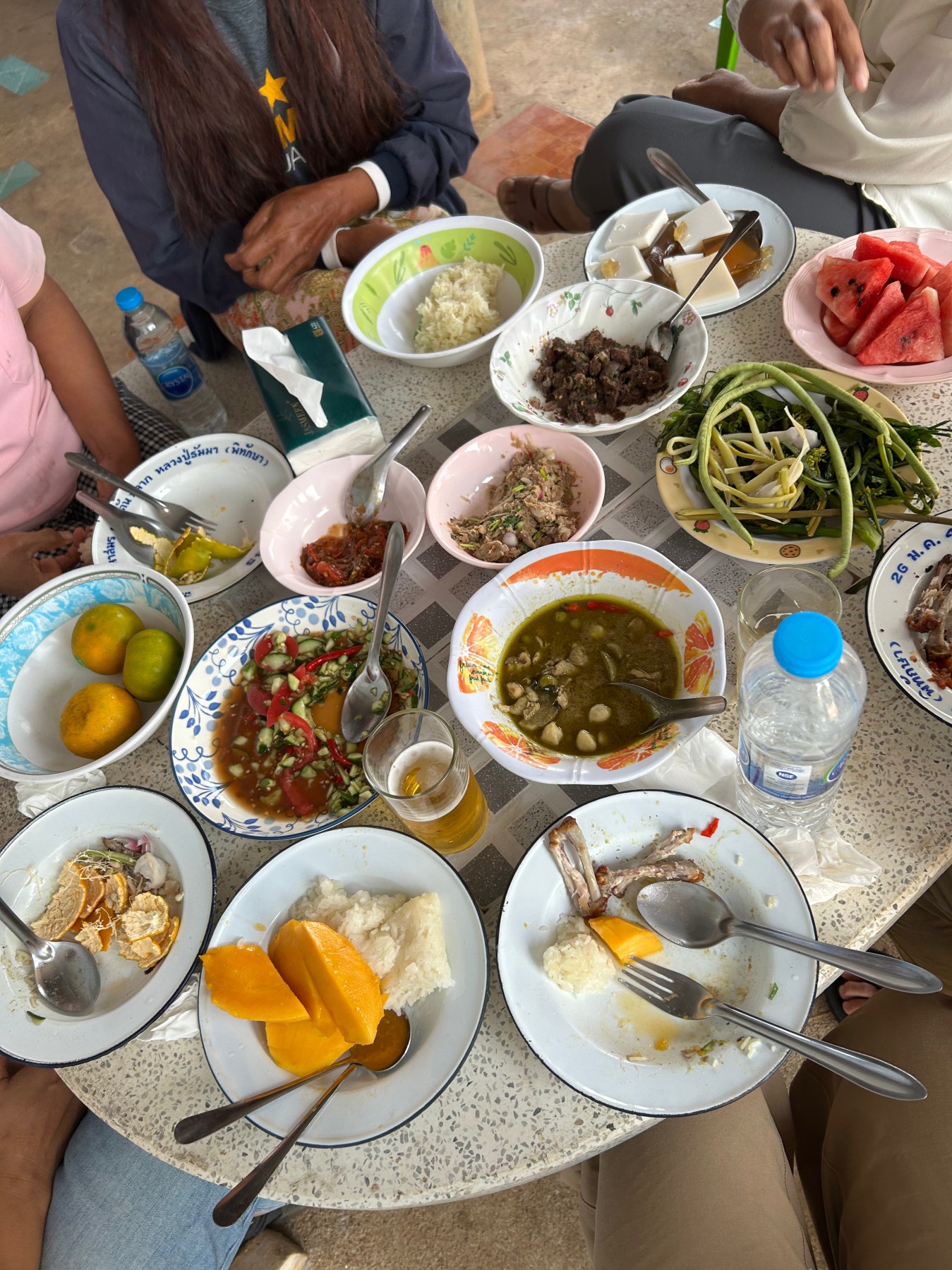
During my first week living in Isaan, I had just rolled out of bed when my host mom knocked on the door, indicating the family was waiting for me. I hurried out, chugging a bottle of water as I went. I have learned over the past few months to be prepared for anything, and if you don’t know what to prepare for, start by drinking water and bringing a long-sleeved sun shirt with you. My little host brother and aunt led, my host mom tailing Tucker and me on her scooter. I had worked up a sweat when we approached the house of another host aunt, only about 800m away. The ceremony soon started, a local grandfather leading the prayers until the head monk took over. Offerings of cushions and silks began, and then piles of food were given to each monk. In Thailand, monks may only eat food given to them and only until noon, at which time they are expected to abstain from eating until the following morning. I speculate that this is in part why breakfasts here rival any dinner feast I have experienced in the U.S. Additionally, with around 80% of the workforce in my province working in agriculture, it is a steadfast belief that breakfast should be the largest meal to support the workers for their long and hot day ahead.
When the ceremony finished, we were ushered to the table, and our plates were filled with “khao suay” (jasmine rice) as the feasting began. Given our inflexibility (physically), we were permitted to sit at the table with benches instead of sitting cross-legged on the large platform with the many other community members present. I politely declined a shot of “lao khao” (rice whiskey) as my host mom topped up my glass of beer. I checked my phone – 07:14 A.M. I reached for the sticky rice and dipped it into the spicy, flavorful, and fully cooked pork laab, using it as a transport vessel like I had observed others doing. Although I did not understand much of what was being said, the food communicated for us. I was sent home to rest after the feast, feeling very grateful that the work of integration can be so delicious and fulfilling.
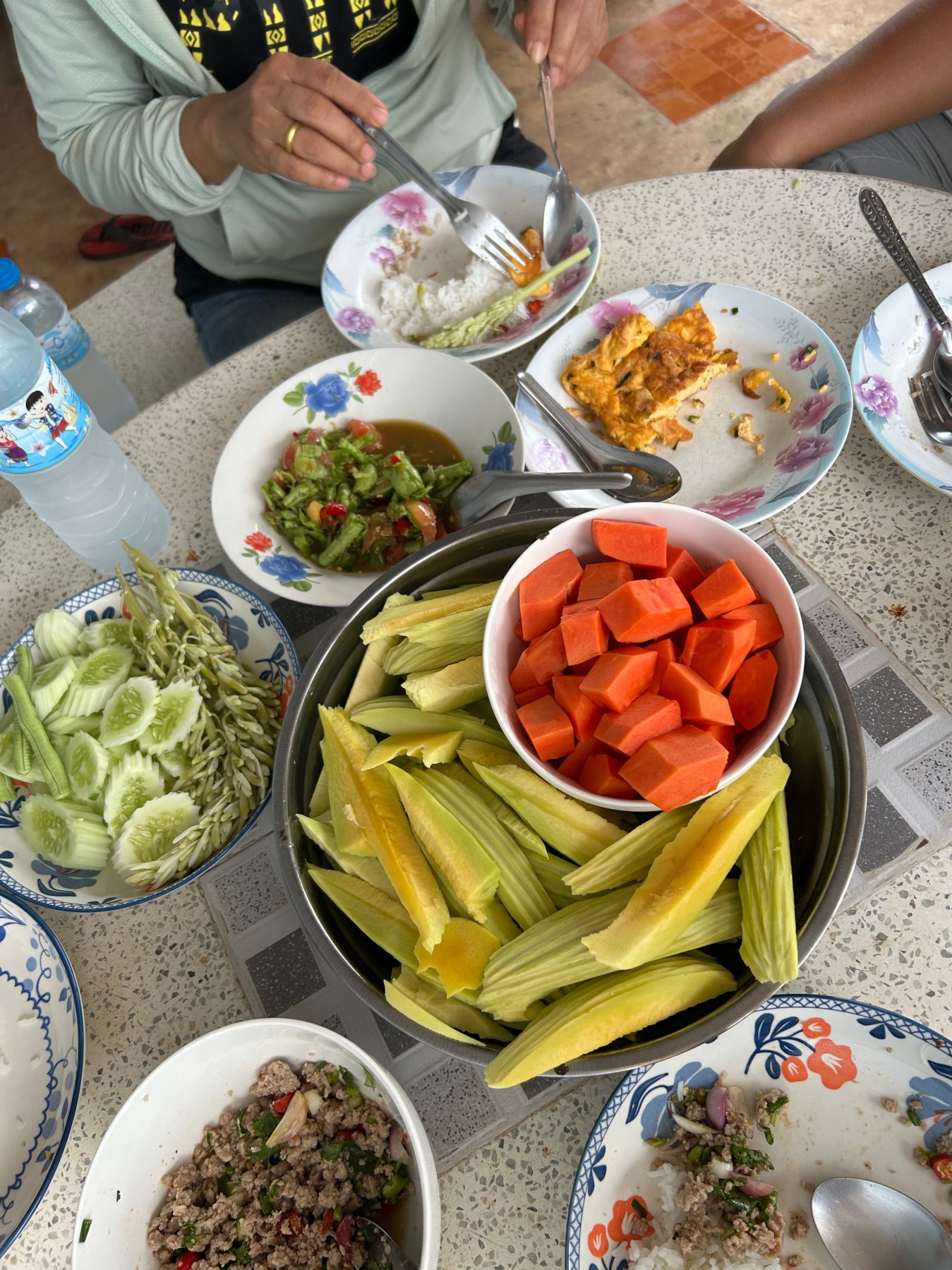
Food is one big way Thai people share their love. Neighbors hand me homemade red ant egg curry, bags of mangoes, or whatever else they have when I ride by. My aunt “bpaa” Lae down the street gives me vegetables every time I come home from school, and, even when my fridge is full, it is impossible to say no to her gifts. Sometimes, crickets for breakfast are not the most appealing, but accepting nam jai and recognizing its intent is worth it. Especially when the nam jai comes in the form of “moo ping”, Thai pumpkin curry, or mango sticky rice.



 Sticky Rice
Share your thoughts