
Michael Swerdlow, 135 YinD

What do you call your parents? Mother, mom, mommy, mama, etc.? Father, dad, daddy, papa, etc.? Using honorifics comes with great cultural and connotative meaning dependent on the personal relationship. For a high context culture that emphasizes the importance of building deep relationships, Thai takes the concept of honorifics and pronouns to the extreme (in the absolute best way!). Just when I think I have the hang of which pronoun to use, I am introduced to a new one.
Without further ado, this is the art of using Thai honorifics and Thai pronouns.
The first topic to mention is point of view (first, second, and third person). In English, it can be grammatically incorrect or sound strange to speak in the wrong point of view. However, Thais will often speak in the third person to express their affection or to clarify context. Remember this as we discuss using Thai honorifics/pronouns.
Pǒm (for males) ผม and chán (for females) ฉัน is the polite first-person pronoun for ‘I.’ Females can also use di-chán ดิฉัน which is typically used to be more formal. Additionally, khun คุณ is the polite pronoun for ‘you.’ These are the most general pronouns in Thai while conveying politeness. When in doubt about what pronouns to use, they are the safest choice.

However, Thais may not use these basic pronouns because they may indirectly convey that the relationship is not very intimate. They like to speak in the third person and use other pronouns for ‘I’ and ‘you’ to show the relationship is strong. For example, young girls use nǔu หนู, which translates to ‘mouse.’ This is the humble version for ‘I’ or ‘you.’ It expresses intimacy in a non-threatening manner. Conversely, when the kids speak to each other, they use the vulgar guu กู. Ter เธอ is another vulgar pronoun used by/for females. Both should only be used for very close relationships with people who are the same age as you and should never be used with elders. This is the Thai version of homie or bro.
What are some more common ways to call yourself or others to be more intimate than pǒm but less vulgar than guu?
Pîi พี่/Nóng น้อง is a pillar of Thai culture and is used in a plethora of contexts. It is my default response. It means older/younger sibling. So, I call myself Pîi Michael with people younger than me, and Nóng Michael with people older than me. Sounds weird to speak in the third person, right? It took me some time to adjust to this. For this reason, Thais will often ask each other’s age when first meeting each other. For another example, I call my host siblings pîi. One of my co-teachers has a five-year-old daughter who can speak English. She calls me ‘Brother Michael’ as that is what Pîi Michael would translate to in English. We wouldn’t say this in American culture, but it is essential to building relationships in Thai culture. This is honorifics in practice!

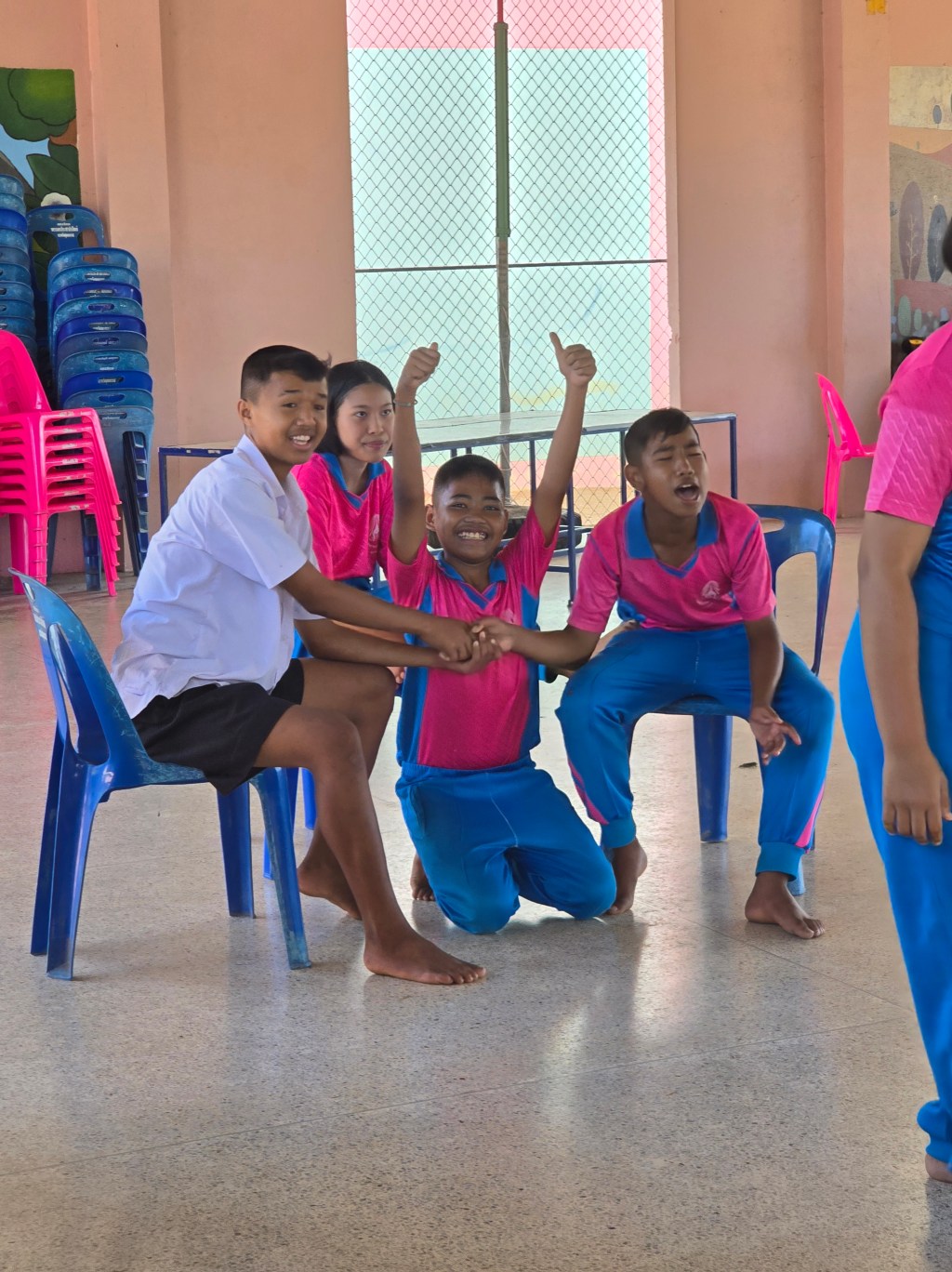
Another example of how to refer to yourself or others is your job title. In school, I call myself khru ครู which translates to teacher. When I address the students in class, I use the Thai word for student, nák rian นักเรียน. When we are not actively learning, I use nóng or nóng nóng. Saying it twice simply makes it more endearing. Additionally, many teachers call the students lûuk ลูก which literally translates to child. Lûuk nák rian is another word for student. Since I am closer in age to the students, I prefer to use the honorific nóng. Moreover, some volunteers don’t want to be called khru and would rather be called pîi. That is what I love about using Thai pronouns; there is no right or wrong answer! It’s up to you based on the relationship.

Another job title I constantly hear is pǒr-or ผ.อ., which translates to director. This is how we address school principals and how they address themselves. In America, it would be the equivalent of using doctor, judge, etc. before their last name. Although it isn’t as common in the States, it is used in all contexts in Thailand.
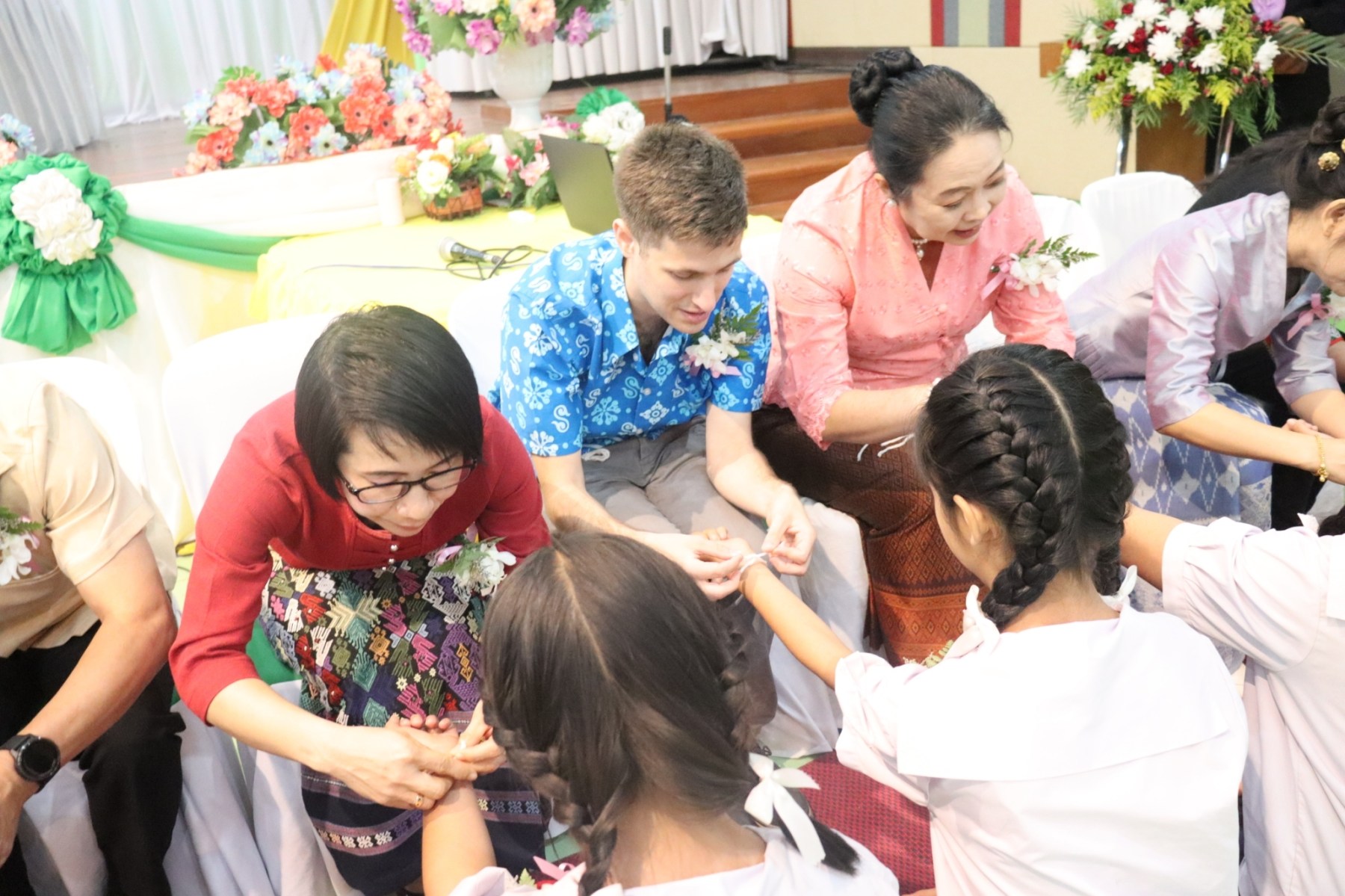
What if you wanted to show even more respect to someone? There are pronouns for that!
There is Naai นาย (Mr.) and Naang (Mrs.) นาง. Nameplates at my counterparts’ desks use naai and naang before their full name. One can also use the pronoun khun คุณ which translates to ‘you.’ However, khun can also be used as a polite honorific and doesn’t only translate to you. As volunteers, we call the Peace Corps staff khun with their name, and the Thai staff do the same with us. Therefore, Peace Corps staff call me Khun Michael.
Additionally, if you book reservations in Thailand, they will most likely address you as khun to be respectful. My mom experienced this firsthand when she came to visit me. Her booking confirmations addressed her as Khun Lisa. Using khun is another cornerstone of Thai culture. Lastly, there is the word a-jaan อาจารย์ (literally lecturer or teacher) which is a very respectful word for teacher. It is often used in universities or for guest lecturers. When I am in the local community, community members will occasionally call me a-jaan. Every single time they call me this, it melts my heart for how much respect they demonstrate towards me as a YinD volunteer.
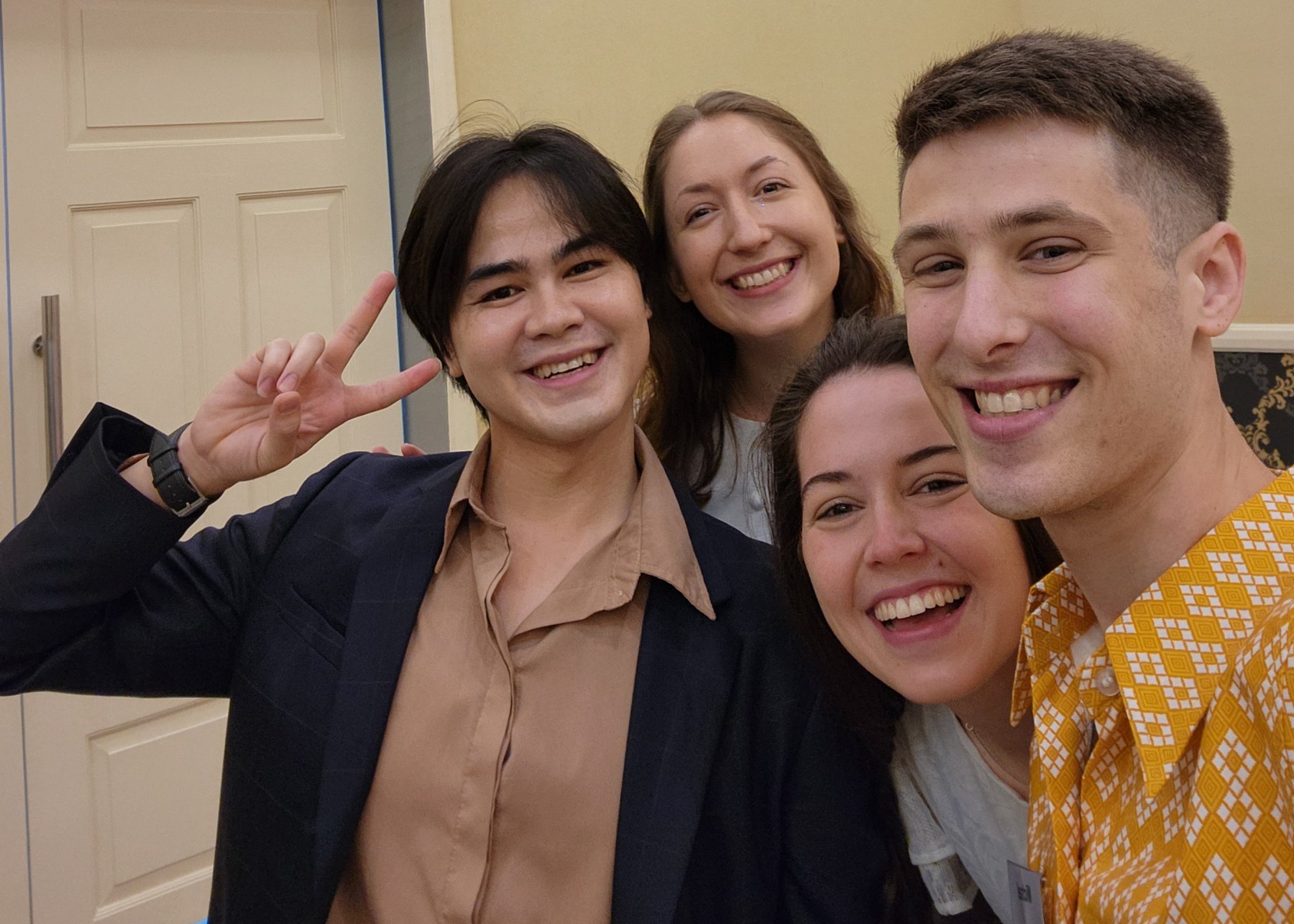
If you want an even more formal version of you, one could use tâan ท่าน. This is often used with highly respected people or monks. For example, I use tâan with my Nayok (mayor) or when speaking to monks.

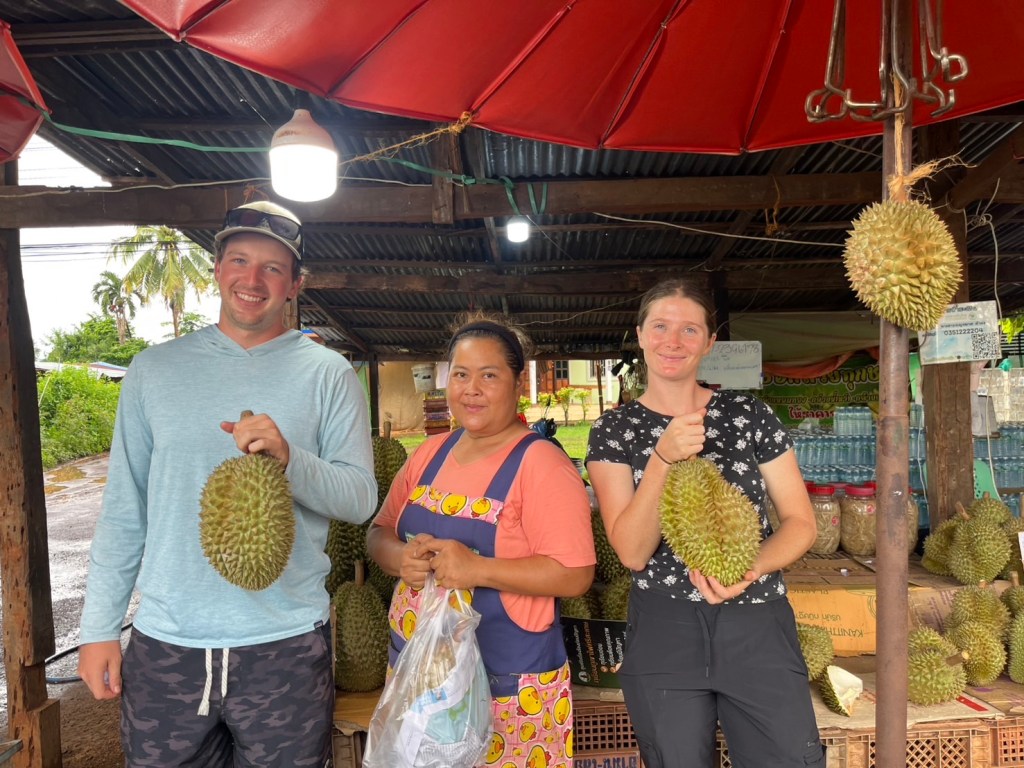
Let’s look at a scenario together. Let’s go shopping at the market! Suppose our vendor is a female. We will go through various ages to see what I would call her. I may use yaai ยาย (literally, grandma) for someone my grandmother’s age; I would use mâe แม่ (literally, mother) for someone my mother’s age; and I would use náa น้า (literally, Auntie) for someone younger than my mother but too old to be my sibling. I also pair these with khun if I want to show more respect. Lastly, I would address the vendor as pîi if they are my older siblings’ age and nóng if they are younger siblings’ age. In America, it is strange to call strangers ‘mom’ or ‘dad’ (pôr พ่อ) but it is very common in Thailand to build a sense of community. The vendors often call me lûuk (literally, child) demonstrating that they view me as one of their own children.
That’s a lot of options on how to address someone! Let’s look at a couple more pronouns together and then we will summarize and draw conclusions.
Rao เรา is the pronoun for ‘we/us.’ Kao เขา is a gender neutral pronoun used for both ‘him’ and ‘her.’ Pûak kao พวกเขา is the pronoun for ‘they.’ The cool thing about using pûak is it can be paired with almost any other pronoun. Thus, when I address a group of kids, I may use pûak nóng.
***
Thailand is a high context culture and has specific words for many types of situations and relationships. Thai has pronouns for regular conversations, intimate relationships, formal settings, religious settings, and everything in between. For example:
Some pronouns in English: I, me, you, he, her, they
Some pronouns in Thai: pǒm, chán, di-chán, mâe, pôr, lûuk, pîi, nóng, khru, a-jaan pǒr-or, tâan, nǔu, guu, so on and so forth.
Not only are these pronouns in Thai, but they are honorifics to show respect or intimacy in a relationship.
When I watch TV, I turn on subtitles in Thai for extra practice reading. It is amazing to see all these pronouns in action in contexts I generally do not encounter in daily conversations. If I come across a pronoun, I don’t know yet, I have time to pause the TV and take note to ask my a-jaan (Thai teacher) during our next tutoring session. Frankly, there are an abundance of pronouns I haven’t even mentioned yet – I’ve only scratched the surface!
There is incredible depth and nuance in Thai culture, which has taught me another way of demonstrating love and respect. The words we use express our emotions towards other people and the relationship we have with them. As Americans, it can be frustrating to receive the answer ‘it depends’ when we ask which pronoun to use. In my opinion, using Thai pronouns is incredibly nuanced, but not difficult. Others may see the abundance of pronouns and be overwhelmed with the quantity of options. After all, we don’t want to culturally offend anyone or accidentally distance ourselves in a relationship. Nonetheless, it forces me to look inward and ask myself what kind of relationship I have with every single person. I believe using Thai pronouns is a masterclass in a method to building positive relationships.


 Sticky Rice
Share your thoughts