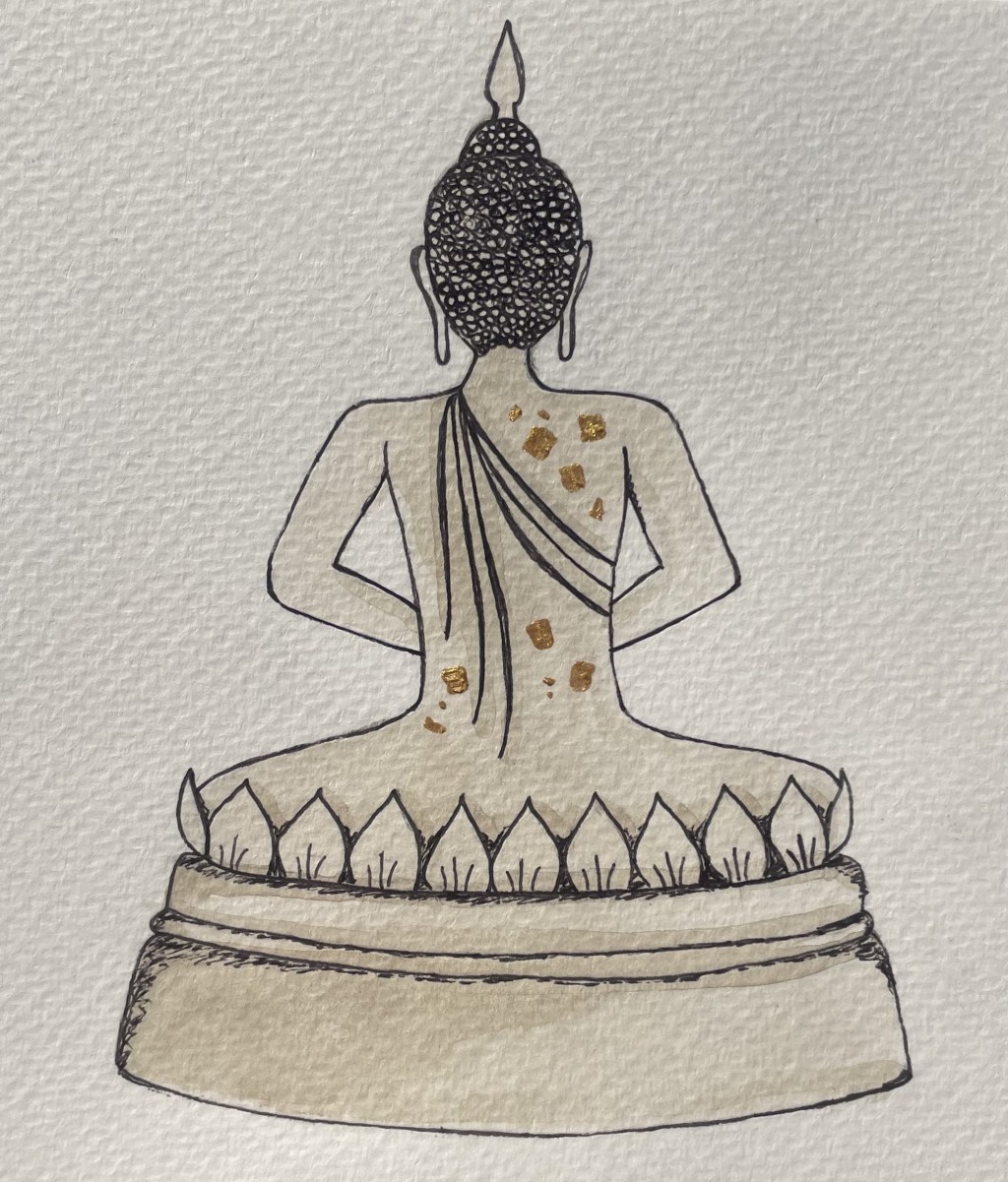
Snake Snake Fish Fish is an ongoing series based around Thai idioms/phrases/colloquialisms, written about and illustrated by Cloé Fortier-King and guest contributors.
GUEST EDITION: This week, Michael Swerdlow is the contributing author of the Snake Snake Fish Fish column.
Michael Swerdlow, 135 YinD
One of the best aspects of service is the opportunity for local travel with our host families, counterparts, and Thai friends. We get to experience the culture through the eyes of a local, helping to ease the stress of unintentionally embarrassing ourselves due to a lack of knowledge of local norms. We travel with our very own personal tour guide, able to receive the inside scoop of relevant history, traditions, and any other information to truly appreciate the gravitas of where we are.
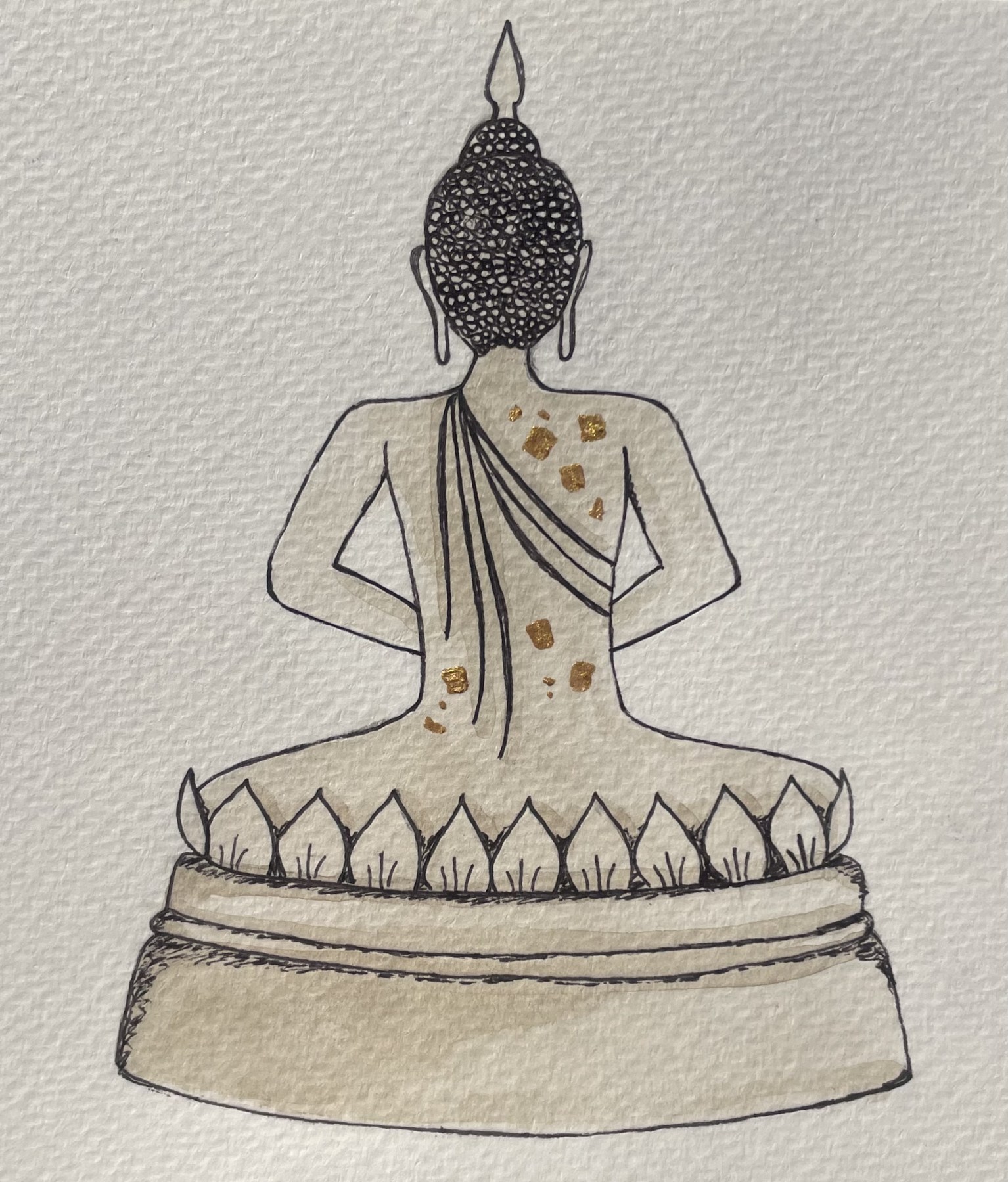
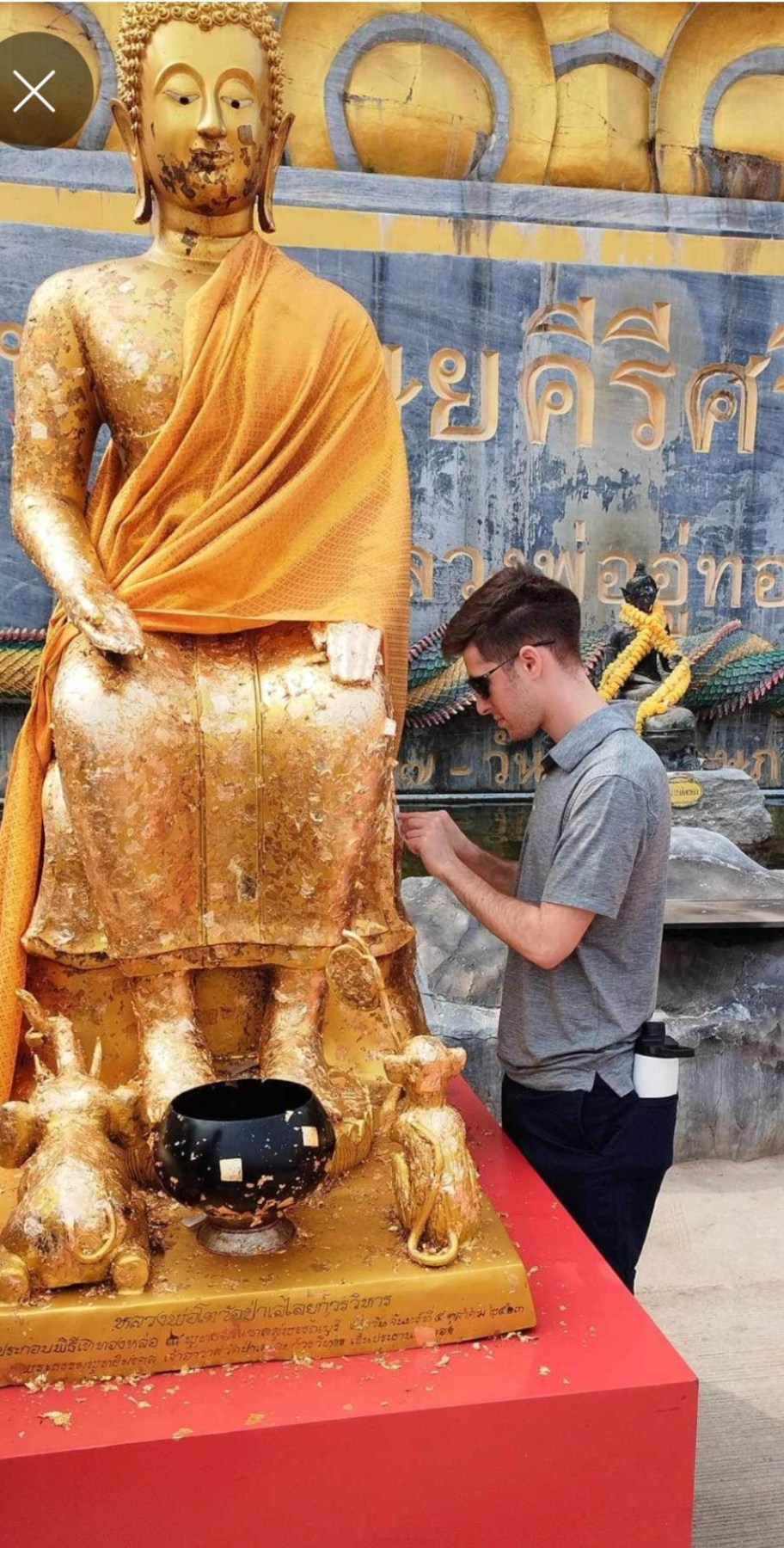
Throughout my service, I have enjoyed all the local travel I have had the opportunity to take with my counterparts. One place I enjoy traveling to is the temples, especially because I have been able to take advantage of my personal tour guides and ask questions about the murals inside the temples, the meanings of chants, and all things temples. Seizing the opportunity to see Thai culture through the eyes of a local, rather than a tourist. One of the practices I instantly fell in love with at temples is ปิดทองหลังพระ (bpit tong lang pra: to put gold on the Buddha’s back).
Thailand has a tradition of sticking gold leaves on statues of the Buddha. The custom was explained to me as such: Gold is a sign of prosperity and eternity. Thus, the practice of sticking gold leaves on the Buddha is a method of making merit to seek eternal prosperity and closeness with the Buddha’s teachings. For the Buddha to be complete, the entire Buddha must be covered with these gold leaves. Only sticking gold on the front of the Buddha (the part everyone can easily see) would result in an incomplete Buddha. Sticking gold on the Buddha’s back (where no one will be able to see) is equally important and has resulted in the idiom, “to stick gold on the Buddha’s back.” The idiom means to do good deeds without seeking recognition or praise but because of virtue.
Like all the Thai idioms, proverbs, and colloquialisms in the column, ‘Snake Snake Fish Fish’ bpit tong lang pra is more nuanced in Thai culture than a simple translation to English. You can see this practice in action in many facets of Thai culture. Whether it is the practice of naam jai, greeng jai, the pii/nong concept, or other Thai customs, this idiom is engrained in Thai culture. Doing the right thing because it is the right thing to do. Students help teachers pass out papers or erase the whiteboard because of bpit tong lang pra. Pii’s look after nong’s because of bpit tong lang pra. Children lend a helping hand in house chores because of bpit tong lang pra. I have first-hand experience of parents, teachers, and other care providers actively teaching kids the importance of this idiom to Thai culture.

I instantly connected with this idiom when my host family took me to a temple and educated me on the practice. I have always strived to live by this philosophy throughout my life. When I started my research on what country I wanted to serve in the Peace Corps, I instantly fell in love with Thai culture, always feeling this strong draw to the Thai customs that maintain social harmony and build strong relationships. Bpit tong lang pra is a continuation of everything I have learned in Thailand so far.
Who knows what my personal tour guides will teach me next ….



 Sticky Rice
Share your thoughts