Virginia L. Jackson, 134 TESS
When I accepted the offer to serve in the Peace Corps, my friends and family often asked what prompted this. I’d usually frame it as some combination of a desire to be of service—to find that sweet spot where my skill set meets a need in the world—and a desire for a personal reboot. My nest was newly empty and I felt like I needed to recover who I am beyond the roles I’d been playing: wife, mother, teacher, daughter of aging parents. The prospect of a solo journey to a faraway place was compelling.
In many ways, I feel that I’ve met those two goals, though I have not yet completed my service. But there is another beautiful and unforeseen outcome; I have rediscovered the joy of friendship. I recently returned from one of several English camps I helped out with alongside three other volunteers, and I am enamored. It was all the laughter, spontaneity, and intimacy of a tween-age slumber party, but with people whose pre-frontal cortices are fully developed. They brought a wealth of perspectives and life experiences that enriched the conversations and connections. We told each other our life stories, our tender wounds, our hopes, and our fears. What allows for such genuine companionship? Is it just circumstances? Are PCVs more social than the average American? Maybe this is normal for people who are not actively parenting and I just forgot? Raising my children was an unparalleled privilege and joy in my life, and I wouldn’t change a thing, but I am now realizing how much I missed broader social connections.
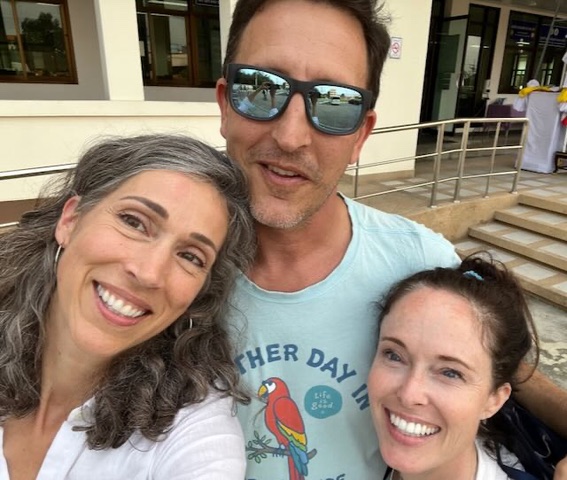
Staging and PST (pre-service training) felt like freshman orientation at college. We’d all been plucked out of our familiar ruts and dropped into the vast unknown at exactly the same point in the space-time continuum. Everyone was off-balance, saying yes to invitations and overtures, approaching each encounter with curiosity. We were vulnerable. We found our people. After site deployment, we’d experience long periods of social and geographical isolation punctuated by brief, intense, shared experiences. At conferences, English camps, and while traveling with companions during breaks, people were hungry to share, listen, laugh, commiserate, and commune. Our loved ones at home listen to our stories but ultimately cannot truly relate in the same way. So, yes, the circumstances lend themselves to fast friendships.
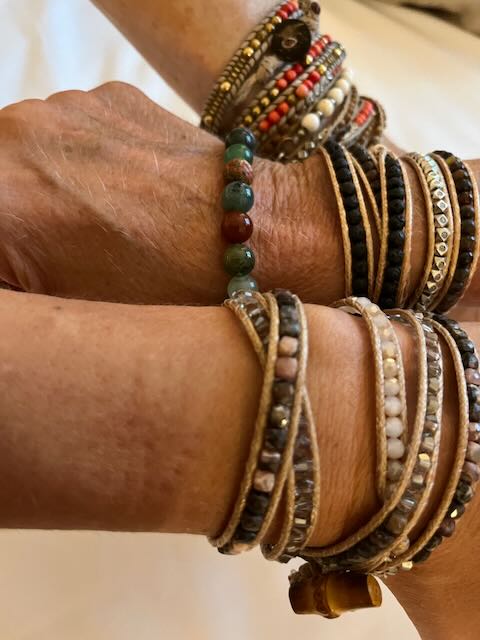
I also think PCV’s are special, if I do say so myself. A close friend of mine once said that anyone who is in the Peace Corps is a little off, but I’d say in the best of ways! We’re people who will think outside the box, who are willing to stretch ourselves and be uncomfortable, who voluntarily walked into a situation in which we are very likely to literally shit our pants at some point. That’s an uncommon level of humility that bodes well for friendship. There’s a beautiful breadth of ages, identities, and backgrounds among us and we have learned from each other.

People ask if I will stay in touch with these beloved Peace Corps friends and the answer is, I don’t know. I wonder that myself. I don’t fear losing contact, because my affection will remain, undiminished, regardless of what happens. We have touched each other’s lives in lasting ways and maybe that’s enough. What I do fear, though, is that the nature of life in the United States will sweep me back into a frenetic, task-oriented, numbing kind of life that leaves little energy for friendship. I’m worried that even if I want to connect, others won’t be in a headspace to respond the way a volunteer does. After this experience, that would feel like an unbearable loss.

To my kindred spirits, my fellow soldiers for peace, thank you for seeing me through bouts of self-pity and doubt. Thank you for your astounding generosity, strength, and humor. At times, I was running on empty and could only ride in your tailwind. You are gems. You are rockstars. You are beacons of light and humanity in a world that can be so cruel. The tagline that made me dive into this venture wholeheartedly said that Peace Corps volunteers “work for world peace one friendship at a time”. Thank you for reminding me of the power of friendship.



 Sticky Rice
Share your thoughts