Happy Halloween! This month it felt appropriate to have our Sticky Rice Writing Staff share their experiences with the unexplainable since landing in Thailand. As Teresa Derr wrote in her most recent installment of “From the Archives”, “Every part of Thailand has different ghost stories and traditions that have been passed down since long before the Peace Corps even came to Thailand. Reading about them is one way to feel connected with current and past volunteers.”
Teresa Derr, 134 YinD
My favorite ghost tradition that I’ve encountered in Thailand is the practice of ‘Feeding the Ghosts’ during September. For a couple of weeks during a specific Lunar Month (the 9th, if I’m understanding my Thai tutor correctly), the gates of hell are opened and the wandering spirits come to find food at the Wat (temple). On the first and last nights of these weeks, everyone goes to the Wat at 3:30am, bringing platters of food: rice, fruits, kanoms, greens, meat, vegetables, bugs, and anything else Thai people might want to eat.
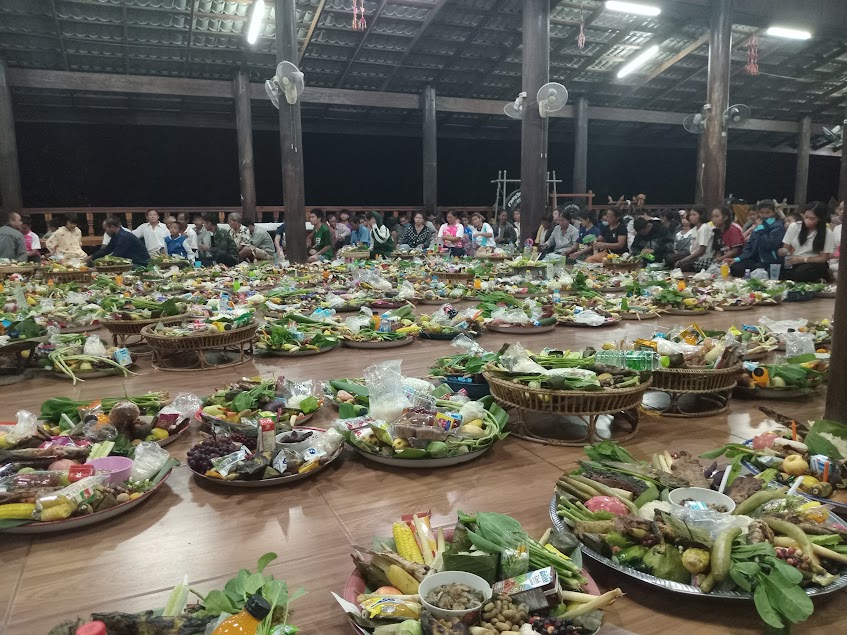
After a short ritual service led by the monks, they and some community leaders go around to each of the platters and pick out the offerings of money and some choice foods to be donated to the Wat. Once they are done, everyone swarms the platters, stuffing the food they want to eat into their bags (the kids dive for the kanoms and milk boxes, the grandmothers snatch up all the bugs). In fewer than five minutes, most of the platters are picked clean of everything except the rice, the greens, and maybe some of the meat that looked questionably old.
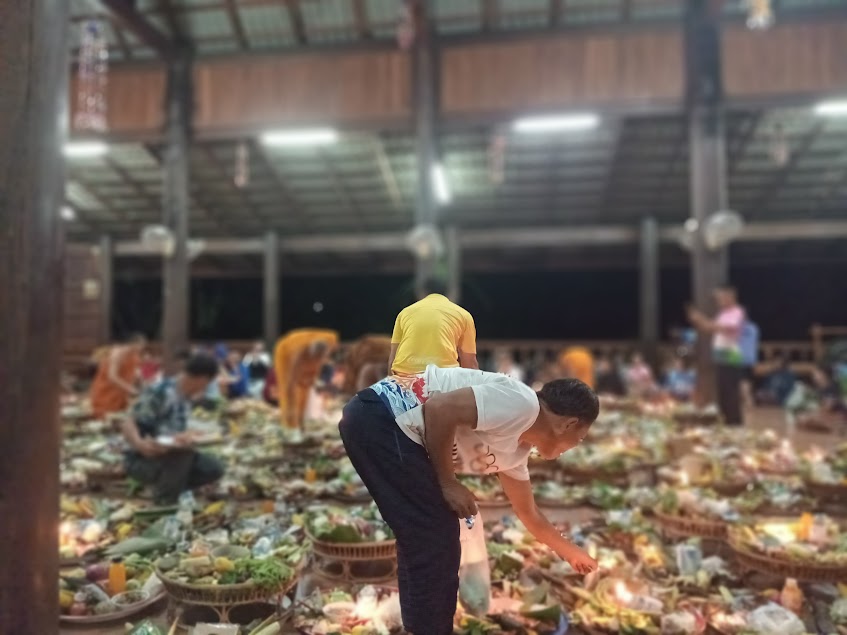

After everyone has picked out the food that they wish to eat from among the platters, the next step is to leave the rest as an offering for the ghosts outside of the walls of the Wat. According to my Thai tutor, everyone calls out for the spirits they wish to give the food to, either calling to ancestors by name or simply to “anyone who comes from hell” (which, in any other context, is a pretty serious insult!) Though I have participated in this ritual ceremony three times now, I have not heard my family do this. We usually just place the remaining food somewhat haphazardly on a banana leaf against the wall, light a candle, and go back home to hopefully catch an hour or two more of sleep before we have to be at work at 7 or 8am.

I’ve really enjoyed participating in this ritual, because it is a fun chance to wake up in the middle of the night and score some tasty snacks/fruit! I don’t believe in ghosts, but I’m glad my community does.
K.D. Norris, 135 TESS
I am not sure I believe in the afterlife; I think life is precious and death is final. But does the “spirit” live on after life? My experience with human spirits is limited, but there have been those few experiences that cannot be easily explained – experiences for another day and another story.
This, however, is a story about dogs – canines domestic and feral, both canis lupus familiars in the Latin. It’s a story about my belief in the spirit of dogs.
My family had dogs when I was young, several of them, and some unfortunately were left behind with friends and family as my father’s work moved us around the country half a dozen times before I was 18. One dog, more unfortunately, was buried by my older brothers and me after he (Joe) was killed on a road near our house.
My wife, TJ, and I have had two dogs in the 30 years prior to our Peace Corps journey. Rastus was a female bull terrier mix who was the sweetest girl ever. We got her as a pup and had her for 15 years before we tearfully bid her farewell and spread her ashes in rural woodlands she loved to run with wild abandon. Adele was a 10-year-old “mini-pin” shelter dog who had a tough life before we adopted her, but carried a loving spirit into our family none-the-less. She never had another bad day in the seven years she was with us, and we mourned her passing by spreading her ashes in a wildflower field near our backyard, a yard she loved to parade around in.
Here in Thailand, our relationship with dogs is different – very different. We have seen many instances of dogs being cared for and valued; some, I would venture to guess, even loved. With our new house we even gained a “yard dog” – Tiger, breed undefined but clearly a dog who has had to defend itself more than once. Tiger protects the house from strangers, two- and four-legged, and gladly accepts a more regular feeding schedule from the visitors from America. I am sure that in some canine afterlife place, he and Rastus and Adele will vouch for our character.

But here in Thailand, there are also many sad dogs and many sad stories. One recently occurred at my school when a dog broke into a loosely shuttered office, one I share with two other teachers. The dog died in the room that night and even after its worldly body was disposed of by our maintenance staff, it continued to leave a reminder with its stench of death. I did not know the dog; maybe I saw him or her but I’ll never know for sure.
One thing for sure, though, is that there are moments, as I sit alone in the office, that I feel a presence. Maybe it is the faint memory of the stench of death, but I think not.
I think I feel the presence of the spirit of a dog who maybe, just maybe, gained a moment of peace in a dry, safe place as the darkness enveloped it.
That’s the way I will remember it anyway.
Kyra O’Connell, 134 TESS
Every year around October, the people in my community celebrate วันแซนโฎนตา or San Donta Day. Variations of this holiday occur throughout the country and may go by slightly different names, however this particular one is commonly celebrated by people of Khmer ancestry in provinces bordering Cambodia like Buri Ram, Surin, and Si Sa Ket.
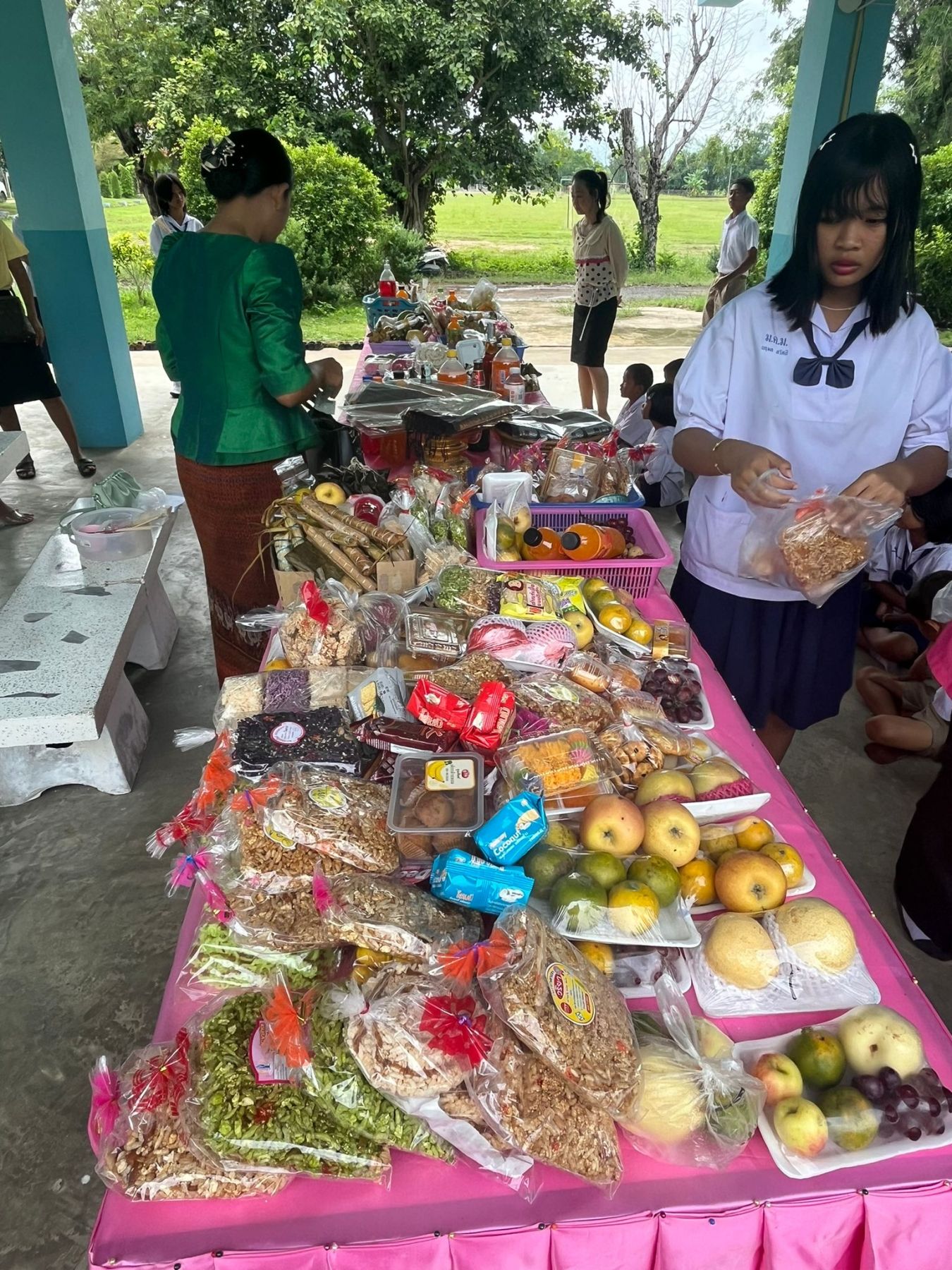
It is believed that on this day the spirits of the ancestors visit their still living relatives and gather to eat the offerings laid out. These offerings range from grilled fish, and sticky rice, to fresh fruits and desserts (kanoms), as well as physical objects like silk scarves and money. I’ve even seen a phone and a lottery ticket added to the pile.
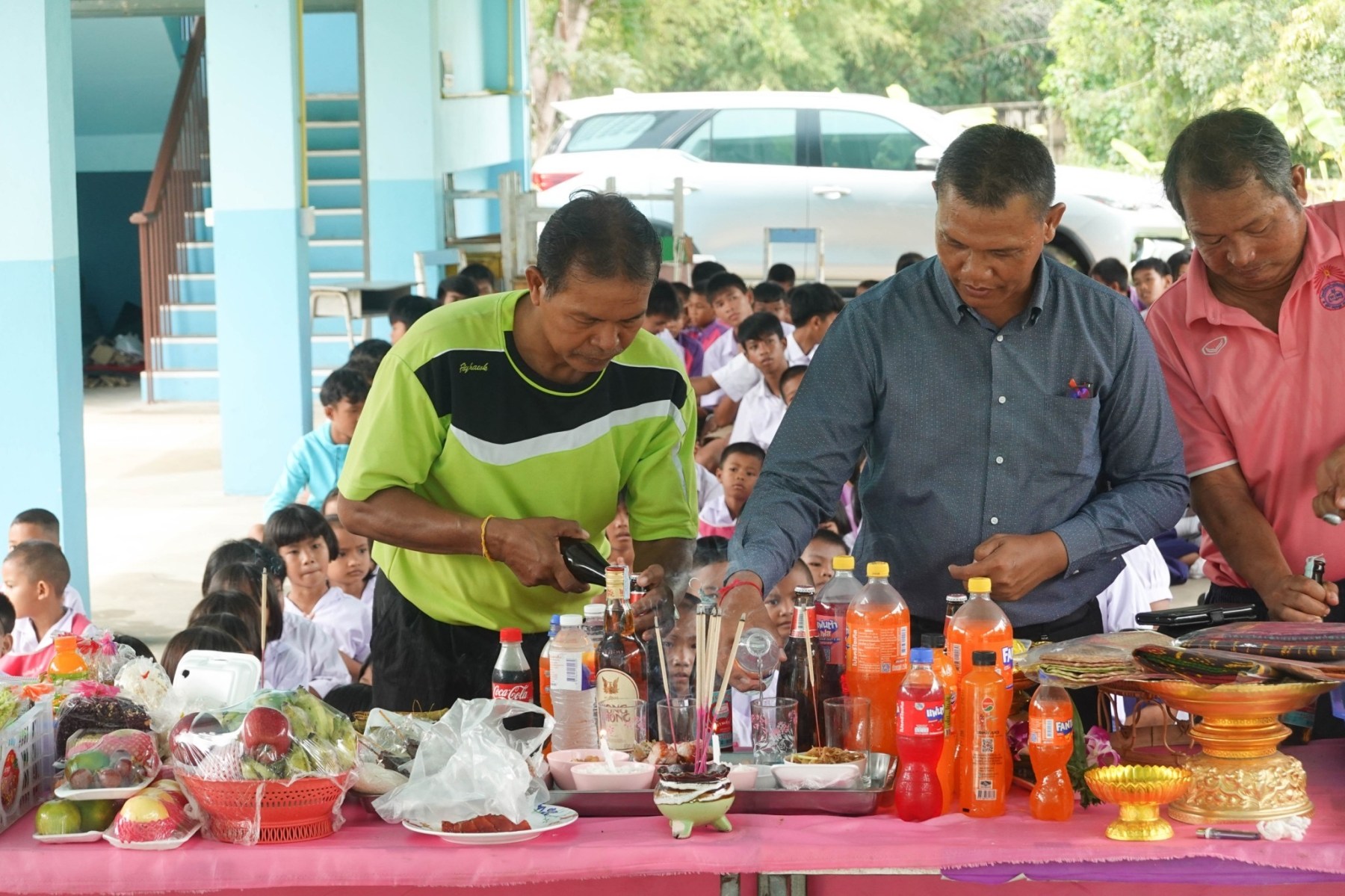
Elders of the group will gather to light incense and pour offered drinks into cups (usually water, beer, and, of course, orange soda). As the elders take turns pouring the drinks they will call out the names of those passed as well as blessings for health, safety, and the like for their family, their voices talking over each other until there’s a cacophony of sound. When they’ve finished then younger members of the group will do the same. Before the ceremony starts they will also light two candles which must not be put out until they burn out by themselves and must be watched over before the ceremony is complete.
This ceremony is often personal to a family but can also be celebrated as a large group gathering. My school held one where all the students brought a bit of food for offerings and then I returned home where my host family also held a smaller one. Doing this ceremony also helps Thai people make merit for their ancestors and create good karma, which is a huge part of Thai Buddhist culture.
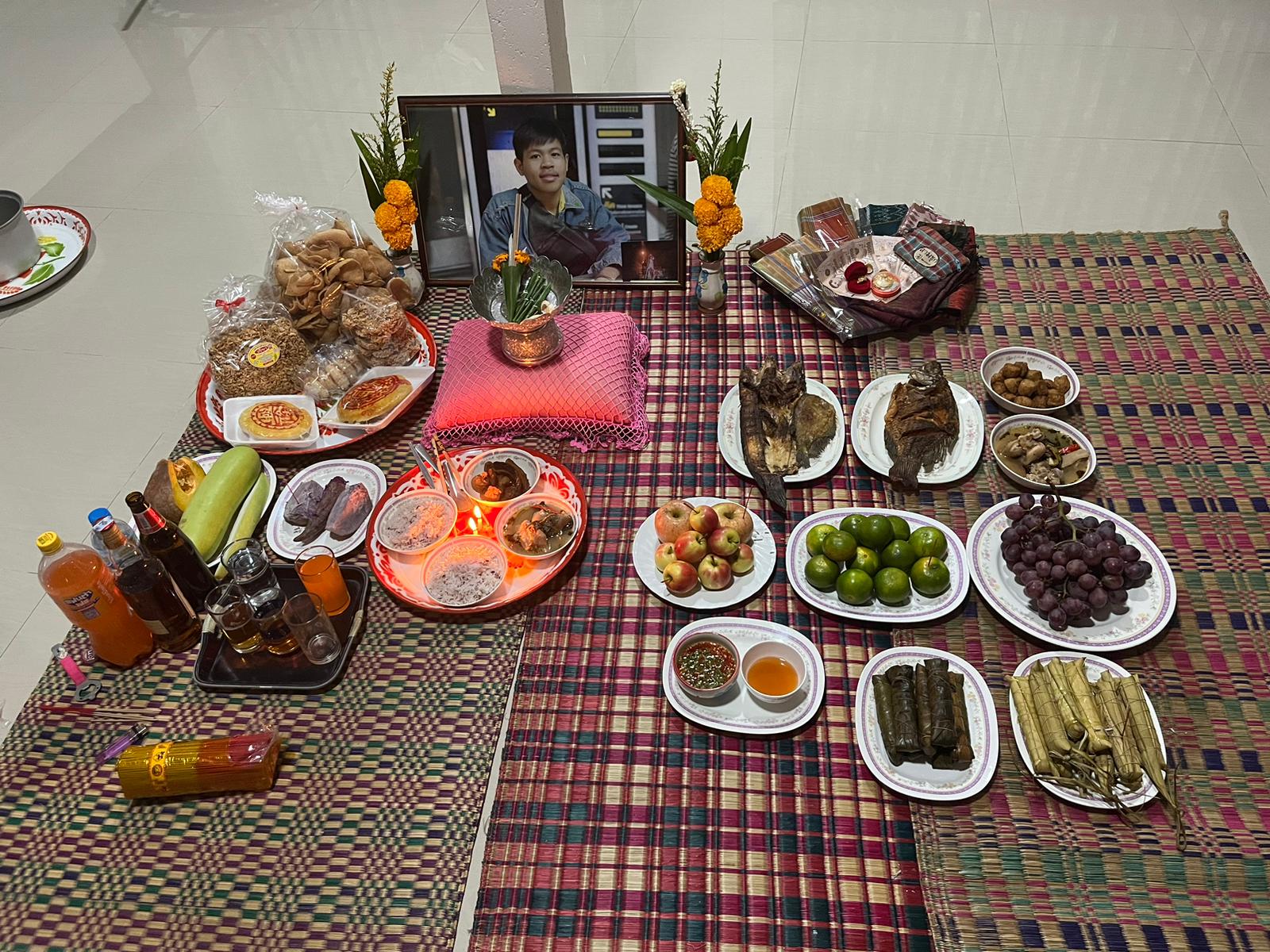
There are many nuances about this day that I still don’t know well despite this being my second year witnessing it, however both times I’ve felt deeply honored that I was invited to participate. It has made me feel greater connection to my Thai host family and also made me reconsider how I might honor my own ancestors once I return to the United States.



 Sticky Rice
Share your thoughts