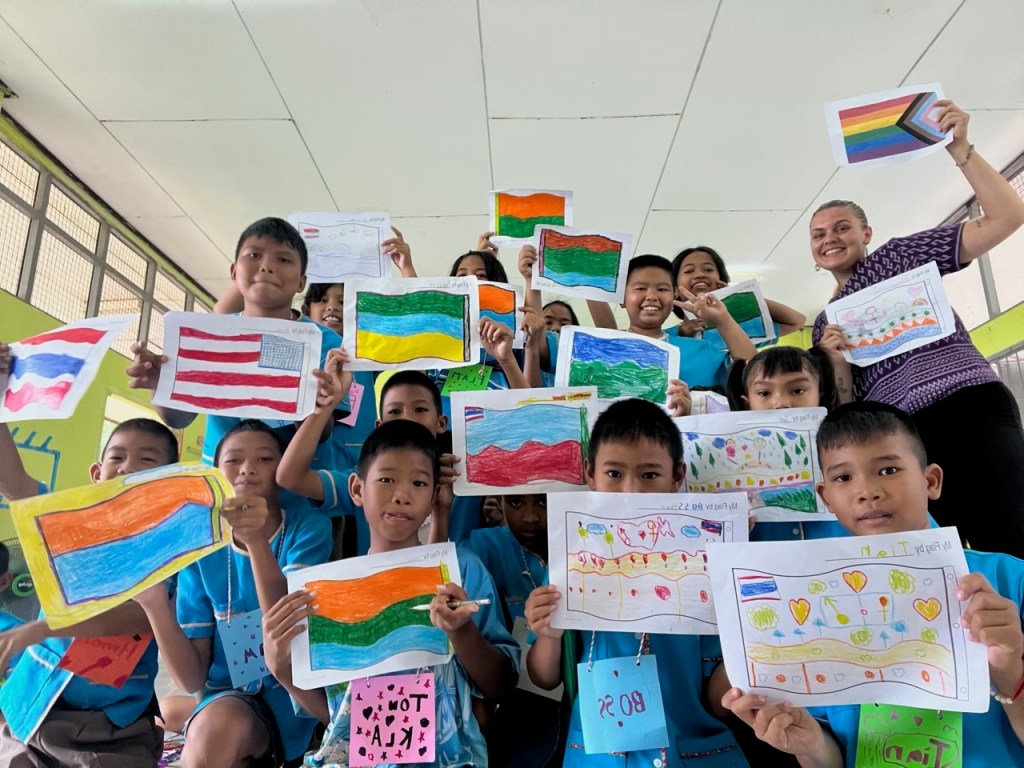
Over the last month, Americans have had the opportunity to celebrate Pride Month, Flag Day, Fathers Day, Juneteenth, and the Fourth of July. Some Peace Corps volunteers used some of these holidays as an opportunity to work on fulfilling the second goal of the Peace Corps: to help promote a better understanding of Americans on the part of the peoples served. We asked volunteers to share their photos and stories from celebrating or structuring activities around these holidays with us!
Raynna Jackson, 134 YinD | Northern Thailand
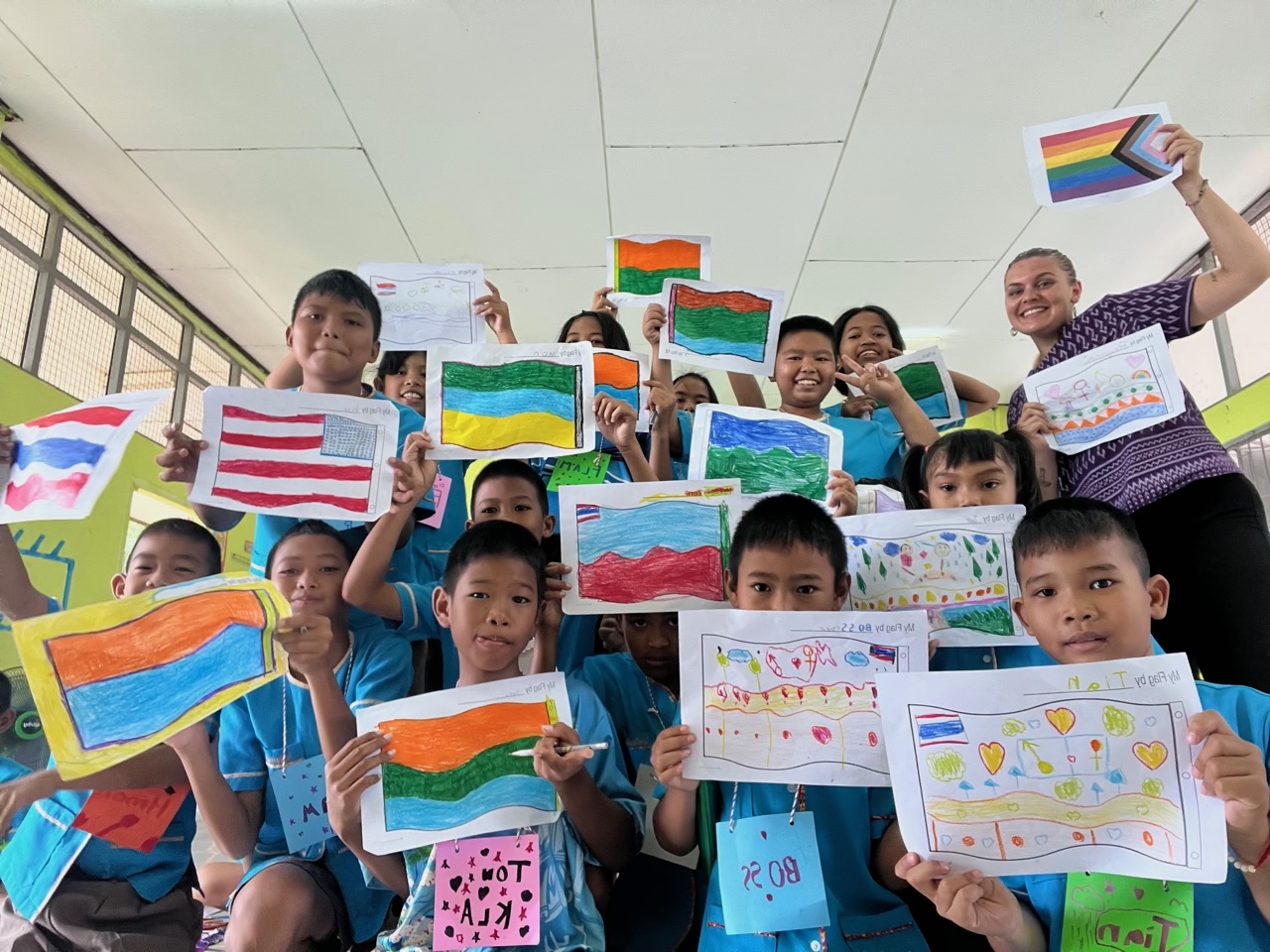
I did an activity making pride flags in celebration of Pride Month. I started by telling the students how in America we celebrate the love and acceptance we have for each other. Then, I showed the students the pride flag and shared what each color on the flag represented. For example, orange means healing, green means nature, violet means spirit and so on.

Afterwards, I had the students create their own flags about who they are as individuals. Some students used the color themes and others drew pictures to represent themselves. Some common themes on their flags were family, water, nature, love, and most importantly, their country, Thailand. Lastly, we had a dance party holding our flags while smiling big because there are so many reasons to be proud of who we are.
Morgan Shupsky, 134 YinD | Northeastern (Isaan Region) Thailand
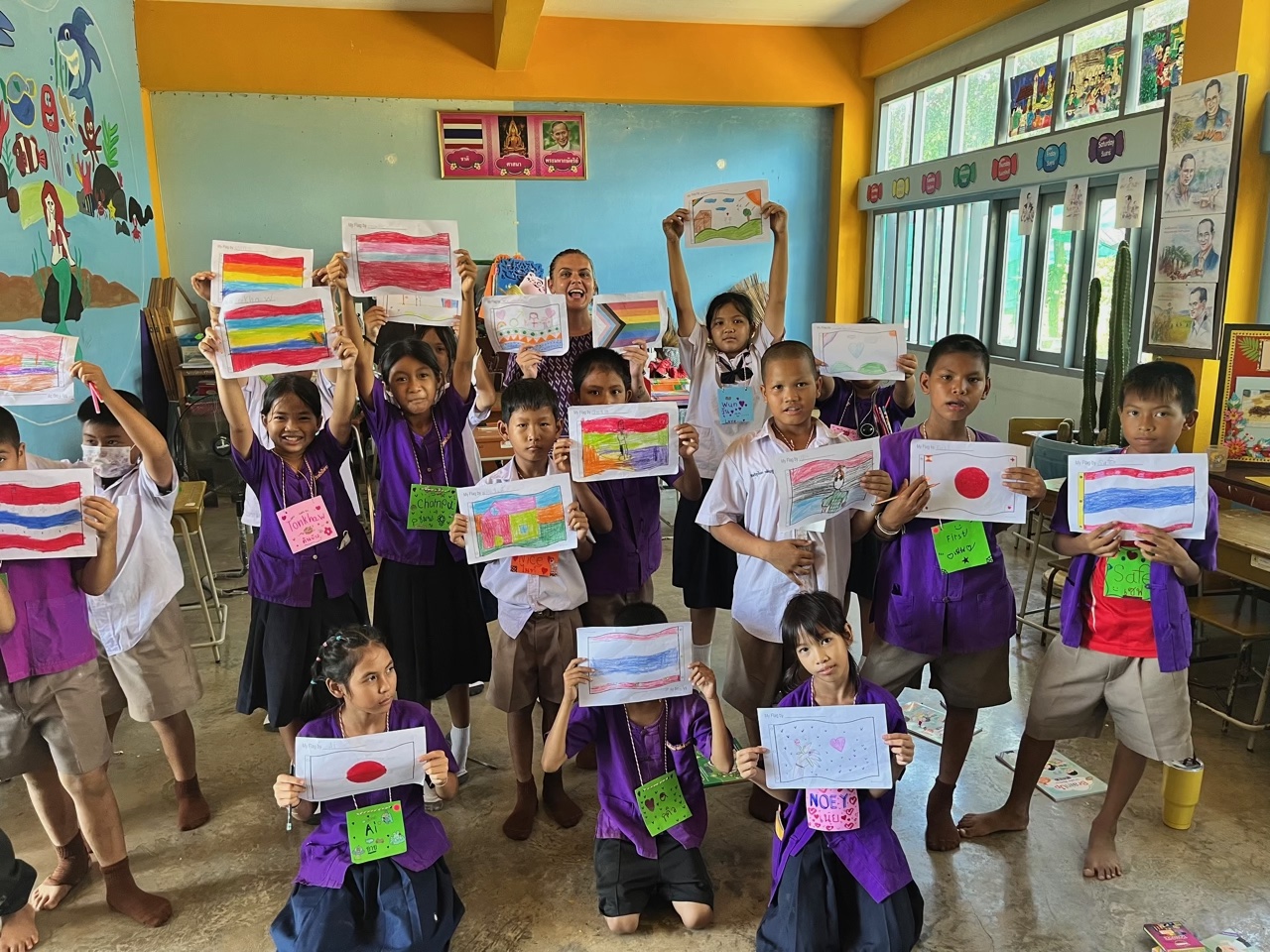
The week of June 19th, I explained to each of my classes that in America we have a holiday to celebrate diversity called Juneteenth. Juneteenth is obviously much more nuanced than this, but given my limitations with the language, I tried to use what I could to discuss a topic that would be understood by my students while pulling from American culture. I went on to explain that America’s culture is a mix of a whole bunch of cultures and that’s what makes the country very diverse in race, religion, food, etc. I then asked the class if they thought Thailand was diverse and the responses were 50/50 with either everyone in the class adamant that Thailand IS diverse or that it’s NOT diverse. In one of my fourth-grade classes that was sure Thailand is NOT diverse, I had a student argue “We’re all the same,” which was followed by a chorus of “Yeah, we’re all the same!” So I went to one student and asked what his favorite color is and he said “see-daeng” (red). I asked the room, “So everyone’s favorite color is red, right?” After going around the room we determined that everyone does in fact like different colors, along with different people, different hobbies, different sports, and they all even have different opinions and ideas. Once we dug a little deeper, we discovered that Thailand is very diverse and is made up of different languages, religions, nationalities, foods, genders, professions, and ages. All of which turn out to be very important because as one of my students pointed out, “We all have to think differently otherwise everything would be the same color!”
This discussion was followed by an activity where I asked the kids to explain their lives to me by drawing. All the kids got a piece of paper, 30 minutes, and very little instruction. They drew things they like, what they want to do, where they want to go, what they want to be when they grow up, who’s in their family, etc. As I pieced the pictures together to make our “diversity quilt” and showed each class how different each of them is, we again decided that everyone being different is way more fun because otherwise all the pictures would be the same and that’d make such a boring quilt.


The following week was our Fourth of July celebration and since my Thai does not yet include vocabulary for talking about revolutionary wars, I summed up the whole concept by saying Britain had all the power and America didn’t like it. I asked the kids, “If only one student in this classroom had power how would everyone else feel? What if when she/he went to buy Thai tea it only cost 10 baht but when all the rest of you went it cost 50 baht?” This one really got to them and they exclaimed with outrage that they would NOT like that. Then we did a flag scavenger hunt where the class was divided into group Britain and group America (pre-war) and since the British had the power, that group got to hide the flags first. This activity got very heated and several debates broke out about whether it’s fair to dig a hole and bury a flag to hide it or not – another good lesson: there’s no rules when it comes to warfare.

We also talked about the meaning behind the American flag and each class had an opportunity to explain to me the meaning behind the colors of the Thai flag, which are the same as America but stand for the different ideals of each individual culture. While this week and the previous week were intended to be fun and creative days, the exchange of culture and ideas that came from them and the respect that was shown across all my classrooms was an unexpected delight of my service thus far.

Kayla Kawalec, 134 YinD | Northern Thailand
I’ve been working on School Mapping with my Bprathom (primary) students for the past few weeks. School Mapping is a simplified version of a Participatory Analysis for Community Action (PACA) tool called Community Mapping which helps volunteers and community members work together to identify resources, areas of interest, hazards, and opportunities for development in their community. I’ve been using it as a tool to introduce or review school related vocabulary and give my students the opportunity to identify areas of their schools where they’d like to see change.

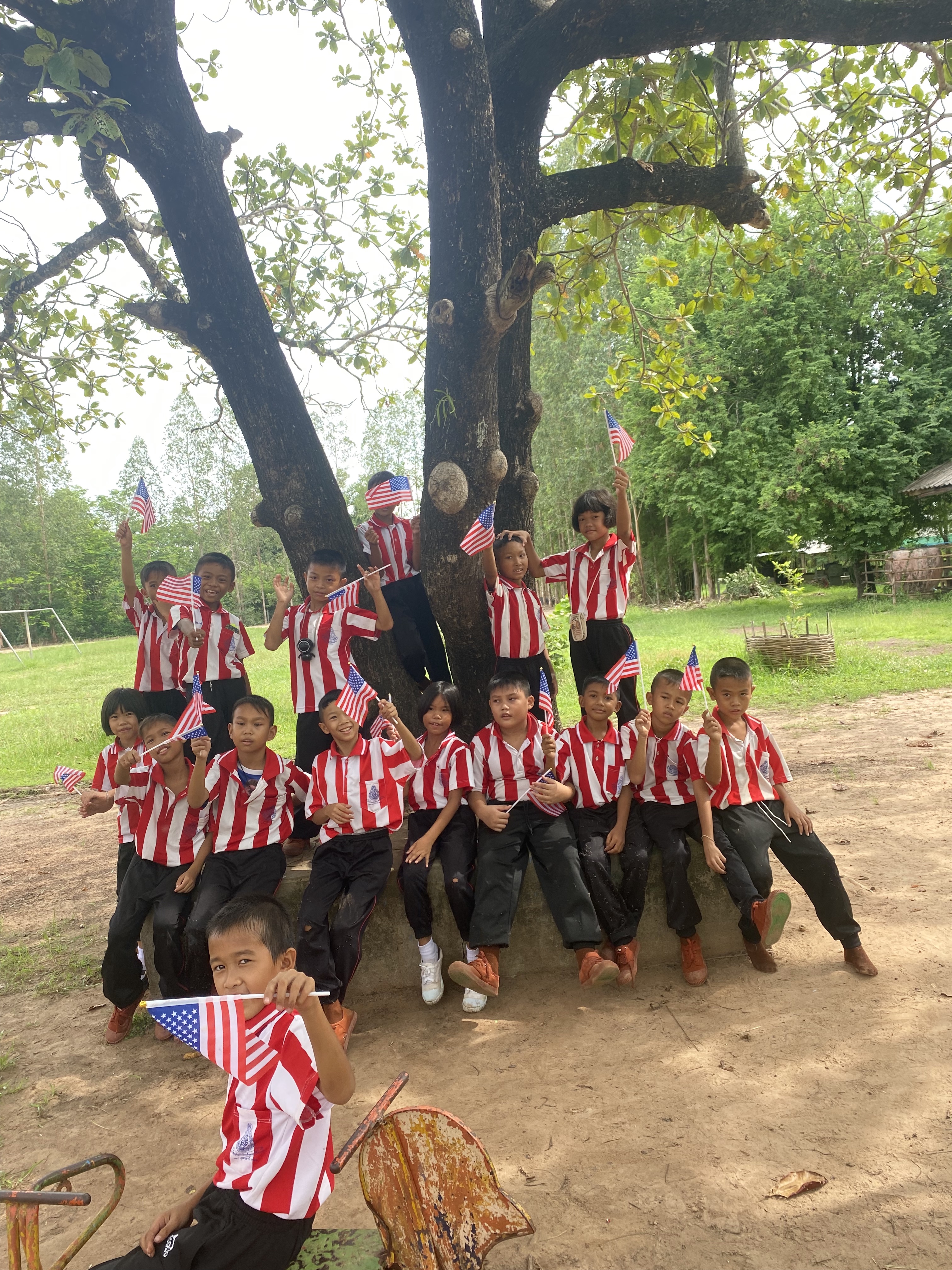
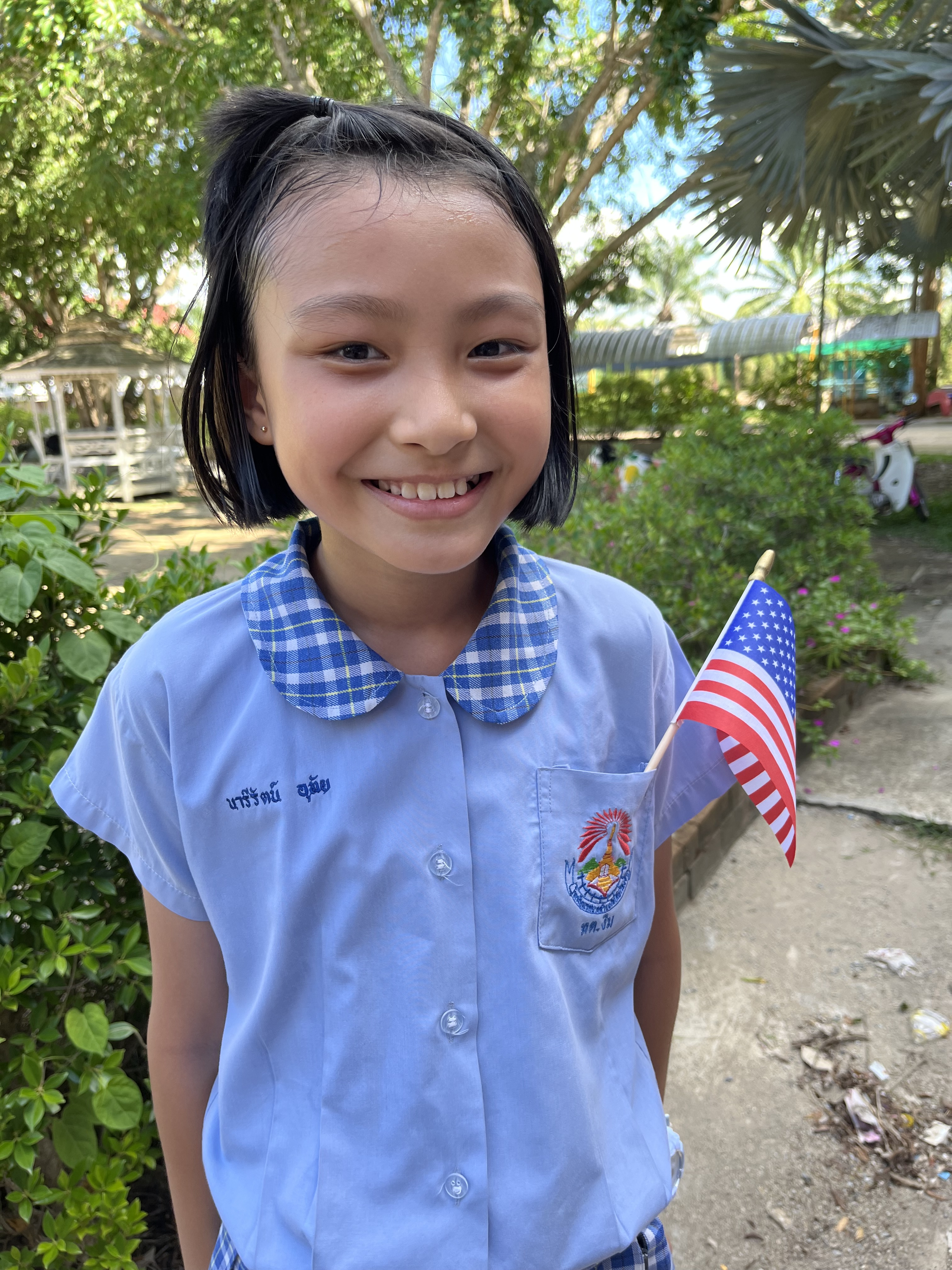
After doing a walk around the school and having the students draw their own maps of their schools, I wanted to find a fun way to wrap up the lesson while tying in the upcoming 4th of July holiday as a final celebration of their work. My fellow volunteer, Morgan Shupsky, inspired me to buy little American flags and I held a scavenger hunt around the school to find them, only using the English names of the buildings as reference. It was a HUGE hit and the kids even indulged me answering some flag-related trivia before tearing off to find their flags and collect their red, white, or blue popsicle prizes.

With my Mathayom (secondary) students, I felt they were ready for a more nuanced discussion including the recent introduction of Juneteenth as a federally recognized holiday. My Thai, unfortunately, is not quite ready for the full scope of that nuanced discussion, so I relied on a YouTube video and good ole Google Translate to help (hopefully) explain the history of slavery in America, the very slow and uneven process of abolition, the eventual, joyful celebration of Juneteenth, and the fact that history is something we write and can have power over. You can watch the video, created by Karlos K. Hill and Soraya Field Fiorio, yourself if you’d like to know more about the history of Juneteenth!

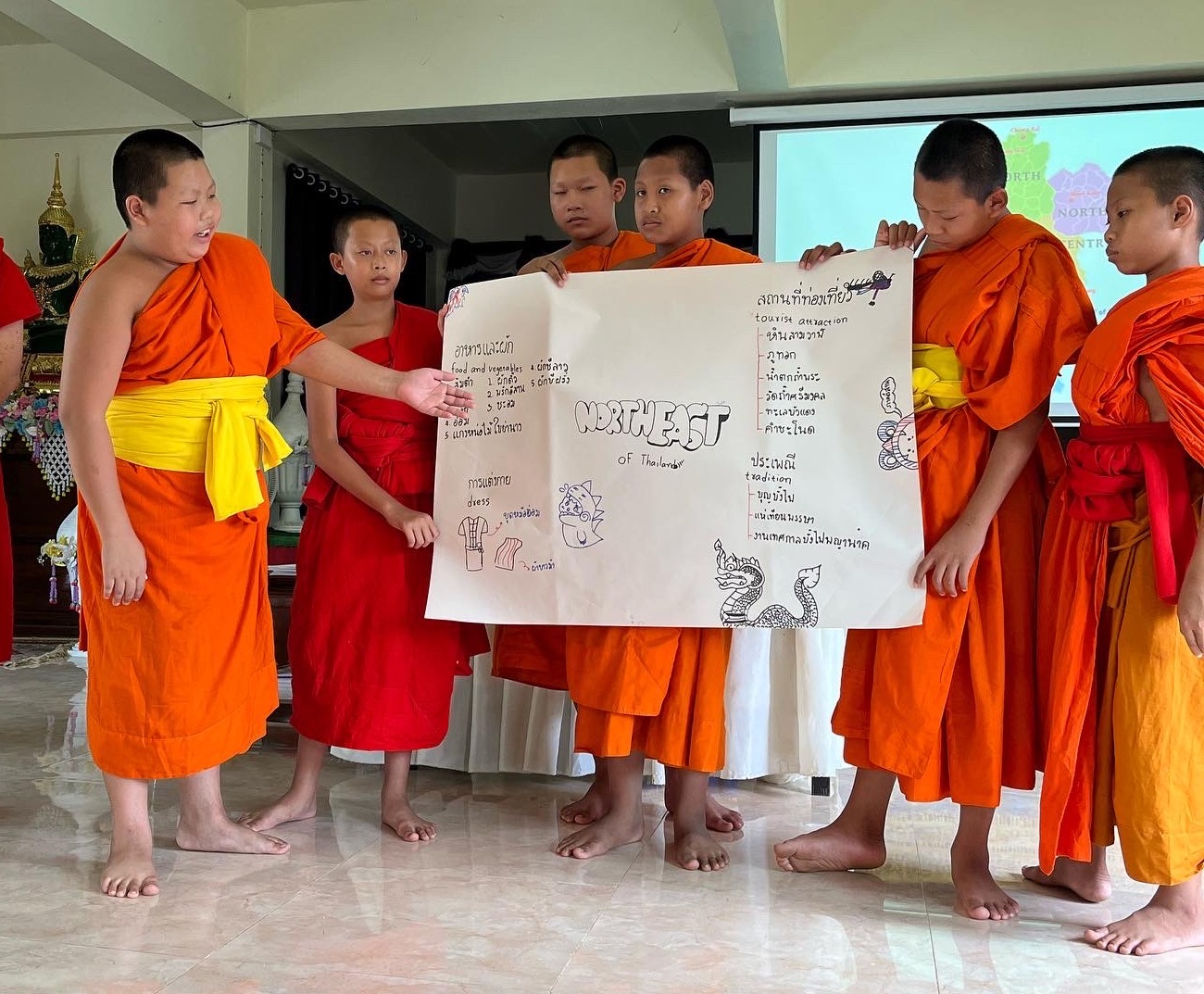
We’ve been working on talking (loosely, again, my Thai can only do so much) about diversity and (thanks to another great suggestion from Morgan) I’ve been using the different regions of America and Thailand to do so over the past few weeks. I replicated an activity we did as trainees, and after showing a slideshow about the regions of America, I had my students break into four groups and present the four regions of Thailand to each other through the types of food, weather, cultural events, clothing, and celebrations unique to each region. This was the perfect segue into sharing the diversity of America through our complicated history with Juneteenth and the hope that in the future we will continue celebrating that diversity and the sacrifices made for it.
Dewey Tran, 134 YinD | Central Thailand
In general, I have 2 hours per class so on the first hour I just focused on showing them the documentary, The Flagmakers (only 35 mins), videos of people singing the Star-Spangled Banner and America The Beautiful at different events such as the Super Bowl, presidential inaugurations, etc., and finally, videos of America’s famous places with America The Beautiful playing in the background.

In the second hour, I focused on talking about the documentary, explaining the two songs, and finally, teaching the symbolism of the American flag; for example, why there are 50 stars and 13 stripes, why the 13 original colonies are all from the east coast, etc. I am from Colorado, so I also shared facts about the state, like Colorado’s statehood order and nickname. For the last 5 or 10 minutes, I showed them my passport, and explained it, then gave some sneak peeks into my life back home (sharing about the Disney cruise I went on was a hit!).
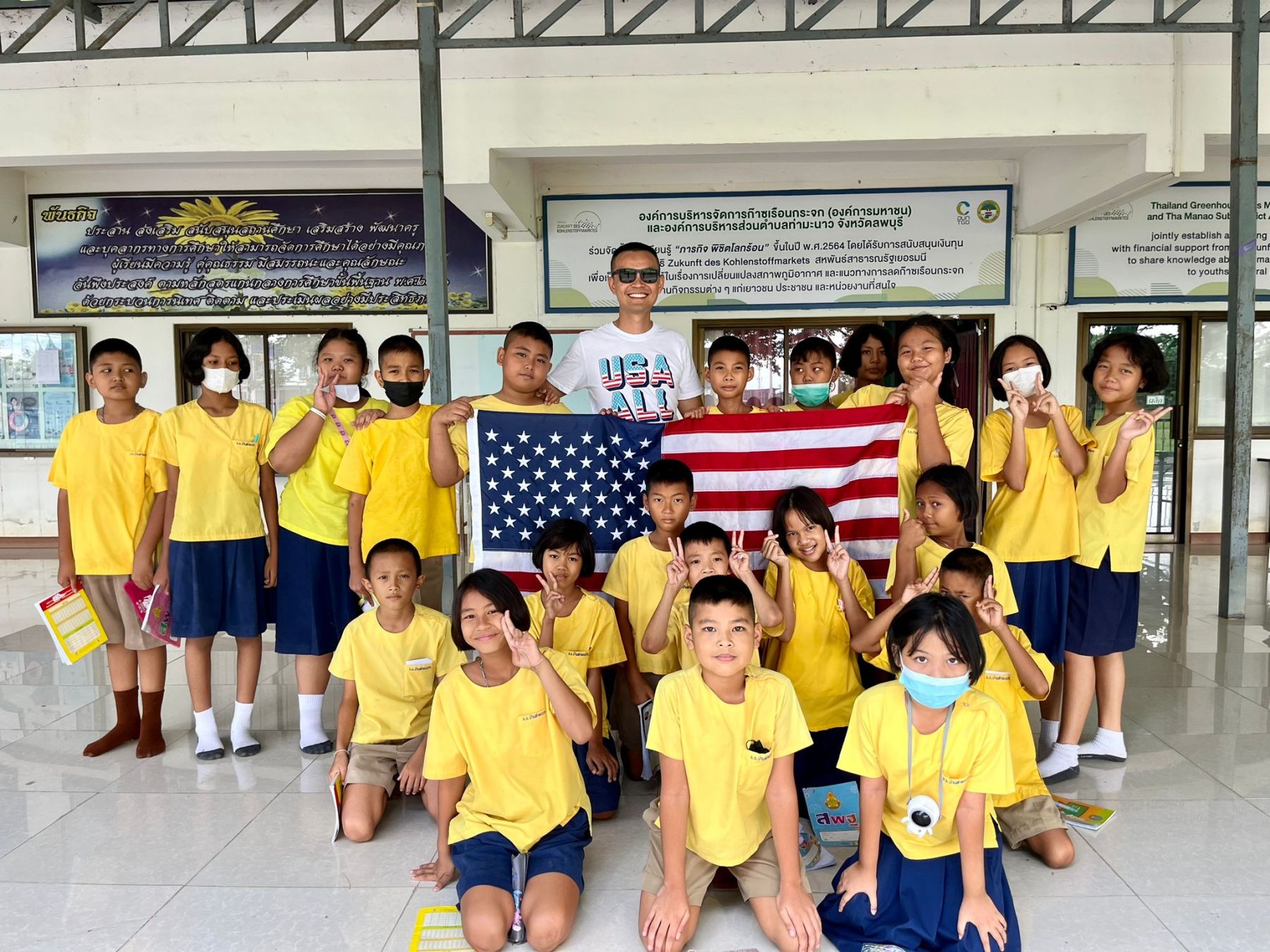
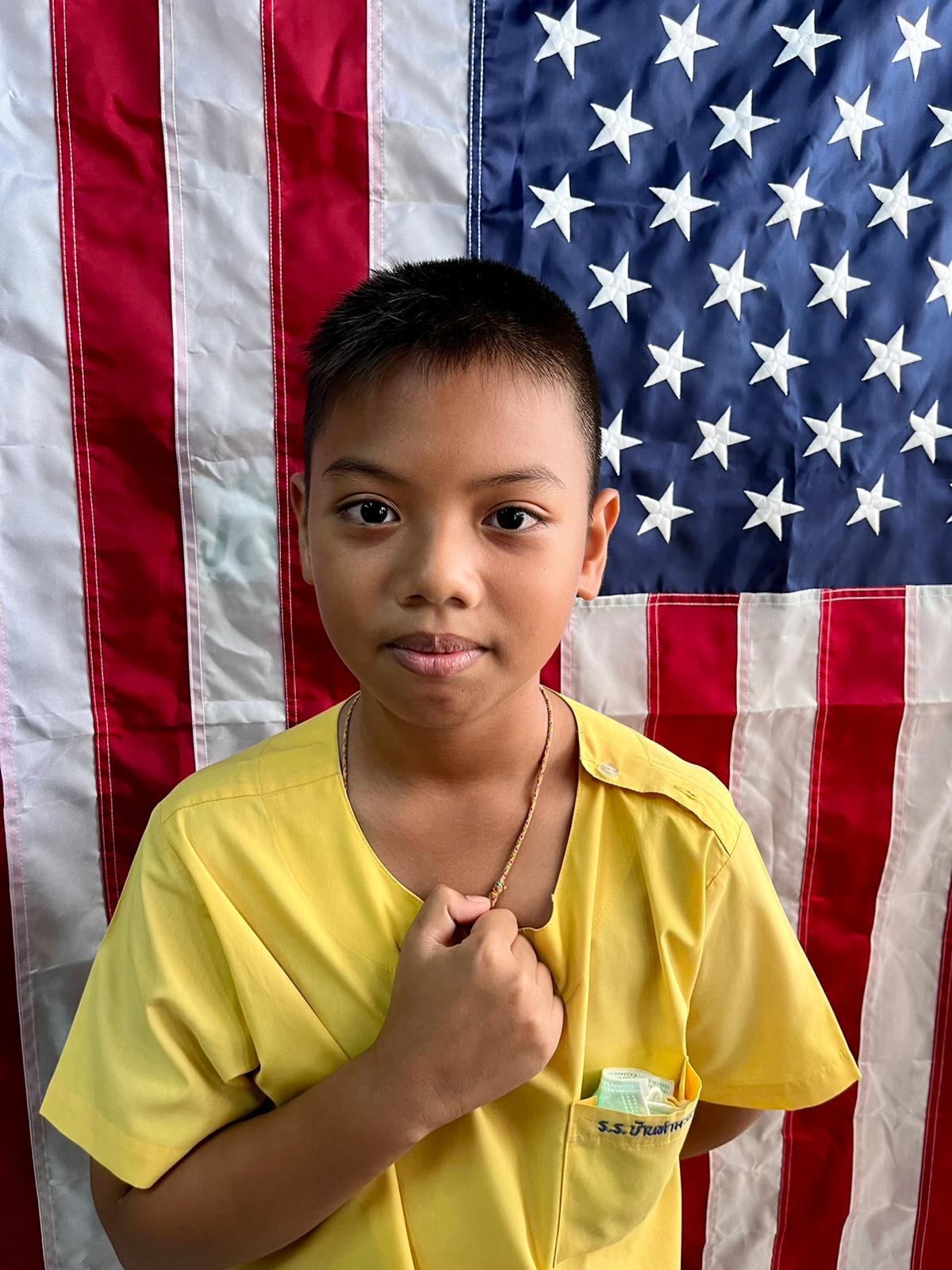
Then after class, I asked for an extra 15 minutes to take photos of the kids in front of the flag. I’ll print the photos out and give them as souvenirs.



 Sticky Rice
Leave a reply to jakrii Cancel reply