
This is one volunteer’s experience and perspective regarding service following the acute phase of the Covid-19 pandemic. For more information on the current Covid-19 situation around the world, please visit https://covid19.who.int/.

Morgan Shupsky, 134 YinD
Welcome to Thai Fact Check, a regular column where I will use my very personal experiences to fact check everything that you may or may not want to know about Thailand. I’m Morgan, a YinD volunteer serving in the Udon Thani province in the Isan region of Thailand. I’ll be here for two years and no matter how many new hobbies I try to pick up I still have copious amounts of free time so I’m adding this column to my to-do list! On a weekly basis I get questions from friends and family back home to fact check things they’ve heard or want to know about Thailand:
What language do they speak in Thailand?
Do Thai people eat red meat?
Is it true there’s elephants walking around everywhere?
Are there spiders in Thailand?
What exactly does a Peace Corps volunteer do?
Before I was a volunteer I asked a lot of the same questions, so I’m going to bring all of these questions, pre-conceived notions, and general wonderings to this column so we can all be educated (and entertained) together!
A lot of people are curious about the state of Covid-19 in Thailand, and since I was quarantined at home with Covid while writing this article, I figured this was a great topic to broach. This is my second time testing positive, but my first time in Thailand – apparently, this virus is on a world-wide tour. If you want to read more about the Peace Corps Thailand experience post-Covid you should read my fellow volunteer, Bradford’s article, as he was another bored, quarantined sufferer and he wrote about the more general experience of all volunteers regarding Covid so far. I’m going to focus more on my personal experience and use it to introduce my community and my experience at my site so far!
In Isan, just like in the rest of Thailand, meals and food are a huge part of the culture. It’s customary for everyone to eat meals together and sticky rice is the gem of Isan, which you eat with your hands out of a shared gra-tip (the bamboo container that stores the rice). Another huge part of Thai culture is sharing, and I mean sharing everything. It’s rare for someone to finish any kind of kanom (snack), fruit or food of any kind on their own without offering it to others to share. The very culture of Thailand is a perfect recipe for Covid to spread like wildfire around here, wildfire fueled by gra-tips and kanoms.

I live in a house with a Thai host family, which includes my one-year-old host brother and my very pregnant host sister, so I’ve taken quarantine very seriously. Given that I spend all of my time surrounded by other people and have not eaten a single meal at my house by myself ever, it’s been quite a severe change. All volunteers have completely different experiences with their host families and I am so incredibly lucky to have a family who has completely taken me in as their own. When I asked them if they’d be more comfortable if I quarantined at the hospital (given the immunocompromised baby and pregnant woman in the house) they looked at me like I asked if I should quarantine in the chicken coop and asked, “Why would you do that?” They reassured me that as much as my host-nephew and sister are family, I am too, and they had no intention of me going anywhere else. This is so indicative of the Thai culture of viewing everyone as family. It’s so common for people to introduce other people as their family that if I was to try to make a family tree it would easily be a mile long. When I met new people, I used to ask if they were really family or if they were “family” and people always thought that question was so weird because they don’t see the difference. If they say you’re family, you’re family.
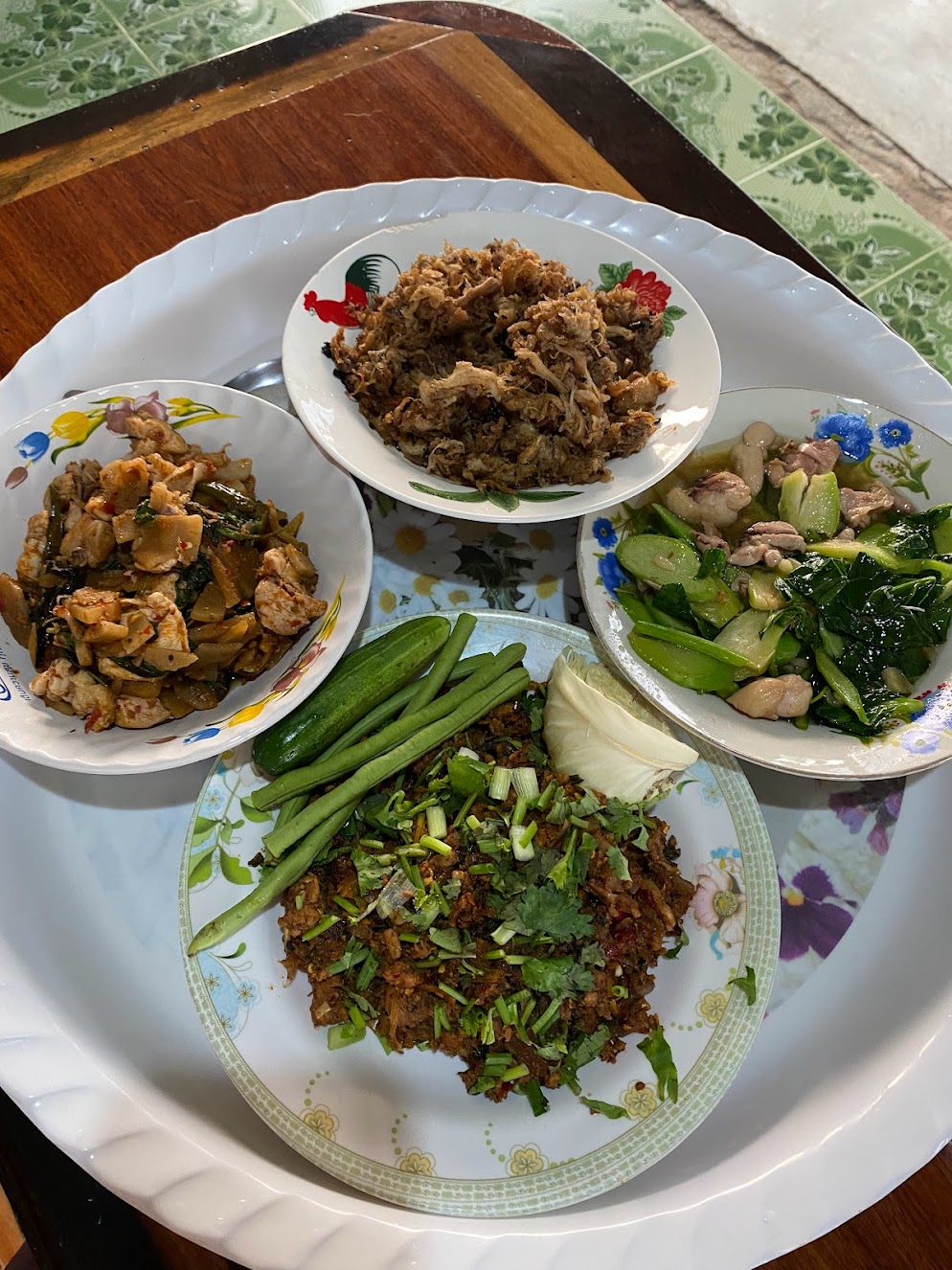
Every night since I’ve tested positive for Covid, my host-mom makes dinner as normal and sets up smaller plates and a small gra-tip at a different table for me to eat at and she sits 6 feet away from me so I don’t have to eat alone. During these dinners she’s recounted Covid stories that I think are perfect anecdotes of Thai culture. Throughout 2020, the community became even more of a family than they already were. If a mom came down with Covid, the kids went to a neighbor’s house through her quarantine. If a family came down with Covid, the neighbors took turns cooking and delivering meals. If one family member was sick and their home didn’t have a free room, they’d go to a home that did have an open room to quarantine. If a grandparent tested positive, a songtaeo (a type of taxi – kinda) would be at the house to bring them to the hospital. And lastly, this isn’t a story from my community, but when group 132 was sent home at the beginning of the pandemic, the PC Thailand staff kept working with unwavering faith that there would be a group coming after the pandemic that they needed to prepare for. Because of their efforts, we all received amazing training from incredible teachers and directors when we arrived in Thailand.
Leave it to Thai culture to use a world-wide crisis that was meant to separate people as an opportunity for communities to come even closer together and for people to work even harder for others.
All of this goes to say that Covid’s got nothing on Thailand, and if I had to get sick away from home this is where I’d want to be. I’ll continue to share anecdotes of culture from my community, but I hope this introduction gave you a good idea about my site and how lucky I feel for this to be my home for two years – and how excited I am to get out of quarantine in two days!
THAI FACT CHECK – Can you eat Thai family style six feet apart?: YES!



 Sticky Rice
Share your thoughts