
Four Cohort 136 PCVs’ reflection on One Year of Service
Wei-Huan Chen, TESS 136
It’s hard to believe that it’s been one whole year since Cohort 136 was exactly where 137 is now: in the whirlwind of Pre-Service Training (PST).
Looking back to January 2025, we didn’t know each other very well. Like every cohort, ours represents a variety of backgrounds and life experiences. This often surprises or even confuses locals, offering an opportunity to show them the full diversity of Americans. However, the variety among us can also lead to misunderstandings. Our differences in age, belief, race, gender, class, working style, and general “vibe” became more pronounced during the pressure cooker environment of PST.
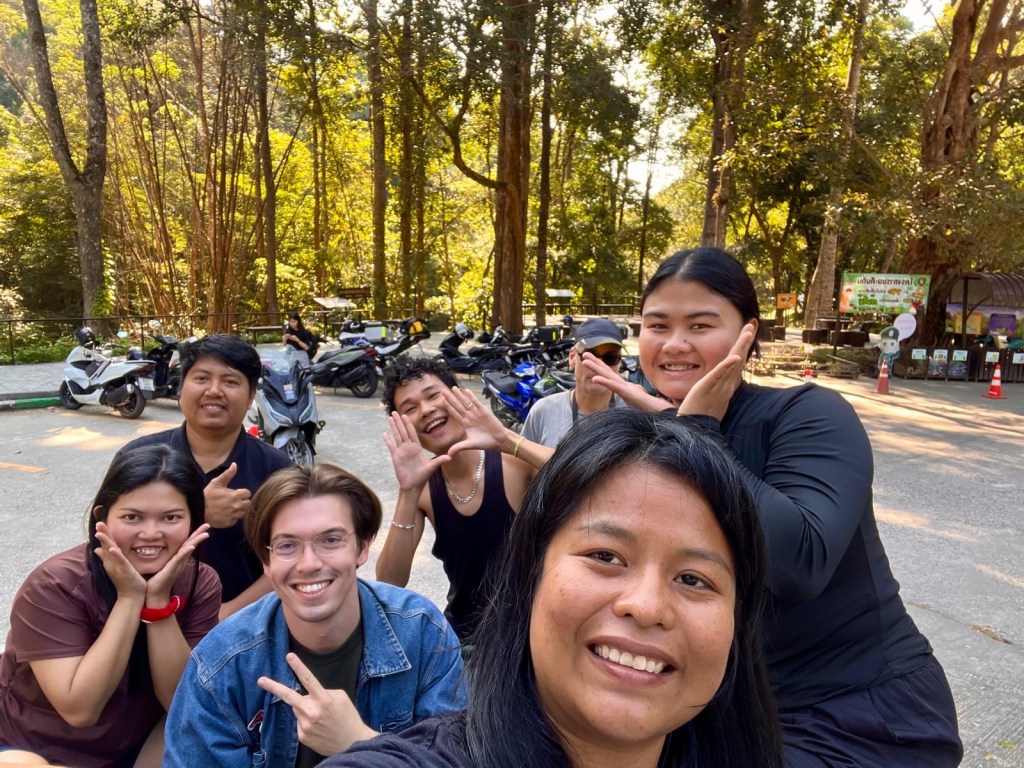
Upon talking to my cohort a year later, I see that something beautiful happened in the year 2025. We all experienced the highs and lows that is Peace Corps service, and have become bonded through hardship. Despite our physical separation, despite our differences, our cohort is closer with each other than ever before.
Each of our experiences is unique, yet everyone has felt the same struggles, the same culture shock and the same frustrations of living in a foreign land. Through these uncomfortable experiences we have grown resilient. While Thais have their “pi-nong” concept of family relations, we Americans have in the past year formed a new kinship with our people, a sisterhood/brotherhood forged in the fires of service.
As we ring in 2026, and welcome in a new cohort of volunteers, I found it fitting to speak to a few of my fellow 136ers about what the past year has meant to them. I asked myself who I’d love to hear from, whom I haven’t before, called them for one-hour-plus phone interviews, and typed up what they said. Here, I present the culmination of four volunteers’ experiences and reflections for the year 2025, in their words.
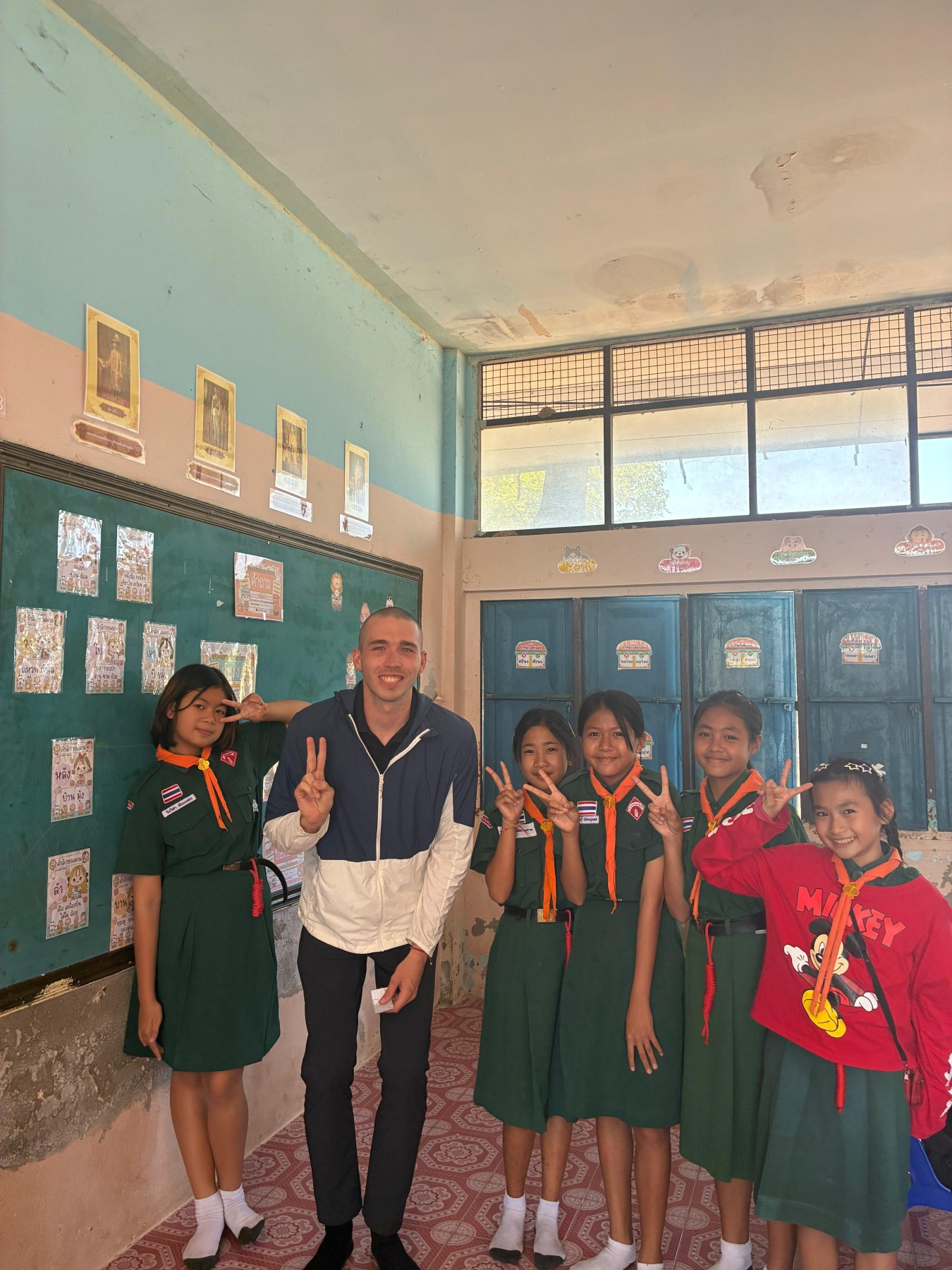
Oliver Michalak, YinD
2025 has been the year of “Going with the flow.” I knew the Peace Corps would test my ability to submit to the flow. You have to be a rock in a river, and let the water push you along and carry you. I’ve always been a “go with the flow” person, but being here has taken it to a whole new level.
It’s things like coming to school and realizing you’re not teaching, or showing up to the SAO to find an event taking place that I didn’t know about beforehand. I came to school once and they told me I needed to go to a meeting right away with a bunch of other teachers and introduce myself, in Thai.
The other day I was in the PC headquarters and I met a bunch of volunteers from 137. They asked me a lot of questions. I hope they don’t take my answers as gospel. At the end of the day, you kind of have to just experience it. It’s just something you have to go through.
Leave your expectations at the door. If you have expectations, you’ll be disappointed. You need to be open to not knowing what’s going to happen the next day. Take it day by day. What’s happening is happening.
I forget just how similar our experiences are. I was going through a rough patch in August and late September. I thought to myself, ‘Oh my gosh, everyone’s having a great time and I’m here struggling’. The loneliness at times, the isolation, was so tough. But you know what? A lot of people I’ve talked to in our cohort have also gone through that. I realized I’m not the only one experiencing this. You talk to others, they’re dealing with these things too.
During the hard times I’ve found that other volunteers are the biggest resource. That’s what I’ve come to lean on. Sometimes, I question myself, “Do I want to reach out? Maybe I shouldn’t.” But in the end, you shouldn’t be afraid to reach out, especially for introverts.
One of the big things that kept me going was seeing the work that I do. Deep down, even if I’m struggling, I know I’m here for my students. When I see them smiling and yelling my name at school, so happy to see me, that gives me a boost. Even if I’m having a hard day, the fact I’m here is enough for them. They help me realize I need to be a bit easier on myself. These interactions were what kept me buoyed, kept me from sinking under the weight. I’ve for sure experienced the lowest of lows, but also the highest of highs.
Victoria Armand, YinD
BIGGEST CHALLENGE
The biggest challenge I faced during my first year of service is the lack of communication. My site would often tell me things last minute and expect me to be ready. This is something I am still working on by asking my counterparts and community if there are any events happening during the month. I am still trying to find a solution that works best in getting answers and to bridge the communication gap.
I feel like because of the lack of me showing up to events, the people in my community think I don’t want to attend. This causes me to feel frustrated and super lonely. I have lost some of my confidence but in this new year I find that I want to have more of a presence in my community. I’m going to try to be more outspoken and show more of my personality.
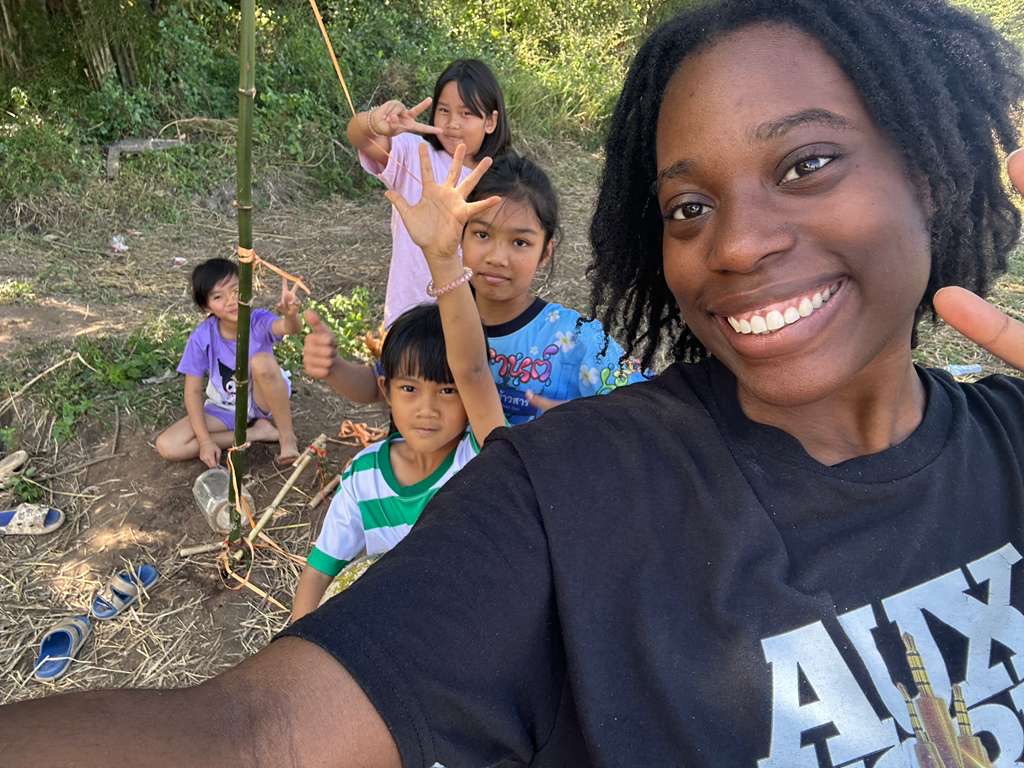
Although times get lonely, I have found my family at site. I spend a lot of time with my host cousin, aunt, and my neighborhood kiddos which makes things better.
This new year I want to find new ways to engage with my community.
OVERCOMING THROUGH CONNECTION
The key to connecting with my host family was to be vulnerable about what I was going through. I struggle with showing my vulnerability to people but I didn’t have my support system to rely on so I had to build that with my host family. It was hard because of the language barrier, but we found a way and now have reached a flow state.
I guess the most valuable lesson I learned in 2025 would be that in any tough experience, you are bound to become stronger by the end of it. Instead of focusing on the pain and the hurt that you feel right now, think about the seeds that you are planting in your students, community, and coworkers.
To new volunteers or people thinking about volunteering, there’s a saying in PC that the highs are highs and the lows are lows. This is in fact true, but a good friend of mine told me all we can do is take things day by day and look for the highs within the day.
Zach McCoy, TESS
As a language nerd, Peace Corps is one of the best opportunities you can ask for to deeply experience language. You’re putting it into practice 24/7. You’re working with school directors, Thai governments, Thai schools.
I love people like Anthony Bourdain, where you see those glimpses into another world, but in travel shows like his it’s just like you’re dashing from place to place. Peace Corps is the opposite. You’re here, piecing together your own experience.
That’s what makes me excited. It’s Thailand, when the cameras aren’t rolling, experienced as a local. We live here. You’re not here as a tourist. It’s funny to come to this place that’s known as this “paradise,” that people flock to, to feel amazing, to eat semi-familiar foods, to go to the beaches. Meanwhile, we’re here struggling with a slow, often ungraceful adjustment that feels a far cry away from leisure. Though that’s not to say it’s not exciting!
It’s a big contrast.
It was a challenge to realize that other cultures don’t think the way that mine does. I can learn the language and still not be able to talk to people because I don’t understand the context it comes from. If I speak Thai like an American, it doesn’t make sense.
Navigating the culture has been way harder than navigating the language. Once you get the language down, you’re not in the clear yet. No matter what I do, as an American, I’ll never be Thai. No matter how many hours I put into language learning, no matter how much I try to assimilate, I’ll never be Thai. It becomes apparent that you’ll always be different.
It’s tough trying to soak up as much Thainess as I can, working hard at the language, and then hitting these brick walls when I talk to Thai people. It just hit me in a more profound way that there is a ceiling to cultural integration.
It’s shocking to me how different cultures can be. Actually living it— living a life as a white American in Connecticut, then coming to rural Thailand and living life in the “rural Thai bubble” —to me it’s more different than I expected it would be.
I didn’t think I was ignorant in the ways I realize now. Now that I’ve left America, I’m able to see much more broadly what it is to be American, because it’s such a contrast to being Thai.
Sora Jo, YinD
FAVORITE ASPECT OF THAILAND:
The kindness. The respect they have for each other and how open they are with each other. Today, I saw a woman on a bike trying to get in the left lane. They briefly stopped the traffic for her. That would never happen in the States.
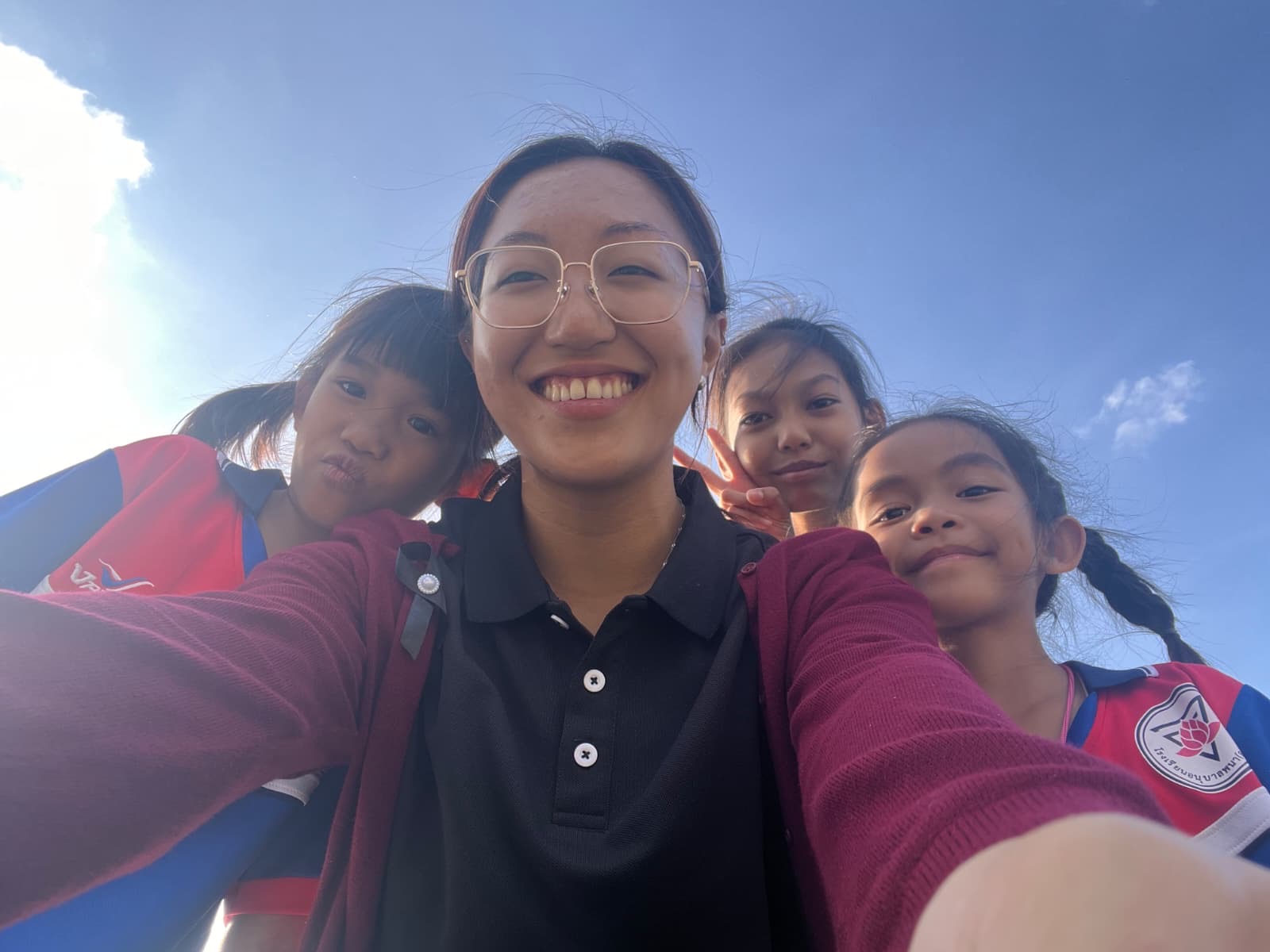
People bow to each other. They really look out for each other. At site, I’m taken care of like a baby. They’re feeding me, taking care of me, being nice to me.
LIVING IN ANOTHER COUNTRY:
It’s made me reflect on the privileges I enjoy back home, the comforts I miss compared to the way of life here.
BIGGEST CHALLENGE:
Being alone. I struggle with it all the time. During PST, you’re with everybody. You might not get along with everyone, but you’re still with people you can talk to. But at site you don’t have that interaction anymore. Getting to site, my loneliness peaked. Nobody likes to be lonely.
HOW TO OVERCOME LONELINESS:
I have my routines. When else am I going to have all this time to myself? I wake up 2 hours before school. I make and eat my breakfast. I prepare, I get through the day, come home, shower. I make sure I’m taking care of myself. I try to exercise. I eat regularly with good ingredients.
I like to craft things. Crocheting. Knitting. I’ve been trying to read more. I never had time to read back in school. It’s healing my brain — reading the written word and spending less time on my phone. I just read “Love in the Time of Cholera.” If you want to, just read something you like. Use your imagination.
I’m more conscious of scrolling on the phone. I’ve come to realize I’m bored of it. So let’s go back to my roots as a kid who loved to read. Now I can’t, so what happened? What happened to my attention span?
I’m journaling more. I’m stretching more. I’m tense, so I need to do yoga, mindfulness. It’s important. And, I reach out to people.
BIGGEST SURPRISE:
It’s how close I’ve grown with some people. The friendships I’ve formed. They’re very genuine friendships and I’m surprised how close I’ve gotten to people. I’ve made some lifelong gal pals. I want to hang out with these people for the rest of my life. It’s a strong connection. We’re going through something together that my friends back home don’t really understand. We have a shared experience.
WHAT I’VE LEARNED:
That I can do a lot. I’m capable of greatness. A year ago, I wouldn’t have imagined doing what I’m doing now.
“Nevertheless, she persisted.”

 Sticky Rice