
Kiera Hurley, 135 YinD & Mia Buffington, 135 YinD
Kiera:
It happened just the other day— I was at my local guay tiaow ก๋วยเตี๋ยว shop and I reached a genuine flow state while eating my noodles. There’s something therapeutic, all-encompassing, in the present moment about preparing your spoonful of a bite and then slurping it down. Chopsticks selecting the noodles you want, spoon poised and ready to collect, the final dump into the broth, and then the entrance into your mouth. It’s perfection, truly. Nothing else matters when that bowl of guay tiaow is in front of me because all my focus is on enjoying every single bite.
Guay tiaow is a dish that took me a while to figure out because there are so many different ways you can order it and have it prepared. First, there’s the noodle type— sen เส้น + small (mi) หมี่, medium (lek) เล็ก, or large (yai) ใหญ่ size. Or other options altogether; wun sen วุ้นเส้น, a clear noodle, or bami บะหมี่, yellow egg wheat noodles. Then, there’s the broth type— clear (nam sai) น้ำใส, dark (nam tok) น้ำตก,curry (Khao Soi) ข้าวซอย, spicy and sour (Tom Yum) ต้มยำ, or dry (haeng) แห้ง. Depending on the combination of all these factors, you have different types of dishes and therefore different names. You can mix and match based on what you’re feeling depending on the shop you’re at. Some offer all combinations, while others may be more specialized and only sell one to two options.
Guay tiaow is usually a lunchtime meal, which may not make much sense. Why would anyone want to eat a steaming bowl of soup noodles during the hottest time of the day? I don’t have the answer to that question, only that I know it always hits the spot. So the next time you eat your local guay tiaow noodles, take a moment to appreciate them however you may take them. Whether it’s a guay tiaow tom yum sen lek, a guay tiaow nam sai sen mi, or a guay tiaow nam tok yai— each combination brings a new experience for you and your mouth to have.
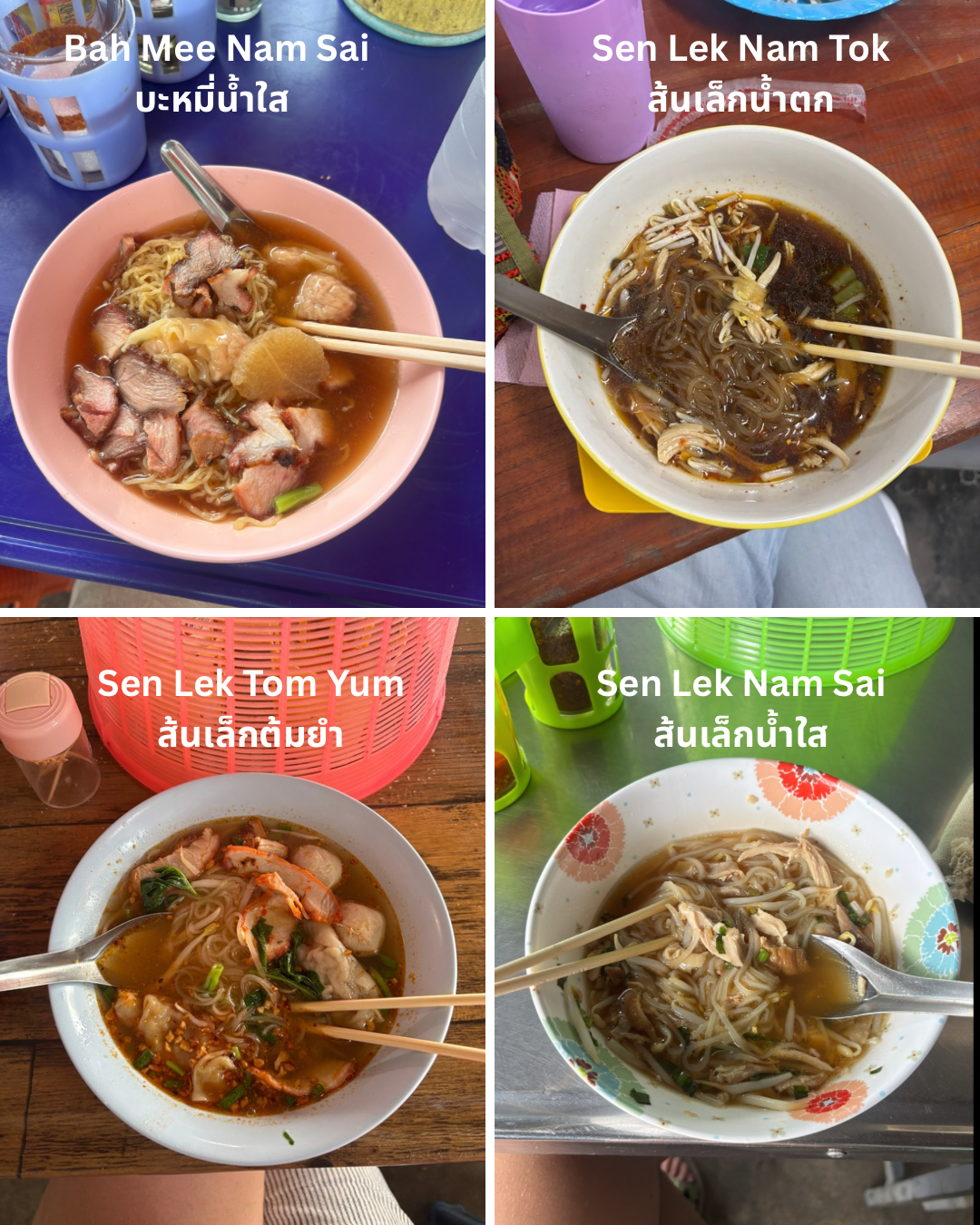

Guay tiaow isn’t the only Thai dish out there that requires your full attention and presence to enjoy. There are plenty of others, and I bet some would argue that any meal, given the right intention, can allow you to reach a flow state. But the next food item we’re going to explore here is sticky rice.
Mia:
Eating sticky rice (kao niao) ข้าวเหนียว in Thailand has become an unexpectedly meditative experience. Warm and slightly sweet, it’s meant to be eaten with your hands, pinched into small portions, rolled, dipped, and enjoyed. The rhythm is simple and repetitive, and before you realize it, you’ve entered a flow state. No utensils, no decisions just following the movement and savoring the taste. Each bite gets your full attention, from the texture to the way it absorbs whatever it’s paired with. The conversation slowly fades, and the act of eating becomes grounding in a way that feels both ancient and satisfying.
Sticky rice is almost never eaten alone. It’s a companion food, designed as a vessel to transport other flavorful foods from the plate to your mouth. With fried chicken (gai tot) ไก่ทอด and crispy grilled onions, it’s salty and crunchy each bite making you reach for more. With papaya salad (Somtam) ส้มตำ and pork larb (lap moo) ลาบหมู, it dilutes the sharp spice and sourness of chilies and lime and soaks up the yummy juices on the bottom of the plate. It pairs perfectly with the smokiness of grilled pork (moo bing) หมูปิ้ง or grilled chicken (gai yang) ไก่ย่าง and the sweetness of mango (mamuang) มะม่วง and condensed milk. No matter the pairing, sticky rice gives structure to the experience. It forces you to eat slowly and intentionally. Eating foods with sticky rice is tactile, communal and complete.
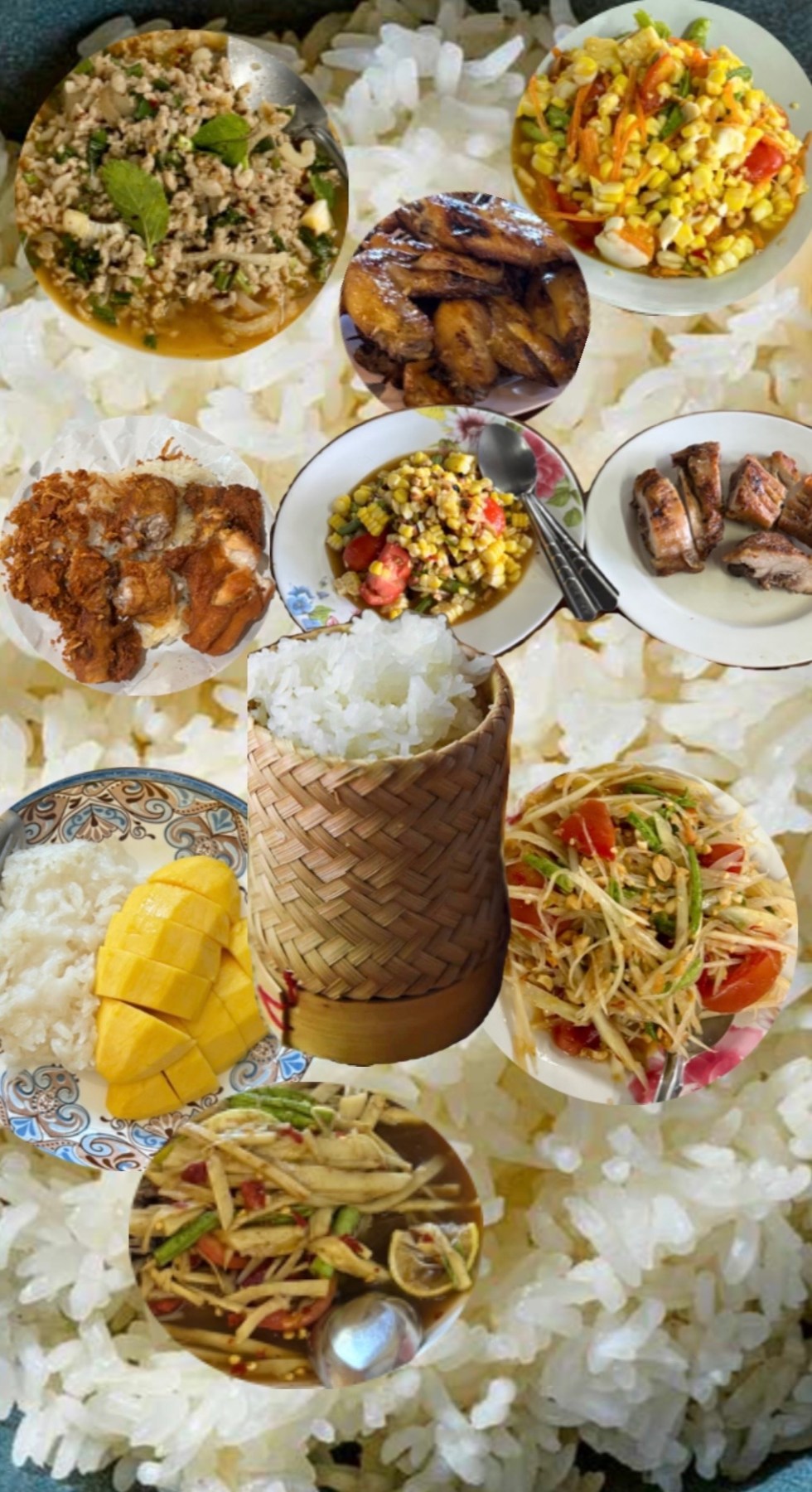
In these small, ordinary moments– slurping noodles or pinching sticky rice– food becomes more than just food; it becomes a practice in presence. Thai meals invite you to slow down, engage your senses, and fully arrive in the moment. Maybe that’s the quiet magic of it: flow isn’t something you chase, it’s something you taste.



 Sticky Rice
Share your thoughts