
Ella Spear, 136 TESS
A starchy, warm-weather faring cousin of potatoes inhabits the fields throughout Thailand. It looks like a small tree for much of its lifespan, but the value is hidden in the dirt. Anyone who has spent time in Central and South America, Africa, or Asia has likely eaten this root vegetable; if not, I would recommend it. As a starch enthusiast, it is a close third for me after potatoes and sweet potatoes. It’s sweet, filling, and can be eaten with dessert or as a main meal. The many strains of this cash crop are known by a few names: มันสำปะหลัง (man sabpahlang), cassava, yucca, mandioca, manioca, or tapioca. Cassava is a huge industry in Thailand, with 60% of production taking place in the Northeast region where I live. Interestingly, I barely ever eat cassava. So, I started thinking, where does it all go? What I discovered is a growing industry connecting small family-owned farms to international markets.
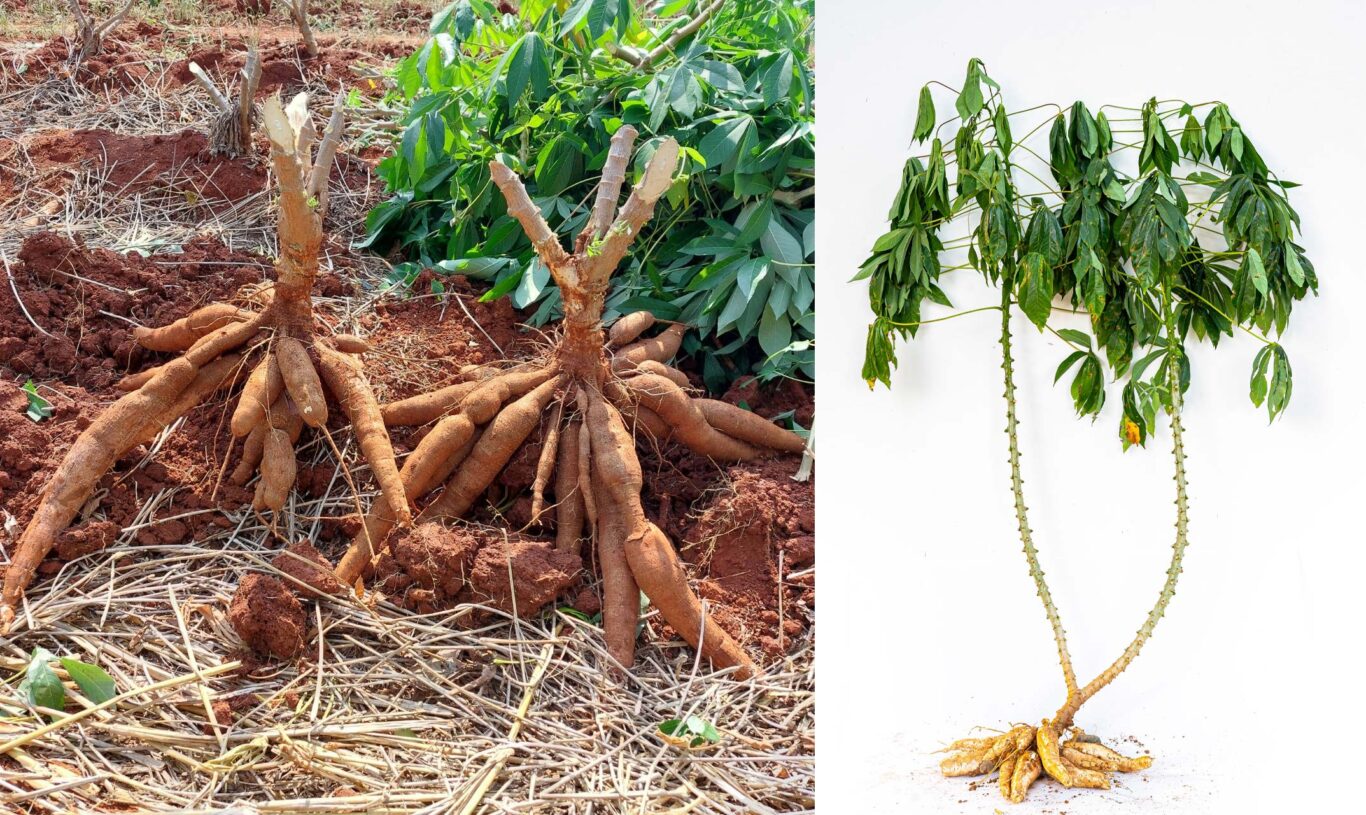
While cassava cultivation can occur at any time throughout the year, the typical season spans from October to March, mirroring the Northeast rice season, which typically lasts from May to December. Now, during the peak of the rainy season, fields are overflowing with rice, and it is almost hard to imagine the same plots as brown rows of spindly cassava stalks. So, it took me by surprise to learn that Thailand is actually the third largest producer of cassava in the world, behind Nigeria and the Democratic Republic of Congo (Walderich, 2025). Cassava cultivation covers 8% of agricultural land in Thailand, making it the country’s fourth largest agricultural crop by area behind rice, para rubber, and sugarcane (Arthey et al., 2018). While a small portion of raw cassava is exported for consumption, the majority of cassava exports are used in industrial products. Dried cassava is processed into chips and/or pellets, which are used in everything from flour and animal feed to medicine, cosmetics, bioplastics, biofuels, and more.
Since 1970, Thailand has held the title of the world’s largest cassava product producer. This is key in understanding the economic viability of the crop (Arthey et al., 2018). While cassava is generally a cheap product, the massive scale of cassava product production and export into starch-based industries makes the value relatively high. In-country, raw cassava is inexpensive. According to my host brother, 1 kg of cassava root is available for about 2 Thai Baht down the street. This is actually a near-double increase in domestic price from the beginning of 2025, driven by sustained global demand for cassava products. In 2022, Thailand reportedly exported 6 million tons of dried cassava for a value of around 1.5 billion USD, as well as around 3.5 million tons of starch products for an estimated value of 1.75 billion USD (Kongsil et al., 2024). According to an interview with the director of the Department of Foreign Trade at the Ministry of Commerce of Thailand, Thailand’s cassava exports reached 4.06 million tons by May 2025. The director’s target export is 7.5 million tons by the end of 2025, in order to keep Thailand at the top of the charts for the largest cassava product exporter for another year running. (Thailand Cassava Ranks First Globally Once Again, 2025).
I find the vertically integrated business model of this industry optimistic for sustainable economic growth. Almost 90% of cultivation takes place on small family farms in (Lilavanichakul, A., & Yoksan, R., 2023). Large cassava product processing and production facilities have sprung up throughout the country, bringing jobs with them. Additionally, the Thai government’s investment in the industry supports key infrastructure, including road networks aimed at connecting rural parts of the country to domestic and international markets. It seems to be an exciting time for a crop that gets such little attention next to the glory of the Thai rice fields.
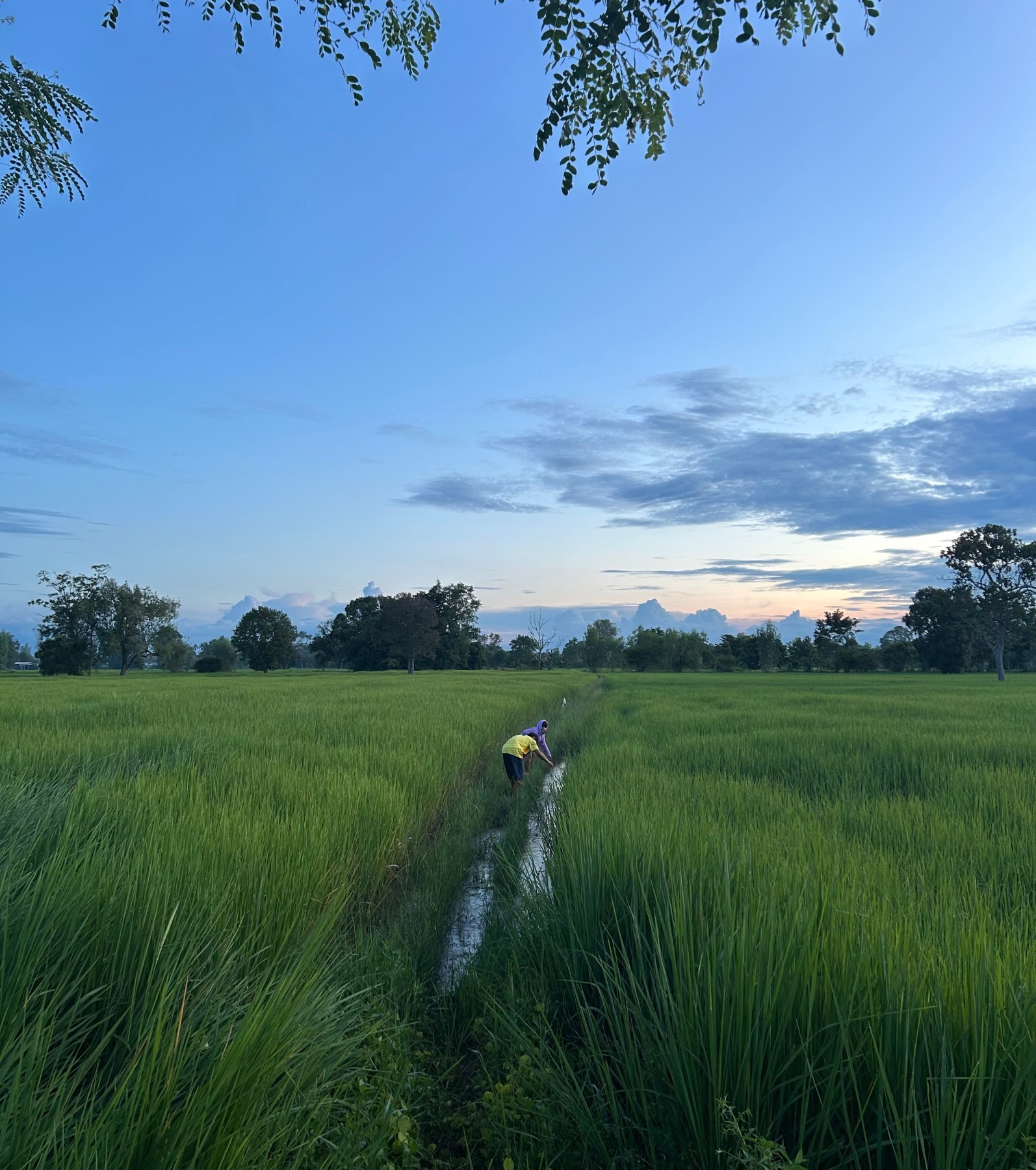
At this point in the year, in between downpours, I can see how luscious the rice fields around my community truly are. Tall and flowing in the breeze, shimmering with that very specific rice field green that we in Thailand know so well. Biking on the main road, I can see a few small plots growing short cassava plants in more well-drained, dry soil. I asked my host uncle if he was planning on replanting his rice field after they harvest it over the next few months. My host aunt responded that he planted it with cassava last year, but that it was “soooo hot” and such a tiring process. I asked my host brother if he likes to eat cassava, and he couldn’t recall what cassava was like, until reminded by his mom: “It’s brown on the outside, we boil it, white meat, soft, you know what it is!” He didn’t seem too interested in it or where it ends up, which, from what I can tell, is everywhere else in the world, in every form other than whole, boiled, and on his plate. While the cassava industry is likely to face pressures in the next decade due to changing climate patterns and increased periods of drought and floods, the high demand for the products means that more research and investment into crop cultivation is expected. For me, at least for the next few months, I will enjoy the cooler weather and beautiful rice fields views, but when cassava season comes around, I will be sure to appreciate the value of this special root crop that is seemingly stretching out around the world.
Bibliography
Arthey, Tom. Srisompun, Orawan. Zimmer, Yelto. (2018). Cassava Production and Processing in Thailand. Agri benchmark. 3-55. http://www.agribenchmark.org/fileadmin/Dateiablage/B-Cash-Crop/Reports/CassavaReportFinal-181030.pdf)
FAOSTAT. (2025, June 11). Food and Agricultural Organization of the United Nations. https://www.fao.org/faostat/en/#data/QCL/visualize
CassavaHub. (2025, May 25). Cassava (Manihot esculenta Crantz) [Photograph]. In Cassava: A Key Economic Crop in Thailand and Its Future Outlook. CassavaHub. https://cassavahub.org/en/knowledge/1419
Kongsil, P., Ceballos, H., Siriwan, W., Vuttipongchaikij, S., Kittipadakul, P., Phumichai, C., Wannarat, W., Kositratana, W., Vichukit, V., Sarobol, E., & Rojanaridpiched, C. (2024). Cassava Breeding and Cultivation Challenges in Thailand: Past, Present, and Future Perspectives. Plants (Basel, Switzerland), 13(14), 1899. https://doi.org/10.3390/plants13141899 https://pmc.ncbi.nlm.nih.gov/articles/PMC11280297/
Lilavanichakul, A., & Yoksan, R. (2023, October 26). Cassava Value Chain in Thailand. In Encyclopedia. https://encyclopedia.pub/entry/50809
Thailand Cassava Ranks First Globally Once Again. (2025, August 7). Tridge. https://www.tridge.com/news/thailand-cassava-ranks-first-globally-once-a-fokrcl
Walderich, A. (2025, August 7). Topic: Cassava industry in Thailand. Statista. https://www.statista.com/topics/11099/cassava-industry-in-thailand/



 Sticky Rice