
Author’s Note: I’m not a professional, but I’ve done my best to accurately identify these specimens through online research. I have a minor in Biology and about 580 days of experience in Thailand, that’s it. My references are listed at the end of this document. My site is in Northern Thailand, and all my experiences come from here. Other regions may see these creatures differently. Please seek professional advice if you have an unpleasant encounter with one of these special “friends.”

Elsie Pagel, 135 YinD
When I applied to the Peace Corps, creepy crawlers weren’t the first thing I thought about when I signed my name on the dotted line. Unfortunately, these uninvited guests in my home, the classroom, my showerhead, my shoes, or even my food have become one of the most challenging parts of my journey. These creatures are part of the beauty of the Thai landscape, play an important role in the ecosystem, and at times are even a star ingredient in local cuisine. However, they have also haunted my nightmares, caused pain in broad daylight, and sparked frustration in the classroom. Here, I will introduce you to the “friends” I have met in Northern Thailand, along with the valuable lessons I have learned for any future encounters.
Oleander Hawk Moth (Daphnis nerii) | หนอนผีเสื้อจรวดลายพราง
Students are always finding and scooping up the green caterpillars (which take about 28 days to transform into moths), saying, “Ahh, narak!” (“Cute!”). Then, they chase me or other younger students with the squirmy worm. These 2.5-inch, poison-resistant caterpillars primarily feed on oleander leaves, despite the plant’s toxicity. Sightings and student shenanigans peak during the rainy season in July.
- Threat Level: Low
- Edible: No
- Annoyance: Mild – students will play with them and ignore the lesson.

Thai Brown Cicada (Cryptotympana atrata) | จักจั่นสีน้ำตาล
A large insect known for its loud mating calls and seasonal emergence. Adults molt and shed their exoskeletons on trees, and students love to collect the shells, using the claws to hang them on each other. This sometimes leads to chaos, confusion, and tears, especially when crushed cicada shells end up in a kindergartener’s hair.
- Threat Level: Low
- Edible: Yes – larvae are collected, grilled, and eaten. They have a nutty flavor, are high in protein, and are considered a delicacy sold at high prices in local markets.
- Annoyance: Mild – older students channel their inner biologists and fashion designers, using exoskeletons in disruptive ways.


Harlequin Cockroach (Neostylopyga rhombifolia) | แมลงสาบลายฮาร์เลควิน
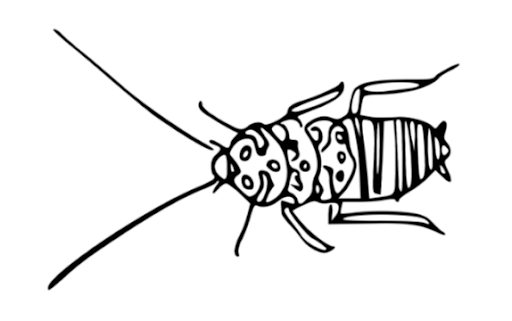
A non-flying cockroach known for its striking black-and-yellow patterns and habit of living near humans. Native to Southeast Asia, it has spread across tropical and subtropical regions worldwide. Cockroaches have a reputation for being unhygienic and nearly indestructible, both of which are true. They also have a love for cardboard, even when it seems impossible for any creature to access it.
- Threat Level: Low
- Edible: No
- Annoyance: High – If you receive a Shopee package (Thailand’s version of Amazon), remove your items and dispose of the box immediately. These pests can carry bacteria and love to “play house” inside your cardboard box.
Giraffe Stag Beetle (Prosopocoilus giraffa.) | ด้วงกว่างคอยาว
Easily recognized by their long, notched mandibles and often glossy bodies, these beetles spend their larval stage developing in decaying wood before emerging as adults during the rainy season. Kids living near forests love to hunt for them like mini entomologists and then turn them into gladiators at school. Harmless to humans but still intimidating, they are not something I will volunteer to remove from the classroom. (I am not completely sure this is the correct classification for this stag beetle.)
- Threat Level: Low
- Edible: No
- Annoyance: High – students will stage beetle battles, with a desk serving as their arena.

Thai Huntsman Spider (Heteropoda venatoria) | แมงมุมบ้านขายาว
One of the largest and fastest-moving spiders in Thailand, often found in woodlands, forests, and rural homes. Generally considered a benign “household visitor” that helps control pests. However, the Huntsman can bite if provoked, typically causing only mild, short-lived discomfort (leaving lasting psychological trauma). Unlike most spiders, it does not spin webs, instead silently hunts down its prey like a (you guessed it) huntsman.
- Threat Level: Mild – They “do not attack humans”, but are fast, massive, and will jump when feeling threatened.
- Edible: No
- Annoyance: High – I have encountered these spiders a handful of times, almost always in my bathroom. After spotting one near my toilet, I could not sleep that night. The sheer size alone is enough to make you want to cry.


Flying Termite (Coptotermes gestroi) | แมลงเม่า

These winged termites emerge seasonally, most often during the rainy season. Found throughout rural areas and forests across Thailand, their sudden swarms provide a plentiful, nutritious food source. Drawn to light, they will gather in the hundreds, shed their wings, and die around any bright source. It’s a bittersweet event, as the rise and fall of the flying termite is both a high-protein feast and a messy ordeal.
- Threat Level: Low
- Edible: Yes – they have a nutty flavor and are eaten as snacks, in omelets, or added to other dishes.
- Annoyance: High – these insects will find their way indoors in search of light, no matter how well you lock or seal your home. By morning, you’ll be left with piles of discarded wings and tiny carcasses to sweep up (or eat). There is no stopping these kamikaze flyers.
Hornet (Vespa affinis) | วสปาแอฟินิสตัวต่อ

A medium-sized hornet identified by its distinctive yellow or orange abdominal band and a broad diet ranging from nectar to carrion and other insects. Found widely across Southeast Asia, these hornets build nests in trees as well as human-made structures. Their sting has been linked to medically significant cases, including fatalities. I have experienced instances where traditional ceremonies, school activities, or temple events have been postponed or rerouted to avoid the nests of these hornets.
- Threat Level: High – they generally won’t harm you if you give them a wide berth. I was recently stung by one, and it was painful, caused swelling, and took five days for the redness and itching to subside.
- Edible: No – while the larvae can be eaten, I have never seen anyone harvest or eatthem.
- Annoyance: High – they are fast and their sting hurts.
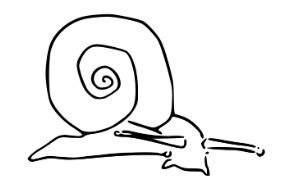
Golden Apple Snail (Pomacea canaliculata) |
หอยเชอรี่หรือหอยทากตู้
An invasive freshwater snail originally from South America, now found throughout Thailand’s wetlands, rice paddies, canals, and slow-moving waters. Considered a serious agricultural pest, they feed on young rice, taro, and aquatic plants. These snails often wander into Thai outdoor or open-air kitchens, devouring anything edible in sight with furious gluttony and leaving piles of poop as a “khop khun ka” (“thanks”).
- Threat Level: Low (to humans) – high ecologically
- Annoyance: High – they climb all over my kitchen, leaving shiny slime trails and little gray dried-out “gifts” to remind me they’ve been there.
- Edible: Yes – they are eaten in some regions, and an Isaan-style curry is said to feature them.
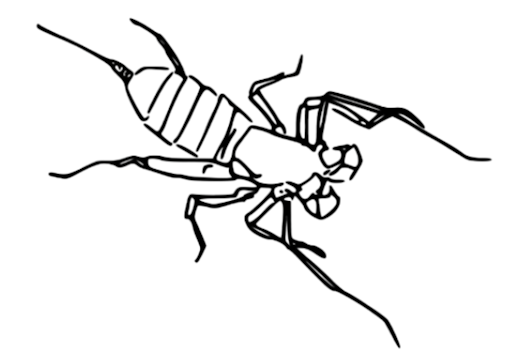
Scorpions
- Thai Whip Scorpion (Thelyphonida) | แมงป่องเสียม
A non-venomous arachnid recognized by its whip-like tail and its ability to spray a vinegar-scented acid as a defense mechanism. A beneficial nocturnal predator, it helps control pest insects in dark, humid habitats. Found throughout Thailand, it prefers burrows, spaces under rocks, or forest debris, hunting at night with its large pincers. When calm, it will tuck in its pincers and move slowly, but when captured or provoked, it will dart away and unfurl its pincers, ready to fight (looking quite freaky).
- Threat Level: Mild – they won’t harm you if left alone, but their appearance can be nightmare-inducing.
- Edible: No
- Annoyance: High – finding two of them “playing tag” in your bathroom right before a shower is an instant mood-killer. At 1.5–2.5 inches long, they’re not easy to remove from their perch.
- Asian Forest Scorpion (Heterometrus species) | แมงป่องป่า
These venomous scorpions are the classic stingers most people picture, native to Thailand and found in the humid forest undergrowth. They dislike rain and may sneak into homes to escape storms, often leading to an unwelcome surprise if you happen to be on the toilet.
- Threat Level: Mild – they generally won’t sting unless provoked, but if they do, expectpain, swelling, and symptoms similar to a bee sting.
- Edible: Yes – while tourists sometimes eat them, locals rarely partake in the grilled-scorpion market.
- Annoyance: High – they’re intimidating, fast, and may inspire you to install anti-insect mesh over every possible bathroom entrance.

Mosquitoes:
- Yellow Fever Mosquito (Aedes aegypti) | ยุงลายบ้าน
- Asian Tiger Mosquito (Aedes albopictus) | ยุงลายเสือเอเชีย
Both the Yellow Fever and Asian Tiger mosquitoes look similar, with black-and-white markings on their legs and thorax. These are daytime-biting mosquitoes and major vectors of dengue, Zika, chikungunya, and yellow fever. They are a significant public health hazard, breeding in clean standing water containers in and around homes, especially during the rainy season. I think everyone can relate to the universal “mosquito problem”.
- Threat Level: High – “The mosquito is the world’s deadliest animal.” – CDC, 2024
- Edible: No
- Annoyance: High – even without carrying diseases, they bite, suck your blood, and leave you itching and scratching afterward. Horrible.

For the rest of my time in Thailand, whether I’m at my site in the north, a fancy Bangkok hotel, or a touristy southern hostel, I’ll forever be scanning my surroundings for my “friends.” I’ll check the bidet handle for a Huntsman Spider, the kitchen sink for a Golden Apple Snail, and the wooden gazebo for a Hornet’s nest. I will dispose of Harelquin Cockroach cardboard houses and apply a lot of mosquito repellent spray.
This heightened spatial awareness is something I’m sure I’ll take back to the States as well. These new “friends” have pushed me out of my comfort zone, strengthened my confidence in my fight-or-flight responses, introduced me to new cuisines, and helped me conquer some of my irrational bug fears (while doubling down on the rational ones). I may never be a bug lover, but I’ll never regret signing my name on the dotted line to join the Peace Corps.

References:
- Arxada. (n.d.). Pomacea canaliculata: Biological notes and geographical distribution. Arxada.
- Bugs Alive. (2018, April 22). Thailand moth gallery 2. Bugs Alive. https://bugs-alive.blogspot.com/2018/04/thailand-moth-gallery-2.html
- BushGuide101. (n.d.). Freshwater snails for food. BushGuide101. https://bushguide101.com/freshwater-snails-for-food/
- CDPH. (2025, June 13). Aedes aegypti and Aedes albopictus mosquitoes. California Department of Public Health.
- Cockroach Wiki. (n.d.). Harlequin cockroach. In Cockroach Wiki Fandom. https://cockroach.fandom.com/wiki/Harlequin_cockroach
- Dr. Jia-Wei Tay. (n.d.). Harlequin cockroach (Neostylopyga rhombifolia). University of Hawai‘i, College of Tropical Agriculture and Human Resources. https://cms.ctahr.hawaii.edu/jwtay/Pest-info/Cockroaches
- ECDC Factsheet. (n.d.). Aedes albopictus – Factsheet for experts. European Centre for Disease Prevention and Control.
- Edible Asian Forest Scorpions. (n.d.). Dehydrated forest scorpion products and their availability in northeast Thailand.
- Heterometrus genus. (n.d.). Toxicity and habitat of Heterometrus scorpions. Animalia.
- Khao Sok. (n.d.). Cicada – Khao Sok National Park, Thailand. https://www.khaosok.com/national-park/cicada/
- Krongdang, S. (2023). Edible insects in Thailand: An overview of status. Journal of Insects as Food and Feed, 9(6), 643–652. https://pmc.ncbi.nlm.nih.gov/articles/PMC10252440/
- LSU AgCenter. (n.d.). Aedes aegypti, yellow fever mosquito (Diptera: Culicidae). Louisiana State University AgCenter. https://www.lsuagcenter.com/articles/page1666715929695
- Lucid Apps. (n.d.). Fact sheet – Golden apple snail (Pomacea canaliculata). Lucid Apps.
- MySakonNakhon. (2021, August 24). Colorful caterpillars in Thailand. My Sakon Nakhon. https://mysakonnakhon.com/colorful-caterpillars-in-thailand/
- Nest in Thailand study. (n.d.). Observations of a Vespa affinis nest in Bangkok suburb. Journal of Threatened Taxa.
- PictureInsect. (n.d.). Neostylopyga rhombifolia – Harlequin cockroach distribution. PictureInsect. https://pictureinsect.com/wiki/Neostylopyga_rhombifolia.html
- Proteome and allergenome study. (2012). Vespa affinis causes medically important Hymenoptera stings in Southeast Asia. PubMed.
- ScienceAsia. (2014). The potential ecological impact of the exotic snail Pomacea canaliculata in Thailand. ScienceAsia, 40(1).
- SciDirect topics. (n.d.). Aedes albopictus – An overview. ScienceDirect.
- Spider Identifications. (n.d.). Types of spiders in Thailand: Huntsman spiders. Spider Identifications.
- Stockmann, Y., & Ythier, C. (2010). On scorpion consumption practices and its rarity in Thailand.
- Thaibugs. (n.d.). Facts about whip scorpions. Thaibugs.
- Thailex. (n.d.). Thailand Lexicon – Whip Scorpion (Thelyphonida). Thailex.
- Thai Ministry of Public Health. (2013, June 17). ยุงลาย Aedes aegypti พาหะนำโรคไข้เลือดออก [House mosquito Aedes aegypti, a dengue vector]. Ministry of Public Health, Thailand. https://ath.moph.go.th/article/139/ยุงลาย-Aedes-aegypti-พาหะนำโรคไข้เลือดออก
- Thailand Unique. (n.d.). Edible Cicada (Cryptotympana atrata). Thailand Unique. https://www.thailandunique.com/edible-insects-bugs/edible-cicada-insects
- Thailand Unique. (n.d.). Edible dehydrated termite alates. Thailand Unique. https://www.thailandunique.com/edible-insects-bugs/edible-flying-termites
- TheThailandLife. (2022, July 19). Spiders Thailand: 10 common species you might encounter. The Thailand Life.
- Vespa affinis info. (n.d.). Details of appearance, habitat, and distribution. Vespa-bicolor.net
- Whatsthatbug.com. (2024). Can I eat flying termites? What’s That Bug. https://www.whatsthatbug.com/can-i-eat-flying-termites/
- Wongkoon, S., et al. (2013). Aedes aegypti is a highly domesticated mosquito and is widely found in urban and residential areas. Parasites & Vectors, 6, Article 321. https://doi.org/10.1186/1756-3305-6-321




 Sticky Rice