
Tucker Strauch, 136 YinD
April in Sisaket can be brutal.
The air temp seldom drops below 90 degrees, the rice fields crack, and everything blurs under a heavy, dry haze. School is out of session, meaning that there isn’t much to keep one’s mind off the inescapable heat. Every year, however, around the middle of the month, the slow village lifestyle picks up, as Bangkok laborers return home to their families to participate in the Songkran festival. This four-day festival, based on the traditional Thai new year, represents spiritual renewal, respect for community elders, and, of course, water. If you’ve heard of Songkran, you probably picture chaotic water fights in Bangkok or Pattaya. Water fights are definitely part of it, but beneath the Instagram highlights (and The White Lotus cameo) is a tradition with a much deeper cultural significance.
On the first morning of Songkran, the small primary school in the center of our village was elected to host the Songkran ceremony. By 7:30 AM, Ella and I had joined our host family at the school, where eight monks from the wat (temple) across the street sat cross-legged in front of our whole community. Ella and I were ushered into the front-row seats we had reluctantly come to expect after many community events being treated like some kind of royalty. While the monks chanted, I held my hands in a prayer position for so long that my fingers started to cramp. Then, all of a sudden, the chants stopped, and it was time to offer food to the monks and gin kaao (eat). After filling my belly, I walked to the front of the school where about 12 elders from my village sat in a line of chairs. Somebody handed me a small container of jasmine-infused water, and I knelt down in front of every elder, slowly pouring the water over their hands, after which they would grip my hands and say a short blessing.
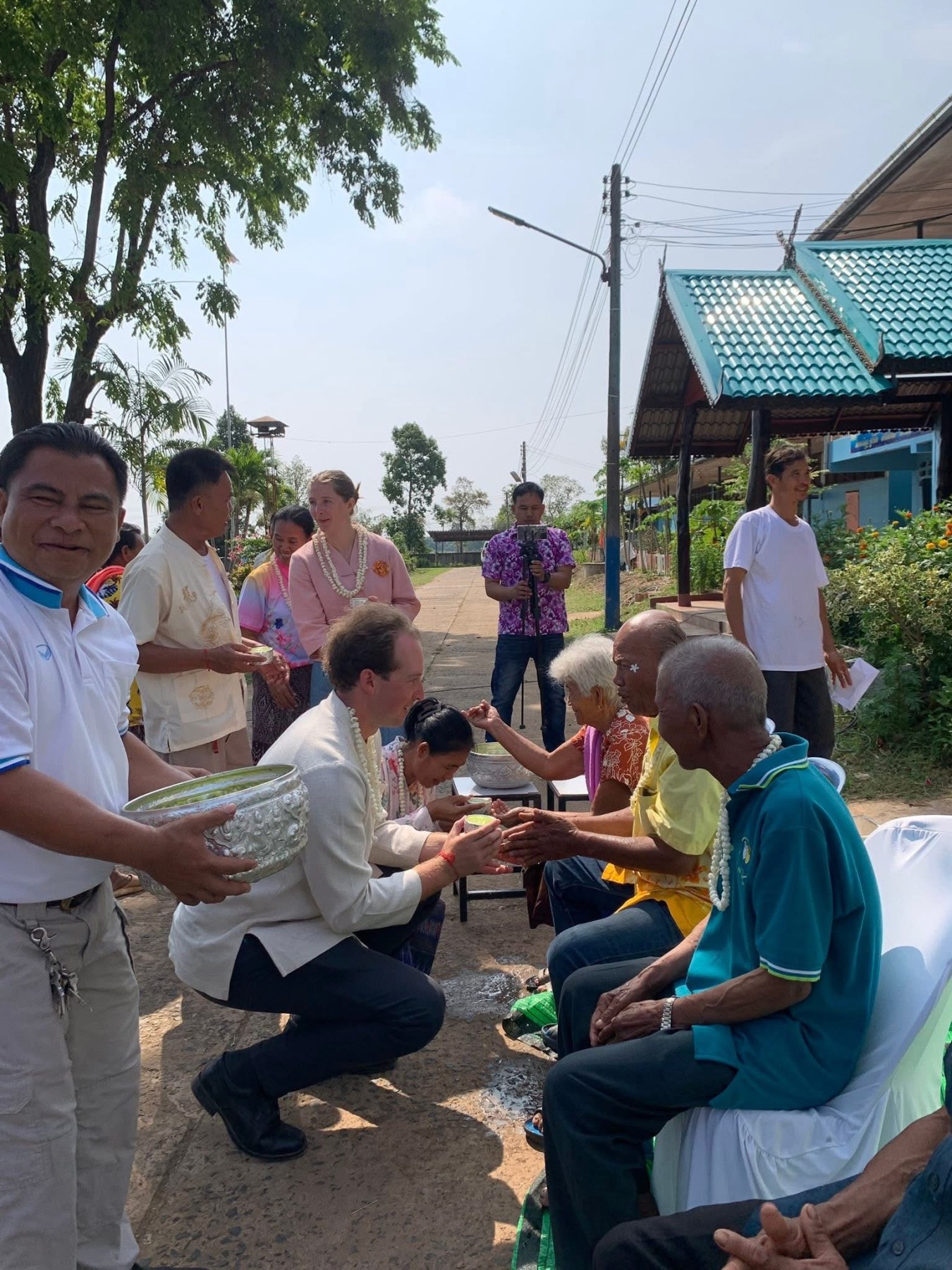
The ceremonial aspect of the Songkran festival revealed that, like most Thai traditions, community is at its core. Offering food to the monks, or giving and receiving blessings from the village elders represents more than making merit; these actions reinforce the bond between young and old, those with experience and wisdom, and those without. At the same time, the ceremonial traditions are just as much about celebrating the new year with family and friends, a theme that continued throughout the next few days.
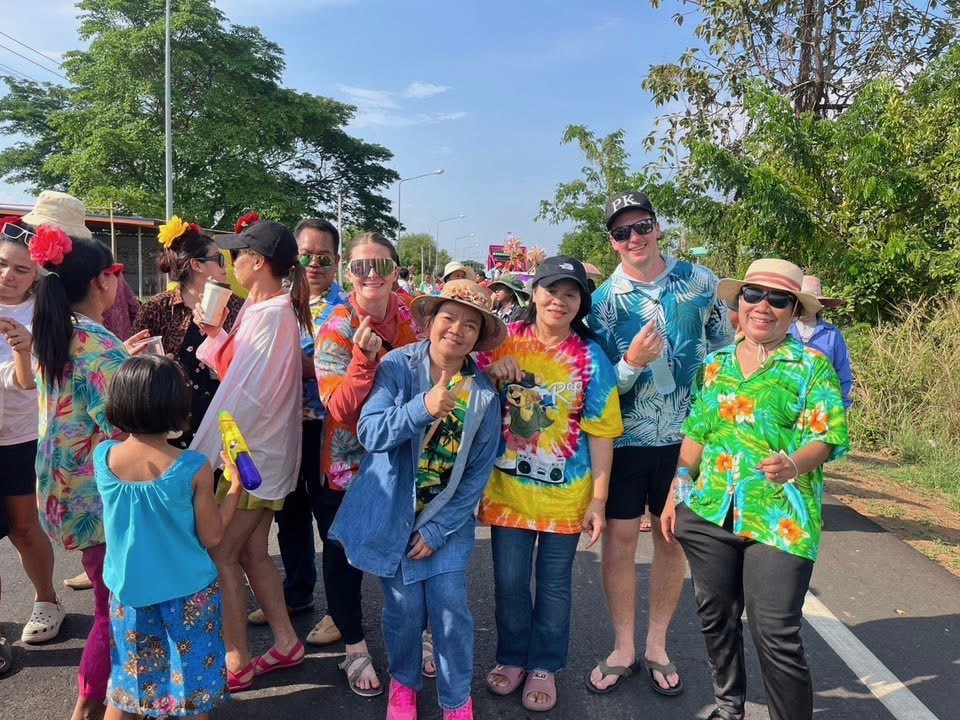
With the more-formal ceremony behind us, it was time to have some fun. My aunt had just returned home from Bangkok where she bought Ella and I each two flamboyant floral shirts that look like the stereotypical ‘American tourist at the beach’ outfit. I put my phone in a waterproof case and partook in a 2-hour long community parade through all three villages of our school district. The procession included three generations of locals, dressed in floral shirts, dancing down the street to upbeat Isaan music blaring out of the many speakers in a few slow-moving trucks. There were also pickups filled with kids throwing buckets of water at everybody, and, thanks to everyone around me, my plastic cup of iced beer never seemed to dip below halfway full.
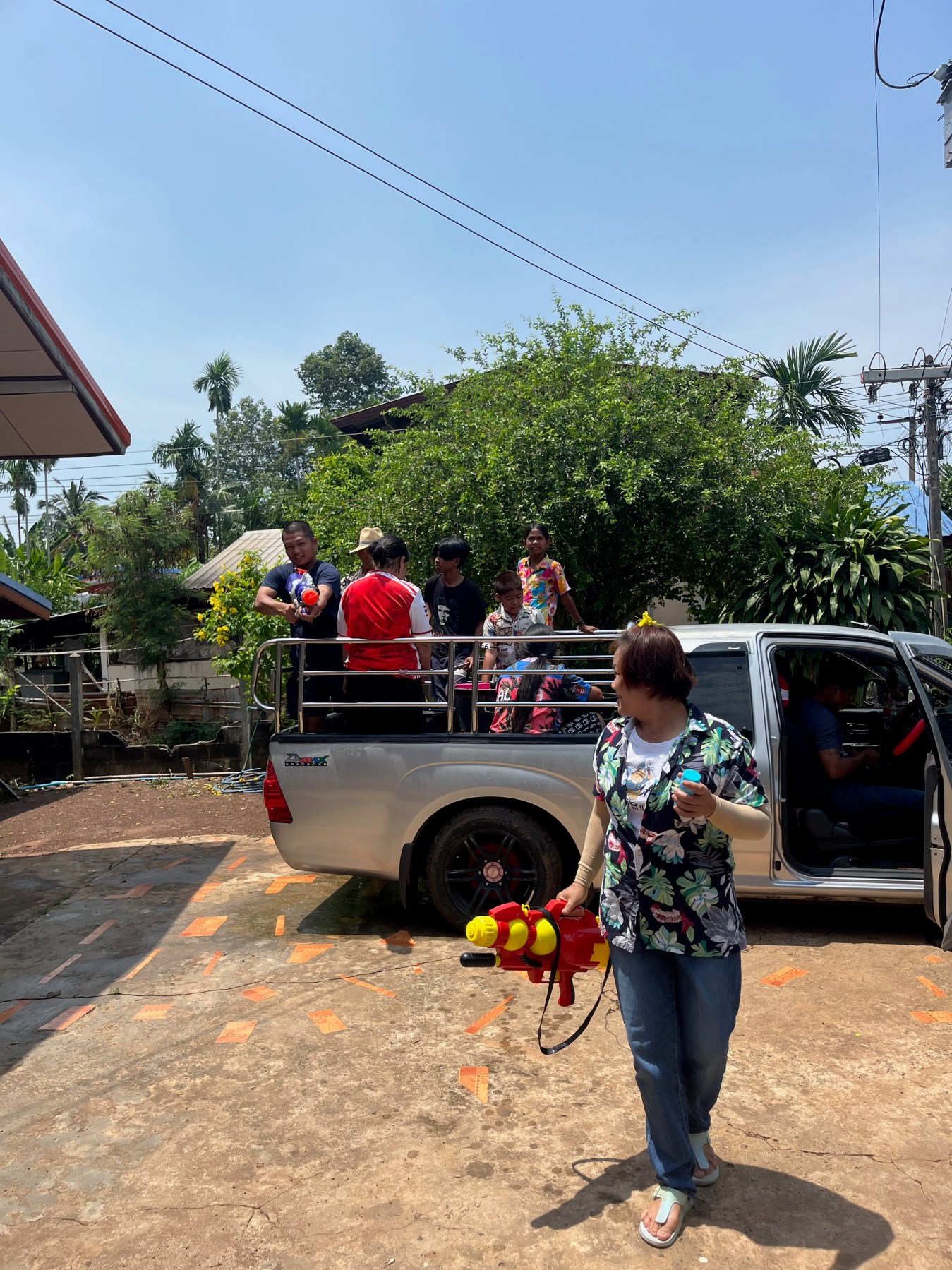
The next day, there weren’t any parades planned, so all we had to do was sit outside of Pi Sawai’s convenience store. All of the community members stopped by to douse us with water. Besides throwing water at each other, people also smeared baby powder or colorful paint on our faces and necks. What was funny to me was that it’s considered a blessing to be doused with water and smeared with the powder/paint; so, when it occurred, instead of fending off the perpetrator, we were supposed to be thankful and even bow in a little wai to acknowledge the kind gesture. I think in the U.S., the common reaction to one’s neighbors running up with squirt guns would be fight or flight, not acceptance and gratitude.
After Songkran, I only had to wait 3 short weeks until the next community-wide gathering called the Bung Bang Fai Festival (Rocket Festival). The Rocket Festival, set against the backdrop of strong scents of durian and gunpowder, generally marks the beginning of the rainy season. It also entails a community parade through the streets. Every village in the sub-district made an incredibly well-decorated parade float (from scratch), and each village had a dance group composed of about 40 older women. During the parade, instead of wearing florals, everybody wore elaborate traditional Thai attire.
Instead of water fights, each village took turns launching a rocket into the air. When my family told me that there would be fireworks and asked if I’d ever seen fireworks before, I said, “Yes, every year on the 4th of July.” There was undoubtedly something lost in translation, which I realized once I arrived at the rocket festival and beheld a giant rocket launch pad in the middle of a field, surrounded by vendors, spectators watching from about 100 meters away. A group of men carried a 15-foot homemade rocket to the launch pad and secured it to the structure. The amplified countdown began, and after it reached one, the rocket exploded upward, leaving a trail of smoke. When it eventually started falling back to the earth, it had already been gaining altitude for about two minutes. Finally, after 5 minutes had passed, people standing with binoculars spotted the rocket falling a few fields over. The final time was noted. Those who bet on that rocket being in the air for the longest started cheering, and then the next village began loading their rocket.
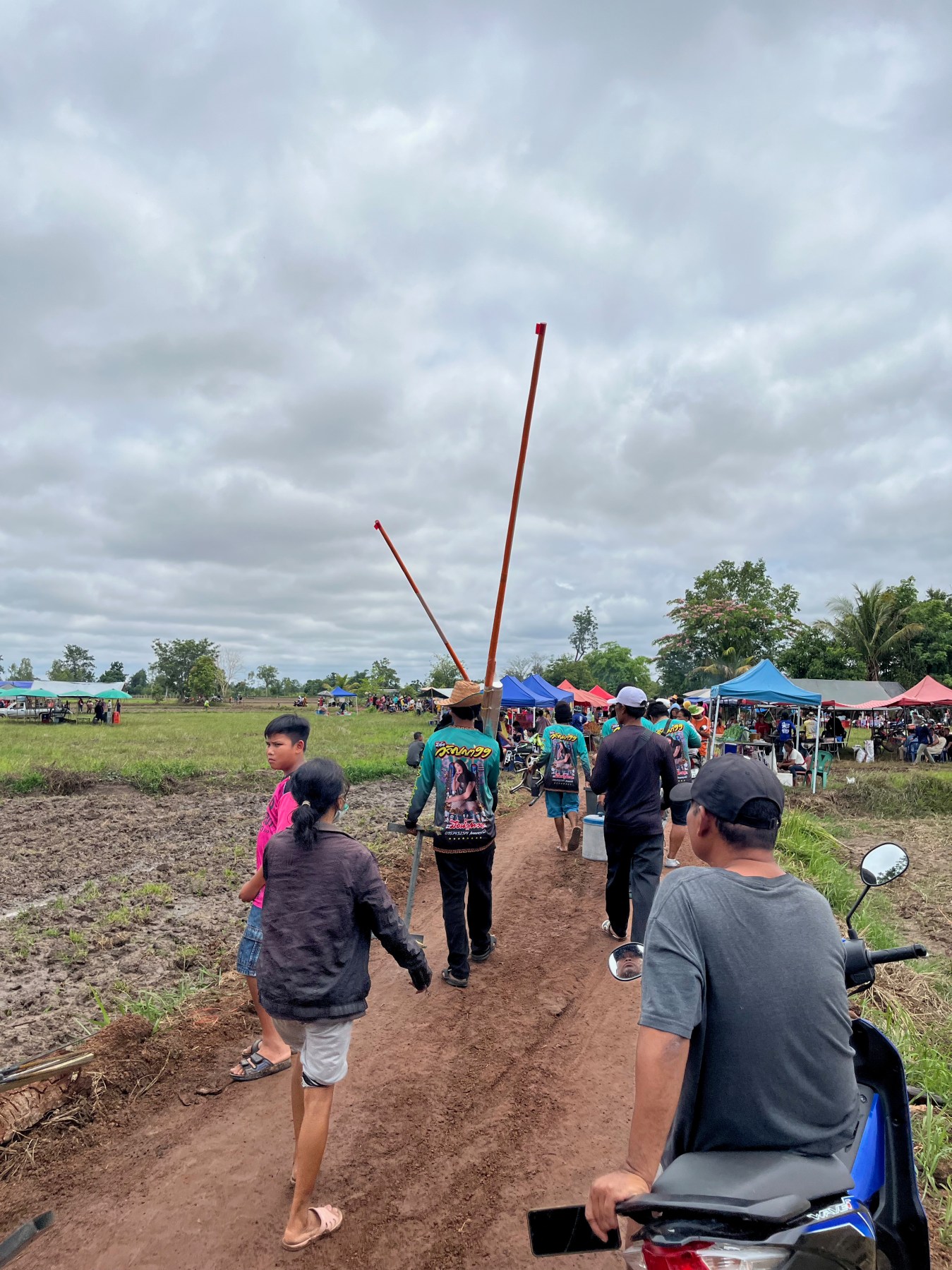
The Bung Bang Fai festival has roots in an ancient folktale. The story goes that the Sky God withheld rain until the Toad King led an army of creatures to defeat the Sky God. Peace was eventually made, and every year at the beginning of the rainy season, people set off fireworks to remind, or perhaps to challenge, the Sky God to send rain. Unlike Songkran, there aren’t any ceremonial elements related to Buddhism or respecting community elders. However, like Songkran, the festival symbolizes a period of renewal and rejuvenation, where families and communities come together to participate in friendly competition and celebrate. Throughout the time my community members spent making a parade float and practicing for the choreographed dance competition, I could clearly see that these types of festivals are not only a fun annual occurrence, but a chance to celebrate Thai community, and national and cultural pride.

Having lived in Thailand for six months already, I’ve had the privilege of being included in many different kinds of cultural celebrations. From helping to set up the unbelievably intricate decorations to parading in floral shirts with my new family, these spectacles have been more than just fun –they’ve highlighted how deeply these traditions are rooted in social connection. Not all of the festivals and traditions I’ve encountered are as spectacular as community-wide water fights or 15-foot rockets exploding into the sky, but they all center on community, and they have all brought me closer to my family and neighbors. If the first six months brought water and fire, I can only imagine what the next six have in store for me.



 Sticky Rice