
It’s July, which means rainy season and crossing the half way point of the semester for the volunteers in Thailand. In-service training has passed, and the next school break is still 2 months away. For most, we’re getting into the routine of school, and for our new group, getting the hang of adapting to a new culture in our communities. With the haze of the familiarity, our writers share one of the most pervasive lessons of Thai living – how to chill out and settle down.
Jess Smith, 136 YinD
You’ve heard the phrase cool as a cucumber but have you heard of jai yen yen? The two are not exactly synonyms, but when I first learned about jai yen yen, my mind went to this silly phrase I grew up hearing. Translated, jai yen yen means “cool heart”, but this phrase is so much more than just being cool. It is a way of life in Thailand. To be jai yen yen is to approach life with patience, to act with grace, and simply slow down, especially when the world feels scorching and seems to be passing you by.
Cucumbers were the bane of my existence. I would pick them out of salads, offer them to anyone at the table, and even spit them out after failed attempts at trying to enjoy them. They seemed too bland, too subtle, and a touch grassy. I didn’t see the big deal about them! Give me an onion, a glove of garlic, something with a little spice, anything but a cucumber. However, I then noticed how prevalent they were in Thai dishes. They were sliced thin, disguised with the papaya in my som tam, to cool the heat of the chili peppers. Plated with my pad thai, which seemed to be perfectly fine without those three measly slices. Cucumbers started to show up everywhere, and though they weren’t the main dish, they somehow began to make the dishes better.
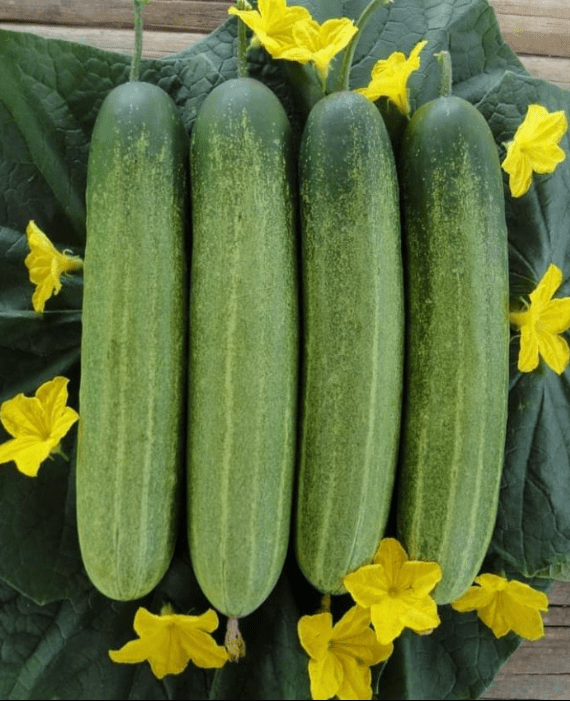
But this got me thinking, isn’t that what it is to be jai yen yen? Not to be overpowering, but to bring balance. To be present and gentle. To counteract the heat and maintain “cool” (as a cucumber). Thailand has taught me how to be jai yen yen slowly, perhaps the way one might learn to appreciate the mild and refreshing taste of a cucumber. I’ve learned to let the meeting start when it starts. To smile when the lesson may not be going my way. To stay as cool (as a cucumber), even when I must bike 6 miles to and from school on Thursdays in the sweltering heat.
Through my new appreciation for cucumbers and my attempts not to take life too seriously, I’ve come to understand that jai yen yen isn’t passive. It’s powerful. It is the strength to remain unbothered amid chaos. To live a life without too much worry. It’s a cucumber beside my laab moo that has a few too many chilies. And it is a lesson that I hope to carry with me long after my service in Thailand. So, hand me a cucumber and let’s do this thing called the Peace Corps.
Laurel Finlay, 136 YinD
It’s no secret that in the United States, working hard is seen as a moral indicator. Grind culture consumes us; haunting many with the feeling that any time spent not in pursuit of a goal is time squandered, akin to throwing out a perfectly good meal or dropping 20 dollars on the sidewalk. I know I’m not alone in carrying the guilt and shame that I’m never doing enough. After work, when I should feel okay resting my body and mind, there’s a little drill sergeant in the back of my head, yelling at me to get up. Even hobbies meant for enjoyment alone exist on a moral scale in my head. Crocheting is high on the positive list for me. Yes, it’s a semi-silly pastime often loved by grandmas, but at the end of the day, you’re creating an object that can be used in the future. Reading a book, doing a crossword, or painting a picture also sits on the side of productive goodness. As relaxing as these hobbies can be, they require forethought, focus, and a level of skill depending on the difficulty or rigor of the task. I hate the idea that I’ve created that I’m suddenly a better version of myself if I solve the crossword in bed rather than watch a movie, or simply take a nap.
One of the most shocking things for me when arriving in Thailand was my Thai peers’ love of doing absolutely nothing. This may sound harsh at first, but I mean it in the best possible way. My Thai friends are incredibly hard working, but have mastered the art of “work hard, play hard,” or more accurately, work hard, sleep hard. I love that when I ask my coworkers what they did over the weekend, they often respond with “non” นอน, the Thai word for sleep. While I know they aren’t sleeping all day, I love the way that they embrace rest and encourage others to do the same. When I’m dropped off at home after a day of teaching or working at the SAO, I’m always told to rest or take a nap. Thailand has taught me the art of relaxing, and has started to silence the little drill sergeant in the back of my head; at the end of the day, there’s no trophy for never taking a nap. Over the last 7 months, I’ve become a much more well-rested, jai yen yen version of myself.
Emily Hoffmeister, 135 YinD
During my time in Thailand, limited access to gyms, pools, and other workout spaces led me to explore yoga. What began as a substitute for physical exercise ended up also shaping me mentally. One of the most important things yoga has taught me is that growth doesn’t come from brute force; it comes through surrender.
Tough times are like a deep stretch that you need to breathe through and let go of. That’s what creates long-lasting expansion. I believe this goes hand in hand with the Thai culture of jai yen (cool heart). My friend Mae once saw me in a moment of panic, and she told me something I now constantly quote to myself when I feel my heart heating.
“You always have your breath.”
This simple reminder to connect back with yourself has eased so many tense moments. There have been a lot of uncomfortable periods of growth during my service – but through a cool heart, surrender of control, and connecting with my breath, I’ve made it through.
Tal Carmel, 136 YinD

Slowing down is something I still struggle with.
After a lifetime of being conditioned to always think of the future and the next step, I have found that it’s very hard for me to just focus on the present, which is not the same as an inability to LIVE in the present.
But rather, to simply think no further than the day in front of me. No planning for the future, no considering how my current moves will impact me later, no strategizing my life like a game of Monopoly.
Just accepting things as they are, for what they are, and not for what they can “do” for me.
Even now, where I’m at the start of my Peace Corps adventure, I find that I’m already trying to figure out my next steps. How to position my work here to best present myself for when I COS… in two years.
It’s crazy to me that I’d even be trying to THINK of my life in two years from now, because if there’s one thing life has taught me, it’s that you can’t plan it if you want to live it authentically. I’ve tried. It just results in forcing situations I’m not meant to be in and trying to fit myself into someone else’s mold.
No, thank you.
Every day, I’m trying to release that self-imposed? Societally imposed? ‘Who even knows’ imposed pressure of trying to figure out my life in two years from now, and just focus ON the now. (Don’t worry if I do manage to figure out how, I’ll let y’all know.)
In the meantime, I’m taking it day by day, pushing forward towards my goals, but still allowing the rest to unfold naturally. Living in Thailand and my time with the Peace Corps have definitely been helping.
Thai people have a very “we’ll get there when we get there” vibe that is much easier to just roll with than try to change. Class starts at 09:00? No worries, we’ll leave the office at 09:03. Your flight is at 11:30? All good! We’ll pick you up with exactly one hour to spare.
I’m learning to just flow as life comes rather than trying to chart, and/or force my course, and if there’s only one thing I take away from my time in Thailand, I’m sure it’ll be that.
Living life in the slow lane doesn’t mean you’re not moving; it just means you have time to enjoy the scenery while you do it.
Oliver de la Torre, 136 TESS
When I first arrived at my site in Thailand, I didn’t expect my classroom to become more than just a workspace. But somehow, it’s turned into the unofficial after-hours hangout spot—part staff room, part therapy session, part stand-up comedy club.
Every afternoon after the last bell rings and the students go home, my coworkers and I drift back into our shared classroom under the guise of “prepping for tomorrow.” And sure, sometimes we do get some work done—but most of the time, we’re just sitting around, laughing, sharing snacks, and swapping stories about the day. There’s always a fan buzzing, someone doodling on the whiteboard, someone scrolling through their phone, and a whole lot of friendly banter that makes the long days feel worth it.
After a long day of teaching, it’s a nice addition to my routine, a little bit of stability in a schedule that, as plenty of other volunteers could tell you, is ever-changing. My experience in Thailand has been wonderful, full of excitement, new experiences, and new friends, but the time I’ve spent with these people is my favorite way Thailand has taught me to be more jai yen yen.
Kayla Kawalec, 134 PCVL
I talk fast. Often the words come out quicker than my mind can process them. Often I’m told to “jai yen yen” when speaking Thai excitedly and quickly… which is often.
So I start over. I try thinking first, I try saying more with less. I try to just say less.
I try to cool
my
heart


 Sticky Rice
Share your thoughts