
Cassidy Haglund, 135 YinD
One of the Peace Corps’ three main goals is to promote a better understanding of other cultures on the part of Americans. Anyone who has spent time in Thailand knows how important food is in Thai culture. A casual greeting I hear daily is “กินข้าวหรือยัง” which translates to “Have you eaten yet?”
Since coming to serve as a volunteer in Thailand about a year and a half ago, I have been introduced to so many new Thai dishes and have seen firsthand the role that food plays in life here.
Every night, my host family and I—who have truly become a real family to me—eat dinner together. It’s when we get to chat about our day and spend time together, and it’s something I look forward to daily. I have lived with my family for over a year, and my host mom, P’Ann, and host dad, P’Glit, have taught me to make many dishes, including papaya salad, stir-fried pork with basil, and Thai coconut green curry.

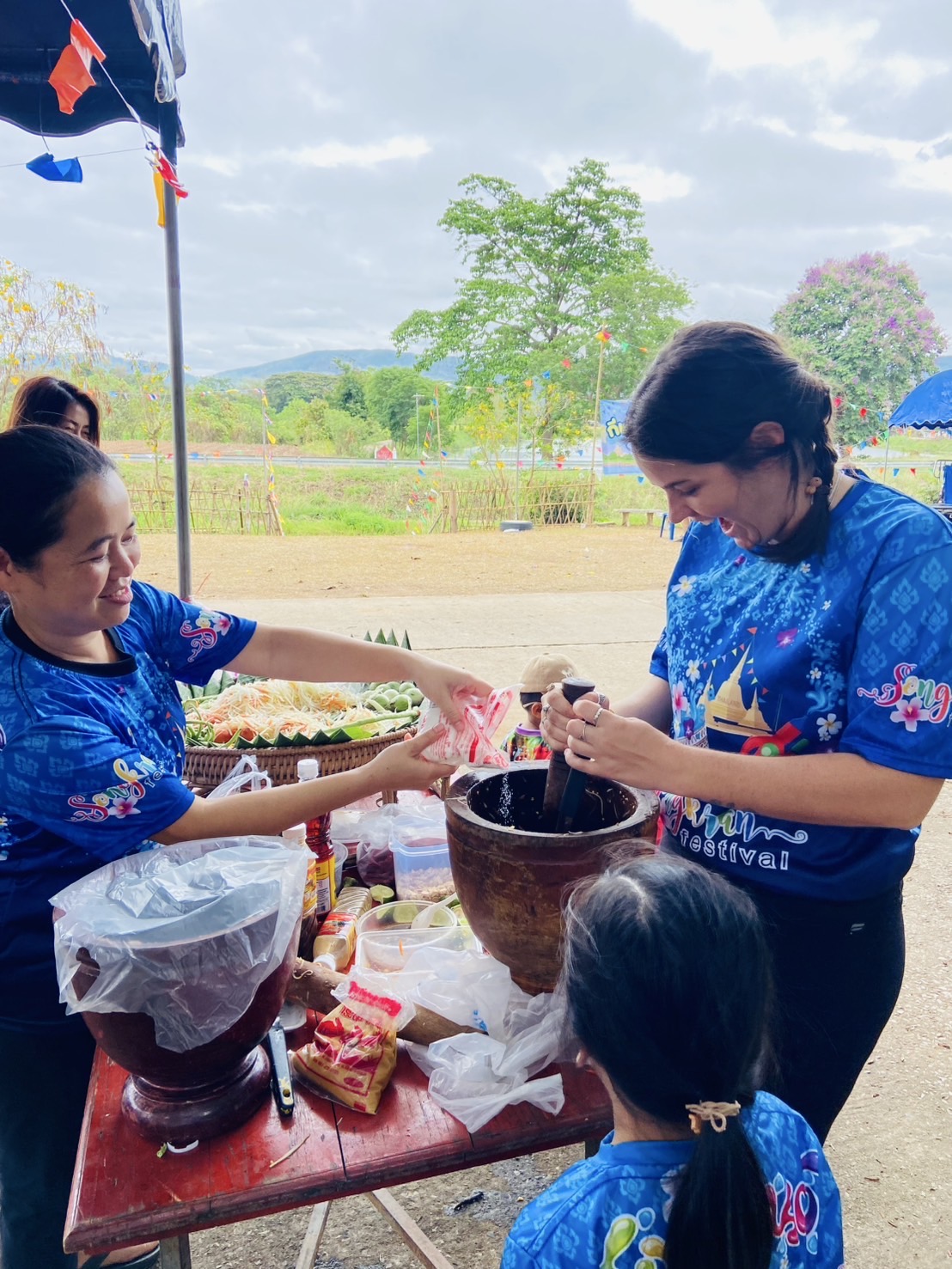

Learning to cook Thai food with my host family
In May, I traveled home to America for 2 weeks for my friends’ wedding. I knew I wanted to bring my family and friends something from Thailand, but I didn’t know what. However, a few weeks before I left, P’Ann started getting Thai ingredients together for me to take to America so I could cook Thai food while home. What better way to share Thai culture than through their food?
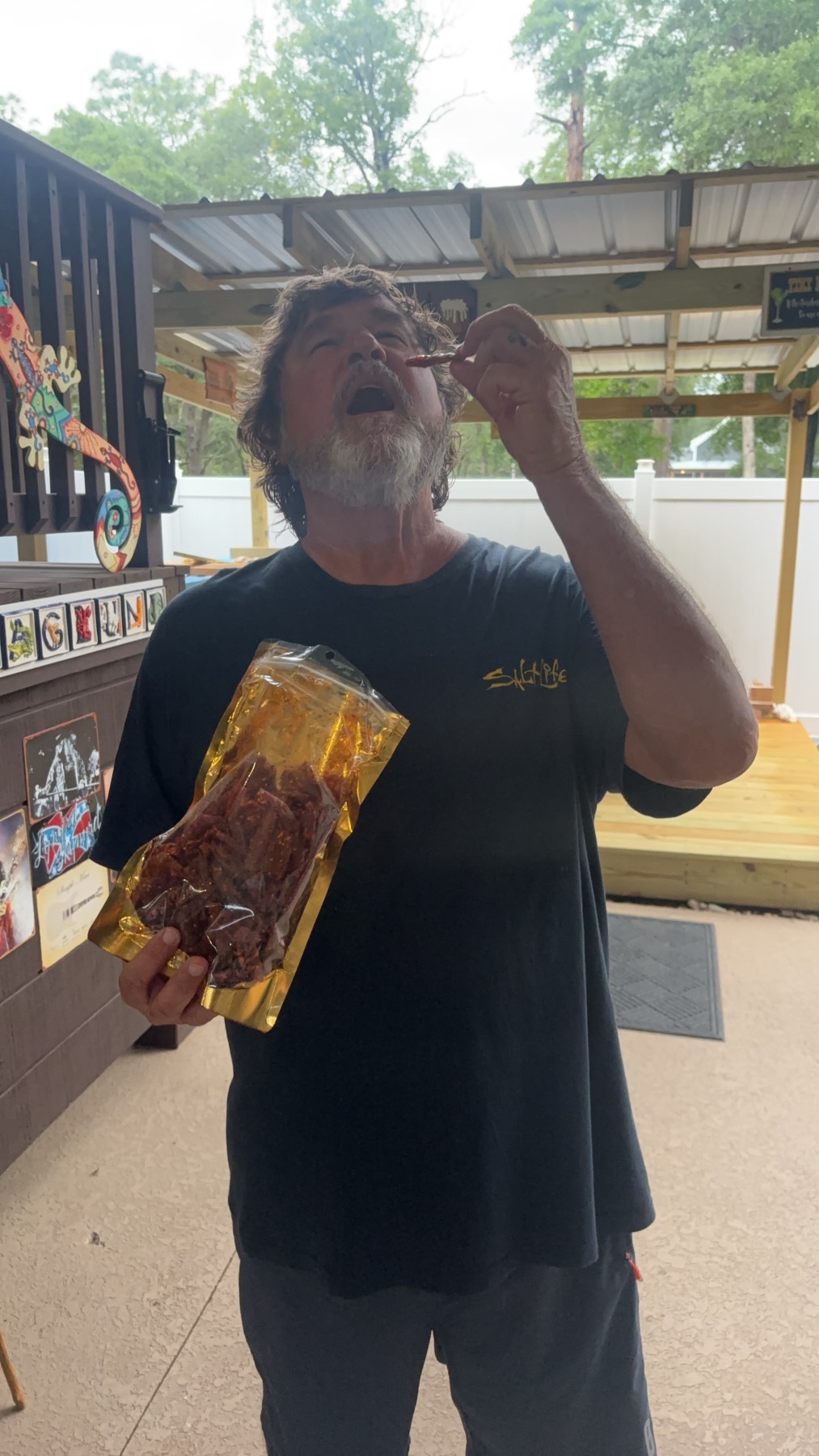
My suitcase traveling home was about 25% clothes, and 75% Thai snacks, Thai cooking ingredients, and Thai cookware. I brought homemade fried chilies, stir-fried holy basil, dried chili sauce, red curry paste, green curry paste, coconut milk, palm sugar, and more – fresh from Thailand. In America, I went to the Asian market to get the fresh ingredients and meat I would need for my meals.
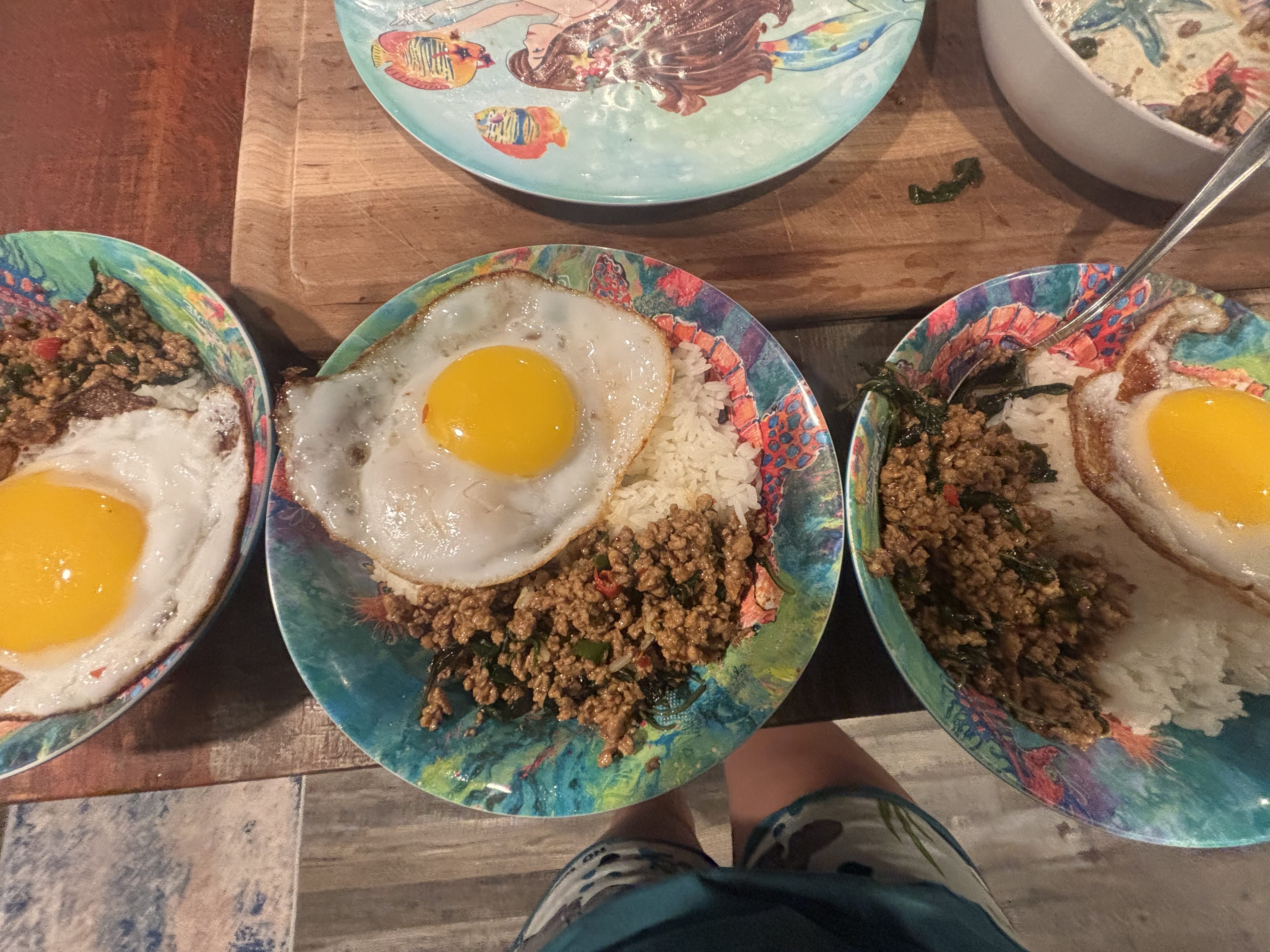
The first dish I made for my parents was stir-fried pork with basil and a fried egg on top (ผัดกะเพราหมูไข่ดาว). The taste was not 100% the same as here in Thailand, but it was close, and still delicious. My parents loved it.
The second dish I made was Thai coconut green curry (แกงเขียวหวาน). I accidentally added too much of the green curry paste I brought, and it was extremely spicy. My parents and friend Kat were able to eat it, though. They said the flavor was delicious, although the spice was a little too much. It was their first time eating Thai eggplants, and that was everyone’s favorite part of the dish.
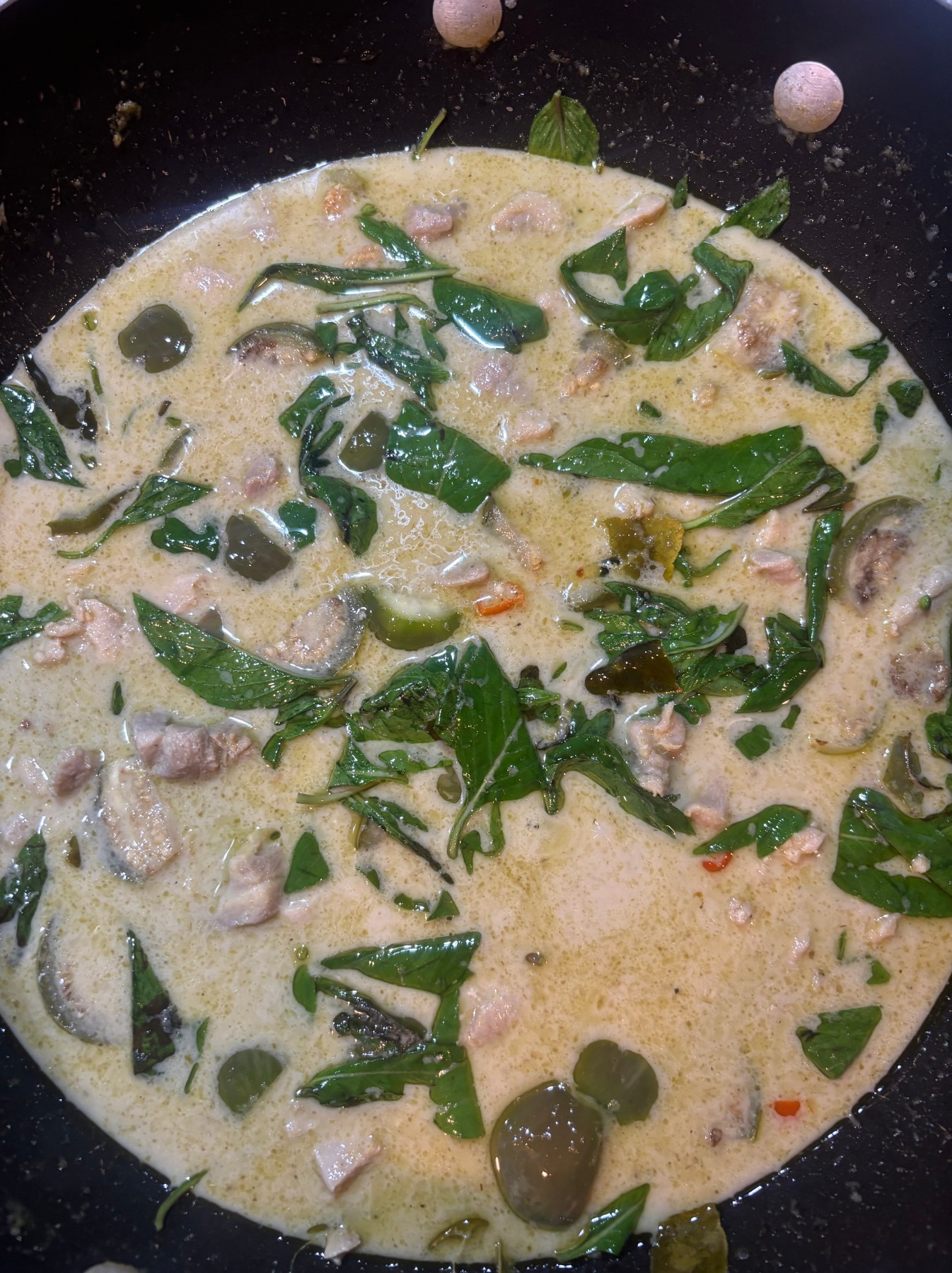
Despite the spice, my parents loved it and asked me to make it a second time. I added less green curry paste and brought down the spice level significantly. This time, I made it for my parents and two friends, Mary and Kelly. Everyone said it was amazing!
The last Thai dish I tried to make (emphasis on the tried) was Thai Pork BBQ (หมูกระทะ). P’Ann sent me with the cookware for this meal, but I did not have the right pot to put the coals into. When I set the top piece that holds the food over the coals, it was not hot enough, and the water didn’t boil. I asked my dad to put the coals on the grill, and we tried it that way. However, the water still did not get hot enough. I ended up cooking MaMa Noodles on the stove that night. It was not a successful meal, but it was fun nonetheless. My parents will just have to visit me in Thailand to eat the real thing!
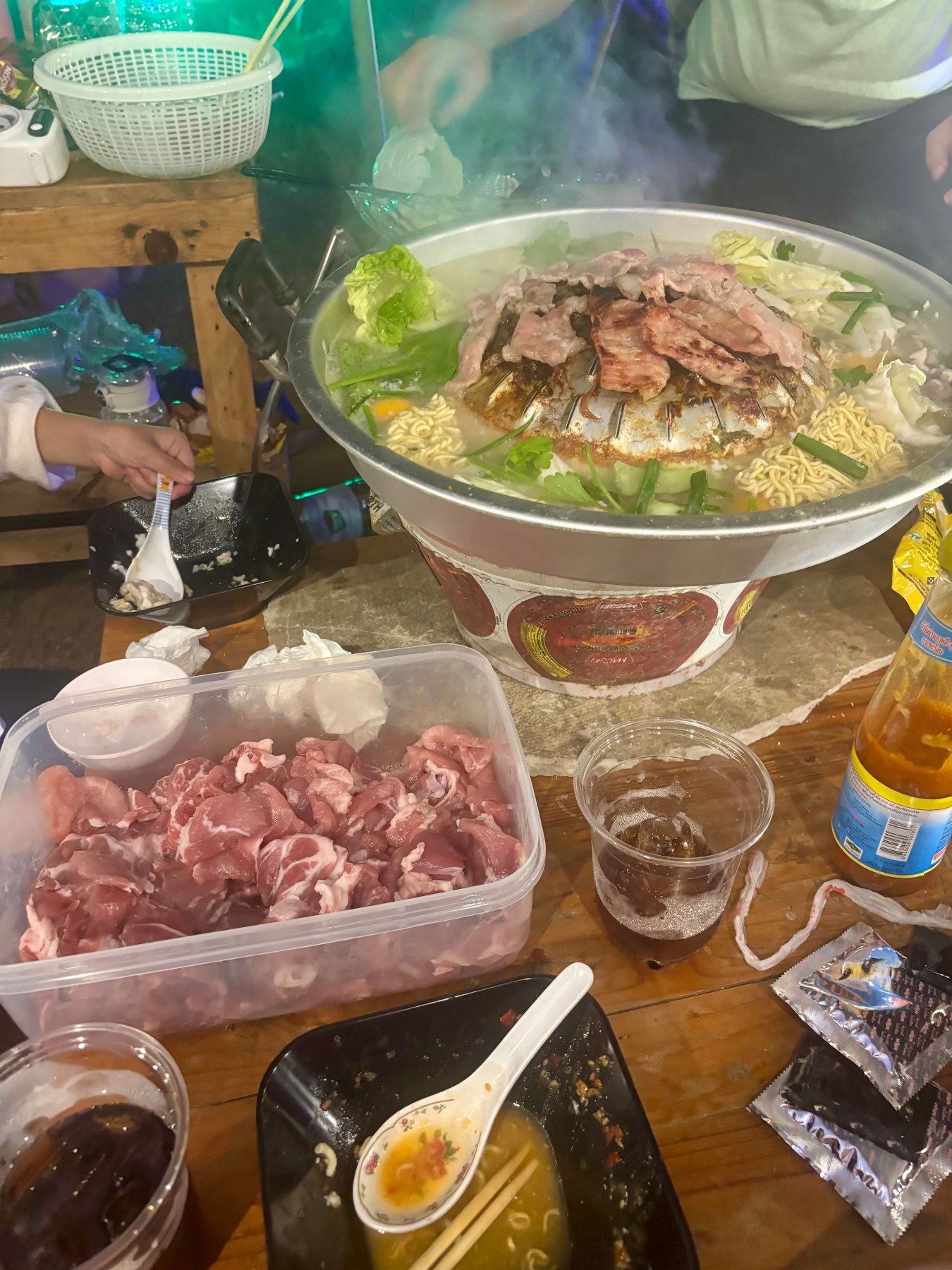

Expectation vs reality. Can you guess which one of these was in Thailand, and which was in the U.S.?
Sharing Thai food with my American family and friends wasn’t just about the flavors—it was about sharing a big part of my life, my experiences, and the culture that has shaped me in the last year and a half. It was a way for me to bring my two lives together, and a gesture that made the world seem not so big anymore.



 Sticky Rice