
English What Now? is an ongoing series based around the humorous, head-scratching, or just plain amusing English found around Thailand observed and written by Teresa Derr.
Teresa Derr, 134 YinD
Recently, a good friend and I visited Bueng Kan with my host family. Honestly, it was a hidden gem of a trip, because most foreigners don’t visit Isaan (and Bueng Kan is as far northeast as you can get in Northeast Thailand), but the sites there were better than some of the places I’ve visited in the South! And surprisingly, even though Isaan (criminally) doesn’t get as many foreign tourists, the English on the signs was pretty good! Wat Phu Tok, especially, had beautiful English signs.

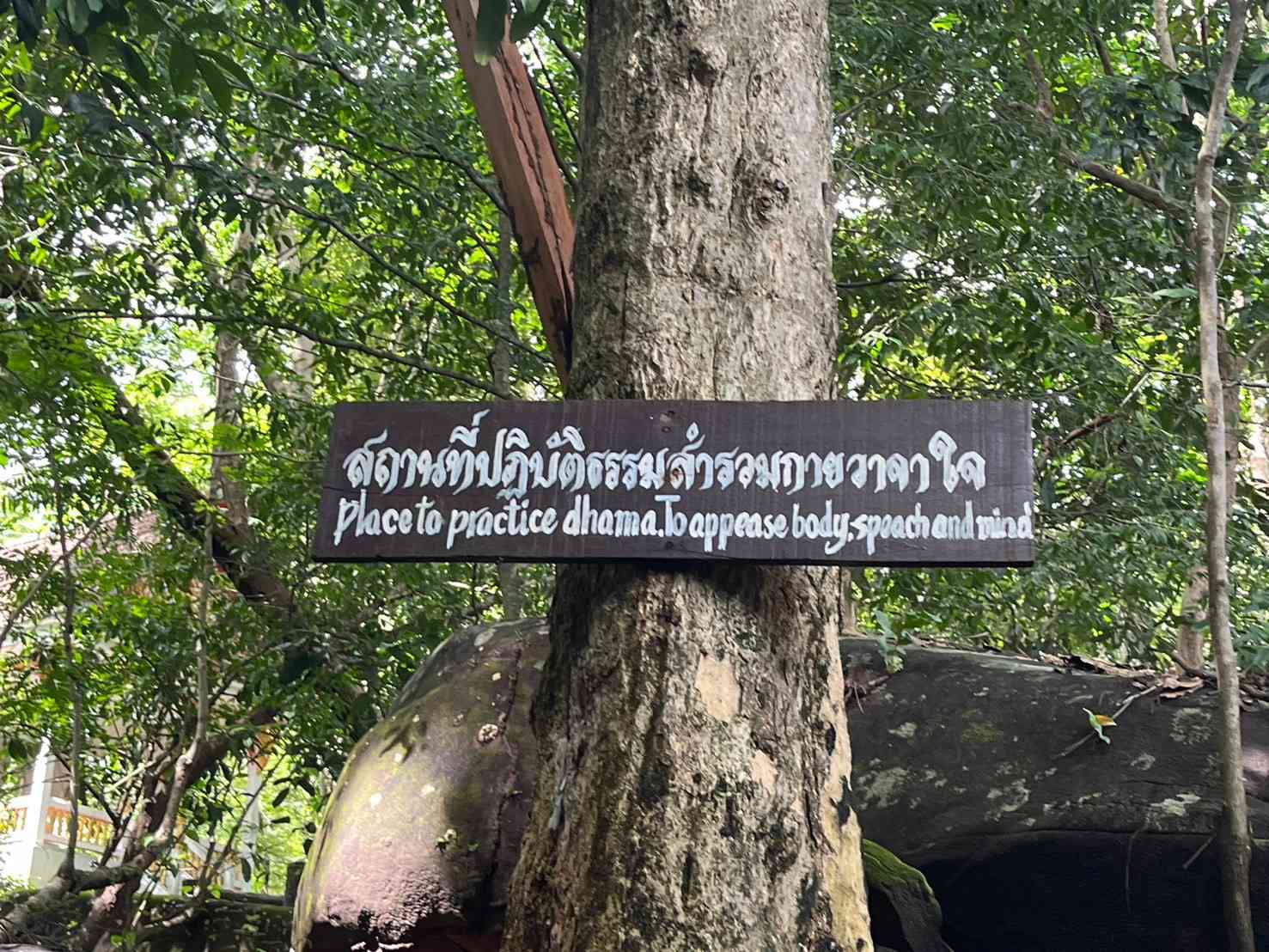

These were some of the first signs we saw upon arriving at the Wat. Look at that lettering! For the calligraphy alone, I’d forgive a good many grammatical errors, but I didn’t even need to! Perhaps the phrasing is a little stilted, but I can’t fault the English on these signs at all!

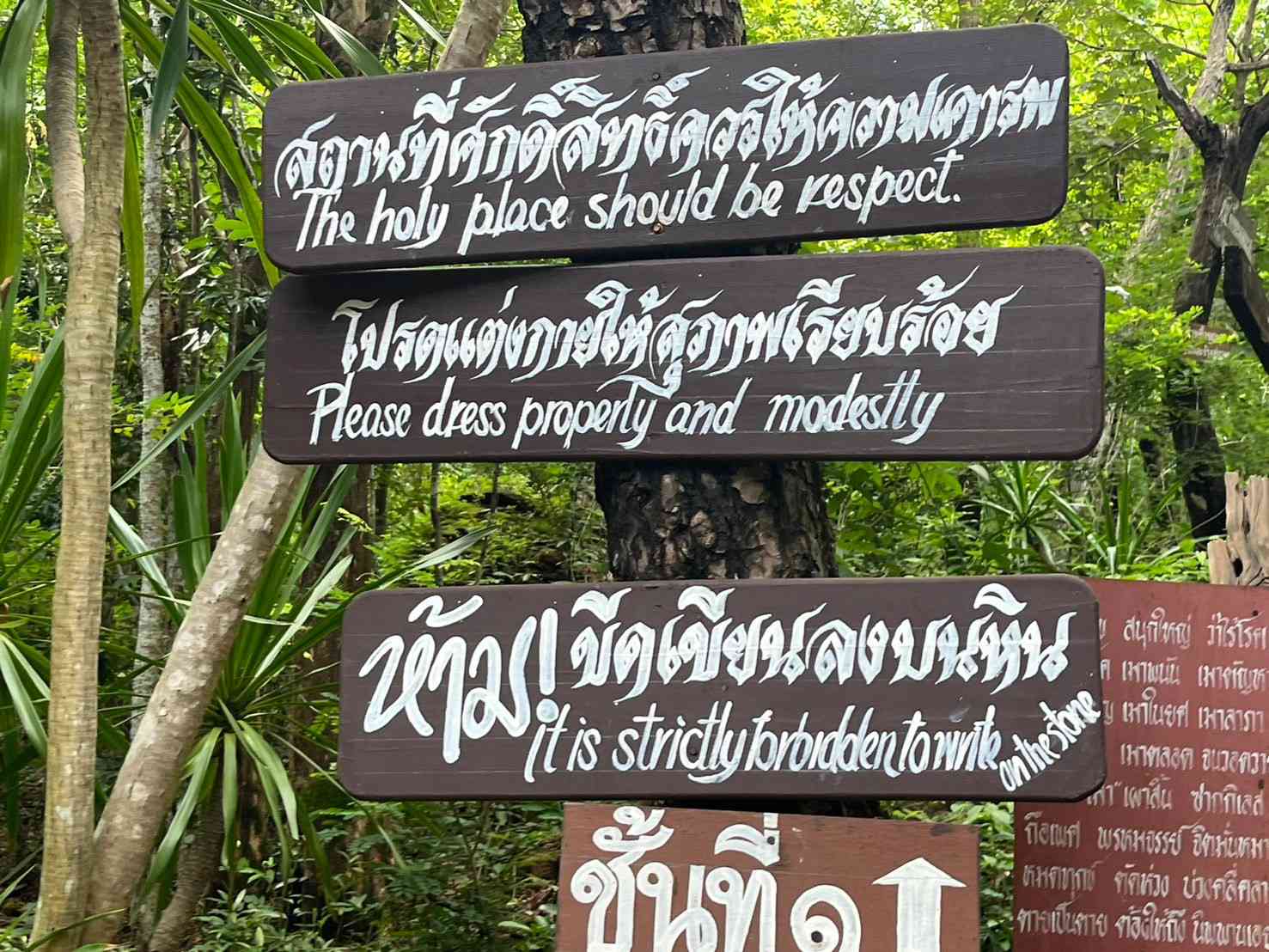

Of course, even with such a wonderful first impression of these English signs, I did have to laugh when we came across signs that weren’t quite as grammatically correct as the fest few. “Do not unaccompanied child to go up the hill” sounds like it is talking directly to this unaccompanied child, possibly named Donut, and I imagine that the full sentence (based on the other signs) would be “to go up the hill is strictly forbidden.
Perhaps I am not respect the holy place by laughing at this, but the number of times I’ve gone to write something all beautifully only to realize partway through that I ran out of space and had to squeeze the last little bit in was a very relatable sign to see. Although, using the preposition ‘along’ instead of the (probably more correct) preposition ‘off’ made the English fit nicely on the sign, while the Thai was crammed in, so that isn’t an English-only struggle!

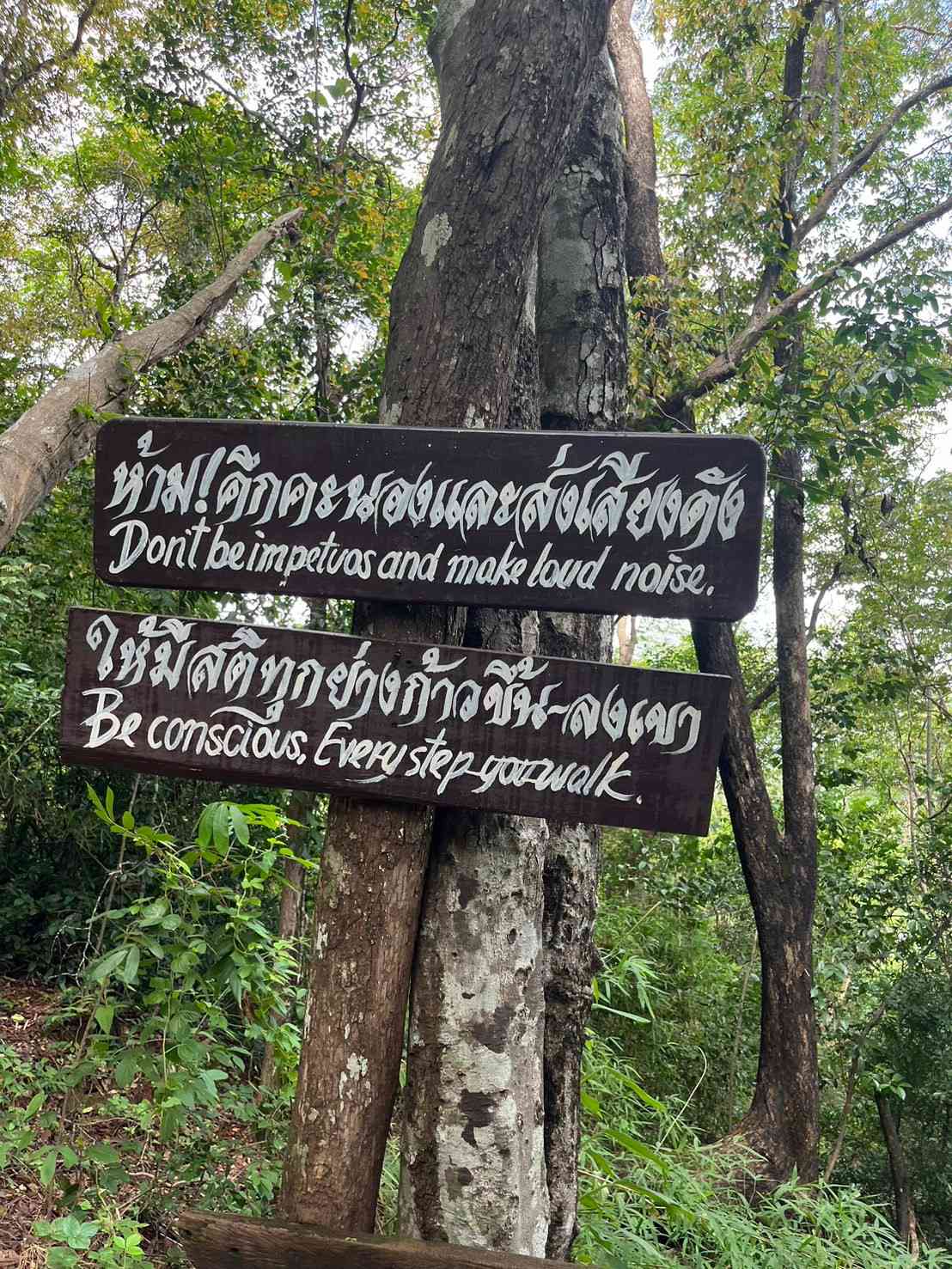
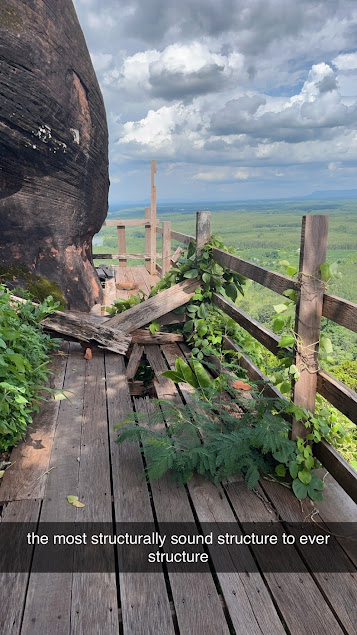
These signs are a return to the very formal, somewhat stilted English, but they suited this Wat very well. We didn’t make loud noises, though less, I think, out of a desire to not be impetuous and more because when walking on wooden planks that are bolted into the side of a cliff, I tended to hold my breath out of nerves. Being conscious of every step we walked was also more out of a need to not fall off the side of a cliff than out of a spiritual desire for mindfulness – though, perhaps that is part of the beauty of this temple, achieving mindfulness through circumstances. Of course, the goal of mindfulness (peace) was maybe less easy to come by when we came across the sign announcing a broken bridge (though not, strangely, near the actual broken bridge), but we found it in other places around the Wat.
¯\_(ツ)_/¯ ¯\_(ツ)_/¯ ¯\_(ツ)_/¯
Traveling to Wat Phu Tok (and the other places we visited that day, Waterfall Ginnalee and Naka Cave) was well worth the trip, for both the stunning views and finding such a wealth of wonderful, amusing English to write about. (Check out Kyra’s Take Me To article for a full account of our trip and recommendations for anyone going in the future!)

 Sticky Rice
Share your thoughts