
TESS Talk is a series from Group 134, TESS Volunteer, Cadi Duncan, who organizes and facilitates discussions with fellow Peace Corps Volunteers on a variety of topics related to our work in the classroom. These “talks” are then summarized by Cadi. Her goal is to address shared challenges and frustrations and brainstorm sustainable solutions on common topics that can be utilized by many generations of Volunteers.
Cadi Duncan, 134 TESS
August’s TESS Talk centered around bullying at school. Prior to discussing the types of bullying we observe we had to address that as people educated under Western principles we naturally have bias towards behavior management practices that are familiar to us. Many of us have realized that our experiences from our own education do not directly translate to our experiences in Thai schools, and while many of the same issues exist in both places, behavior and preventative measures are not equal. This cultural difference has forced us to examine our own beliefs and practices as well as take into consideration the beliefs and practices of our schools and host communities.
We discussed the types of bullying behavior we perceive as harmful as well as the potential reasons behind the behavior. We often see students hitting each other, insulting one another, and engaging in hierarchical bribery. One aspect of Thai culture that can be uncomfortable for Westerners is physical touch. Thai people are generally more touchy compared to Americans and it is especially apparent at school. Students are constantly touching each other, sometimes, gently, like leaning on one another, and other times, aggressively, like wrestling, kicking, or punching. American schools are typically firm when telling students to keep their hands to themselves, but that’s not the case here. Mostly the students seem ok with the physical touch, but there are moments when a playful blow is delivered a bit too hard and a true fight ensues. Moments like this are commonplace and Thai teachers rarely intervene unless things get really out-of-hand.
Kayla Kawalec, YinD 134, noted that when discussing bullying and overall behavior with her counterpart at one of her schools, her counterpart aptly noted that the students replicate what they see in their community, i.e., if the community members are unorganized and at odds with one another, the children are likely to emulate the same behavior. This concept illustrates the reality that Volunteers across Thailand see in their schools and communities. Although we are incapable of implementing sweeping change at our sites, we are capable of addressing bullying at our schools.
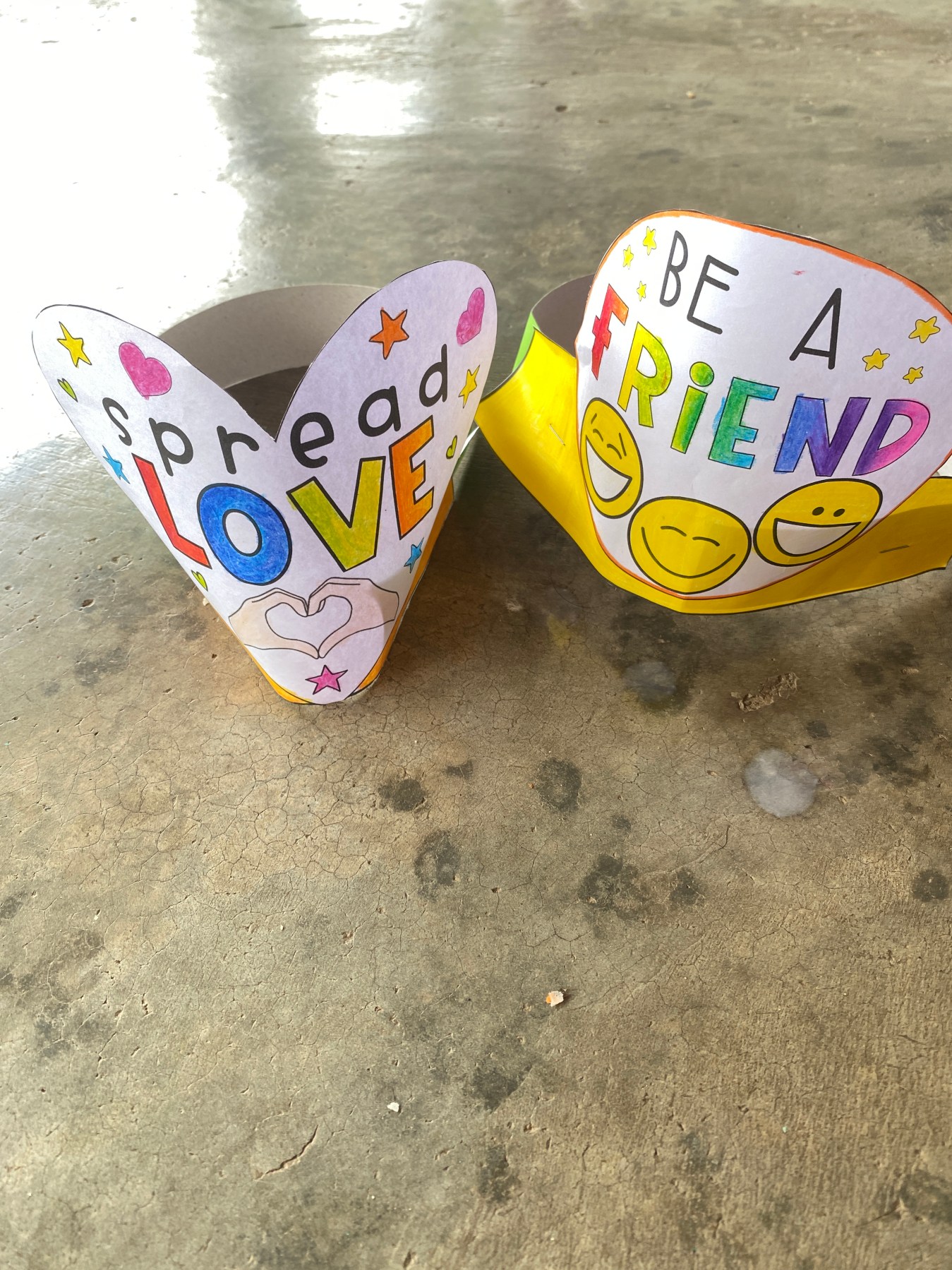
We collectively agreed that the one place we can mitigate bullying is in our own classrooms. Many of us have talked to our co-teacher(s) about what we perceive as bullying and how our classrooms should be free of bullying behavior. As a result, some TESS Volunteers have co-created classroom rules and expectations to ensure that students understand how to behave within the English classroom. We rely on our co-teachers to support our collaborative rules and expectations, and it appears that our co-teachers agree that the classroom is a place for learning and students should behave with kindness and respect to everyone.
We have learned through trial and error that we, the Volunteers, must explicitly teach our students how to stop bullying one another. We have had conversations with our students, oftentimes interpreted through our counterparts, about how they feel when someone is bullying them. With the realization that no one feels good as the bully or the bullied, some of our students have decreased their bullying behavior. With Group 134 closing service soon, we hope that the practices we have utilized in our classrooms remain evergreen. We may be ambitious, but we hope that some of the work we have done with our counterparts will become part of their teaching philosophy and will continue to influence them for the remainder of their careers.



 Sticky Rice