
Snake Snake Fish Fish is an ongoing series based around Thai idioms/phrases/colloquialisms written about and illustrated by Cloé Fortier-King and guest contributors.
Cloé Fortier-King, 134 YinD
“This being human is a guest house.
Every morning is a new arrival. A joy, a depression, a meanness, some momentary awareness comes as an unexpected visitor…Welcome and entertain them all. Treat each guest honorably. The dark thought, the shame, the malice, meet them at the door laughing, and invite them in. Be grateful for whoever comes, because each has been sent as a guide from beyond.”
Rumi
Recently, while reading a book borrowed from the Peace Corps volunteer lounge, I found a reference to a story about two siblings and a blue bird. In the moment, I gave it little thought. It was just a flash of curiosity—a tiny spark bouncing around in the back of my mind. Less than two hours later, I hopped on my bike to pedal from a local café toward home. While following a gravel trail flanked by banana trees and rice paddies, I glanced to my left and spotted the brightest blue bird I’ve ever witnessed. I slammed on my brakes and stopped to watch the bird cross the sky above me. The story from earlier came flooding back, and my spark of curiosity roared into a blaze. As soon as I arrived home, I set to researching the origin of the blue bird story.
After a bit of googling, I found it: L’Oiseau Bleu (or The Blue Bird), a play written by the Belgian playwright Maurice Maeterlinck in 1908. L’Oiseau Blue details the fairytale quest of young siblings Mytyl and Tyltyl, to find a magical blue bird of happiness. The challenge seems insurmountable, the bird elusive. Over the course of six acts, the siblings travel to such destinations as: the land of memory, the palace of night, the garden of beauty, and the kingdom of the future. They encounter symbolic representations of myriad beauties and terrors of the world and converse with speaking animals. Yet as the tale winds to an end, Mytyl and Tyltyl return home to find something strange: the blue bird awaiting them in their own backyard. Having travelled great distances and sought happiness fruitlessly in settings of mystery, intrigue, and fear, the children emerge with fresh perspectives on the happiness contained in their day to day lives. They remark that the world around them—from their home, to garden, to pet bird—shines with brighter color and greater joy than they had ever noticed before.
It’s a lovely story. I think it offers much wisdom about finding happiness from internal rather than external circumstances. It reminds us that no matter where in the world our body is, it is our minds and hearts that experience happiness, joy, and contentment. Even in the most peaceful and scenic environments, we can only feel as good as our internal landscape; alternately, dismal and uncomfortable physical settings do not render positive thoughts and inner satisfaction impossible. The Thai language shares this wisdom in the words สุขทุกข์อยู่ที่หัวใจ (suk tuk yuu tii hua jai), translating to “happiness and suffering live in the heart”.
But this story has its limits. As much as I subscribe to this notion of finding happiness within oneself, claiming that we have total control over our own happiness is wishful thinking. L’Oiseau Bleu is a fairytale devised for the stage. In reality, the nuances of individual capacity for happiness, social factors, and physical environment must be accounted for. Particularly within Thailand’s collectivist culture, very few things are considered completely the responsibility of the individual – let alone the quest for happiness. The social support of friends and family provide security and resources that are essential to experiencing happiness.
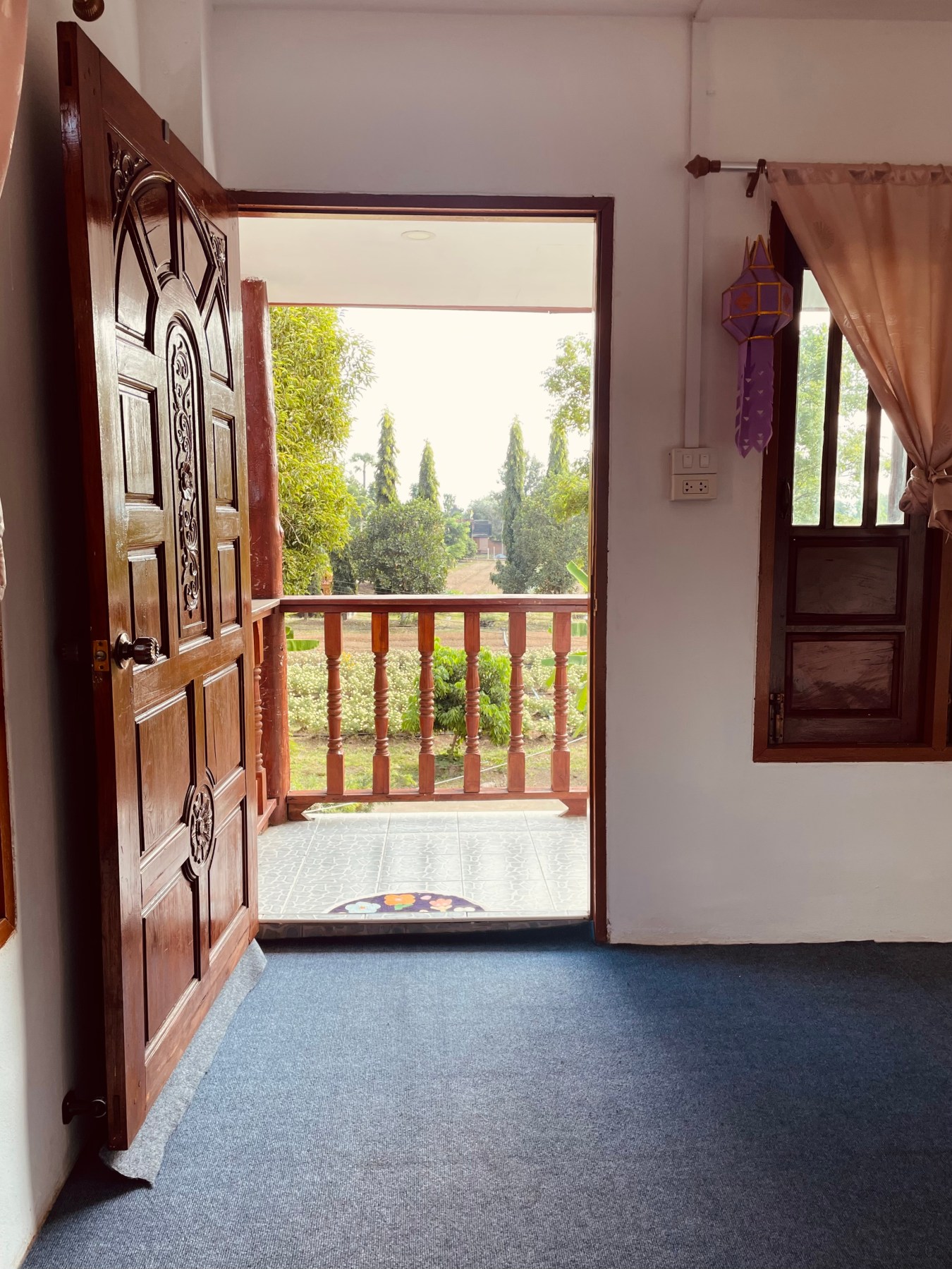
The impact of the physical environment, too, should be highlighted. There was a time when I wasn’t sure I could truly be happy while physically located in Thailand; I wasn’t convinced I would ever feel at home here. And of course, there are still moments when I don’t. But I can pinpoint one major change in my life at site that led to a clear sighted view of my own blue bird. That change was moving to independent housing. It’s a privilege to have the opportunity to live independently as a PCV and I’m incredibly lucky to have found a space I adore. Every volunteer and every site is different, but I’m thankful every day that I listened to the inner voice that led me here. While having a space to call my own is nowhere near the only source of joy I’ve found at site, the peace and stability it has brought me, in combination with budding friendships in my community and the support of my fellow PCVs and social network in the US, have allowed me to nurture a perspective that lets in the joy and beauty all around me. On their own, this joy and beauty do not equate to happiness, but the ability to welcome all circumstances and all of my own responses to them with open arms might.
So yes, with a few caveats, happiness lies in the heart. It comes from within. The tools I use to observe, interpret, and internalize happiness work in America, in Thailand, and anywhere else my feet take me. Much of my external experience lies outside my control, but provided my basic needs are met, my heart and mind are not restricted to a singular experience of reality. One of the many gifts of my Peace Corps service has been an ever-expanding roadmap to my own happiness. The trails are winding, the stops varied, and the destination undefined, but through it all my blue bird is flying alongside me.



 Sticky Rice
Share your thoughts